
Petitot River below Highway 77 (PET01)
British Columbia and Canada conduct biomonitoring at most water quality stations in the network. Benthic macroinvertebrates are collected every three years using Canadian Aquatic Biomonitoring Network (CABIN) sampling protocols.
Summary of biological condition in 2022
Petitot River below Highway 77 can not be compared to a CABIN reference model because none of the regional models contain similar reference sites.
Benthic community metrics were calculated for all years of sampling at this station.
- CABIN Assessment Result: can not be assessed
- Bray-Curtis Dissimilarity Value: can not be calculated
- RIVPACS Ratio: can not be calculated
- Benthic Community Metrics Summary no similar reference sites available for comparison
Benthic community metrics, 2021 to 2022
-
Click on the tabs below to explore individual metrics values over time.
Values for this station ( ● ) are
compared to the range of values at similar reference sites (▮). The black line represents the median
reference value.
Abundance
Total abundance
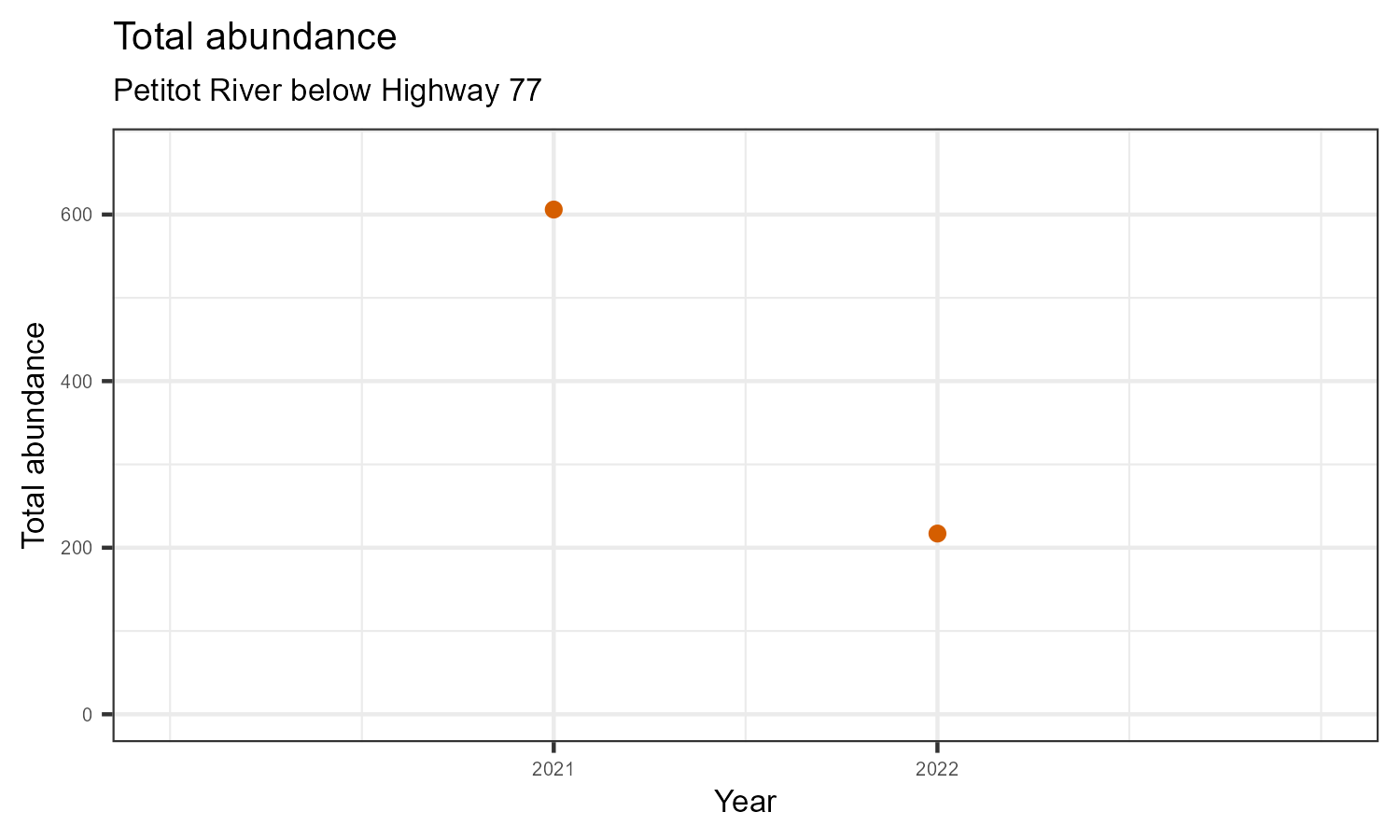
Total abundance counts every invertebrate in a sample. Abundance may increase or decrease in response to habitat disturbance.
| 2021 | 2022 | |
|---|---|---|
| Total abundance | 606.00 | 217.00 |
| % EPT | 81.85 | 71.43 |
| % Ephemeroptera | 61.39 | 31.80 |
| % Plecoptera | 7.59 | 3.69 |
| % Trichoptera | 12.87 | 35.94 |
| % Chironomidae | 8.25 | 17.05 |
| % Diptera and non-insects | 15.84 | 21.20 |
| % Filterers | 24.09 | 47.93 |
| % Gatherers | 85.15 | 82.49 |
| % Predators | 47.19 | 77.88 |
| % Scrapers | 83.50 | 78.34 |
| % Shredders | 11.55 | 24.88 |
| Family richness | 21.00 | 19.00 |
| EPT families | 14.00 | 13.00 |
| Ephemeroptera families | 5.00 | 5.00 |
| Plecoptera families | 4.00 | 2.00 |
| Trichoptera families | 5.00 | 6.00 |
| Diptera families | 2.00 | 1.00 |
| Long-Lived family richness | 1.00 | 0.00 |
| Clinger family richness | 14.00 | 12.00 |
| Intolerant family richness | 11.00 | 9.00 |
| % Tolerant family abundance | 2.97 | 3.69 |
| % Top 2 dominant families | 58.00 | 44.24 |
| Simpsons diversity | 0.79 | 0.85 |
| Simpsons evenness | 0.23 | 0.36 |
| Hilsenhoff Biotic Index (NW) | 4.20 | 4.30 |
% Ephemeroptera
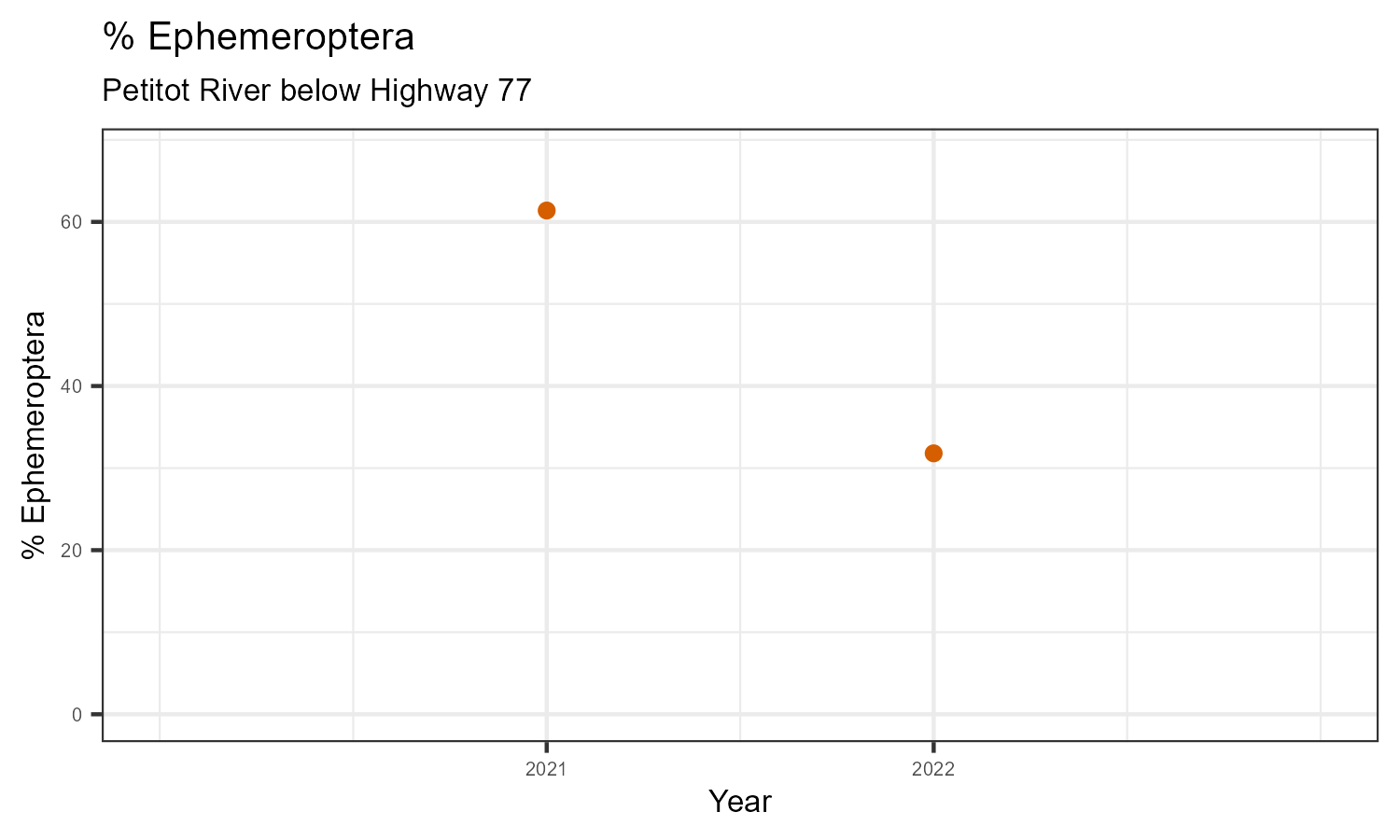
% Ephemeroptera is the proportion of invertebrates that belong to the taxonomic order Ephemeroptera. Ephemeroptera are commonly called mayflies. They are sensitive to pollution. The % Ephemeroptera may decrease in response to habitat disturbances like poor water quality.
| 2021 | 2022 | |
|---|---|---|
| Total abundance | 606.00 | 217.00 |
| % EPT | 81.85 | 71.43 |
| % Ephemeroptera | 61.39 | 31.80 |
| % Plecoptera | 7.59 | 3.69 |
| % Trichoptera | 12.87 | 35.94 |
| % Chironomidae | 8.25 | 17.05 |
| % Diptera and non-insects | 15.84 | 21.20 |
| % Filterers | 24.09 | 47.93 |
| % Gatherers | 85.15 | 82.49 |
| % Predators | 47.19 | 77.88 |
| % Scrapers | 83.50 | 78.34 |
| % Shredders | 11.55 | 24.88 |
| Family richness | 21.00 | 19.00 |
| EPT families | 14.00 | 13.00 |
| Ephemeroptera families | 5.00 | 5.00 |
| Plecoptera families | 4.00 | 2.00 |
| Trichoptera families | 5.00 | 6.00 |
| Diptera families | 2.00 | 1.00 |
| Long-Lived family richness | 1.00 | 0.00 |
| Clinger family richness | 14.00 | 12.00 |
| Intolerant family richness | 11.00 | 9.00 |
| % Tolerant family abundance | 2.97 | 3.69 |
| % Top 2 dominant families | 58.00 | 44.24 |
| Simpsons diversity | 0.79 | 0.85 |
| Simpsons evenness | 0.23 | 0.36 |
| Hilsenhoff Biotic Index (NW) | 4.20 | 4.30 |
% Plecoptera
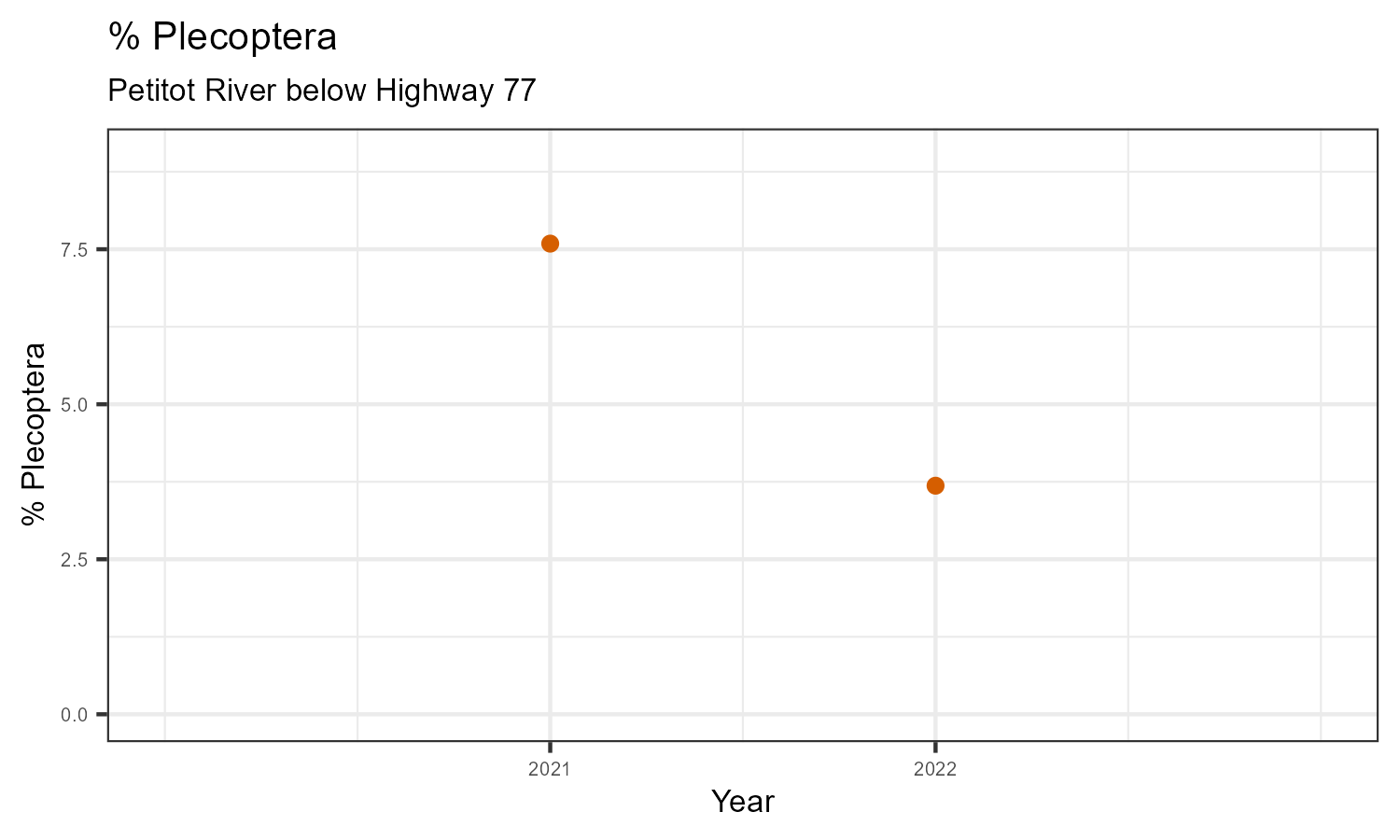
% Plecoptera is the proportion of invertebrates that belong to the taxonomic order Plecoptera. Plecoptera are commonly called stoneflies. They are sensitive to pollution. The % Plecoptera may decrease in response to habitat disturbances like poor water quality.
| 2021 | 2022 | |
|---|---|---|
| Total abundance | 606.00 | 217.00 |
| % EPT | 81.85 | 71.43 |
| % Ephemeroptera | 61.39 | 31.80 |
| % Plecoptera | 7.59 | 3.69 |
| % Trichoptera | 12.87 | 35.94 |
| % Chironomidae | 8.25 | 17.05 |
| % Diptera and non-insects | 15.84 | 21.20 |
| % Filterers | 24.09 | 47.93 |
| % Gatherers | 85.15 | 82.49 |
| % Predators | 47.19 | 77.88 |
| % Scrapers | 83.50 | 78.34 |
| % Shredders | 11.55 | 24.88 |
| Family richness | 21.00 | 19.00 |
| EPT families | 14.00 | 13.00 |
| Ephemeroptera families | 5.00 | 5.00 |
| Plecoptera families | 4.00 | 2.00 |
| Trichoptera families | 5.00 | 6.00 |
| Diptera families | 2.00 | 1.00 |
| Long-Lived family richness | 1.00 | 0.00 |
| Clinger family richness | 14.00 | 12.00 |
| Intolerant family richness | 11.00 | 9.00 |
| % Tolerant family abundance | 2.97 | 3.69 |
| % Top 2 dominant families | 58.00 | 44.24 |
| Simpsons diversity | 0.79 | 0.85 |
| Simpsons evenness | 0.23 | 0.36 |
| Hilsenhoff Biotic Index (NW) | 4.20 | 4.30 |
% Trichoptera
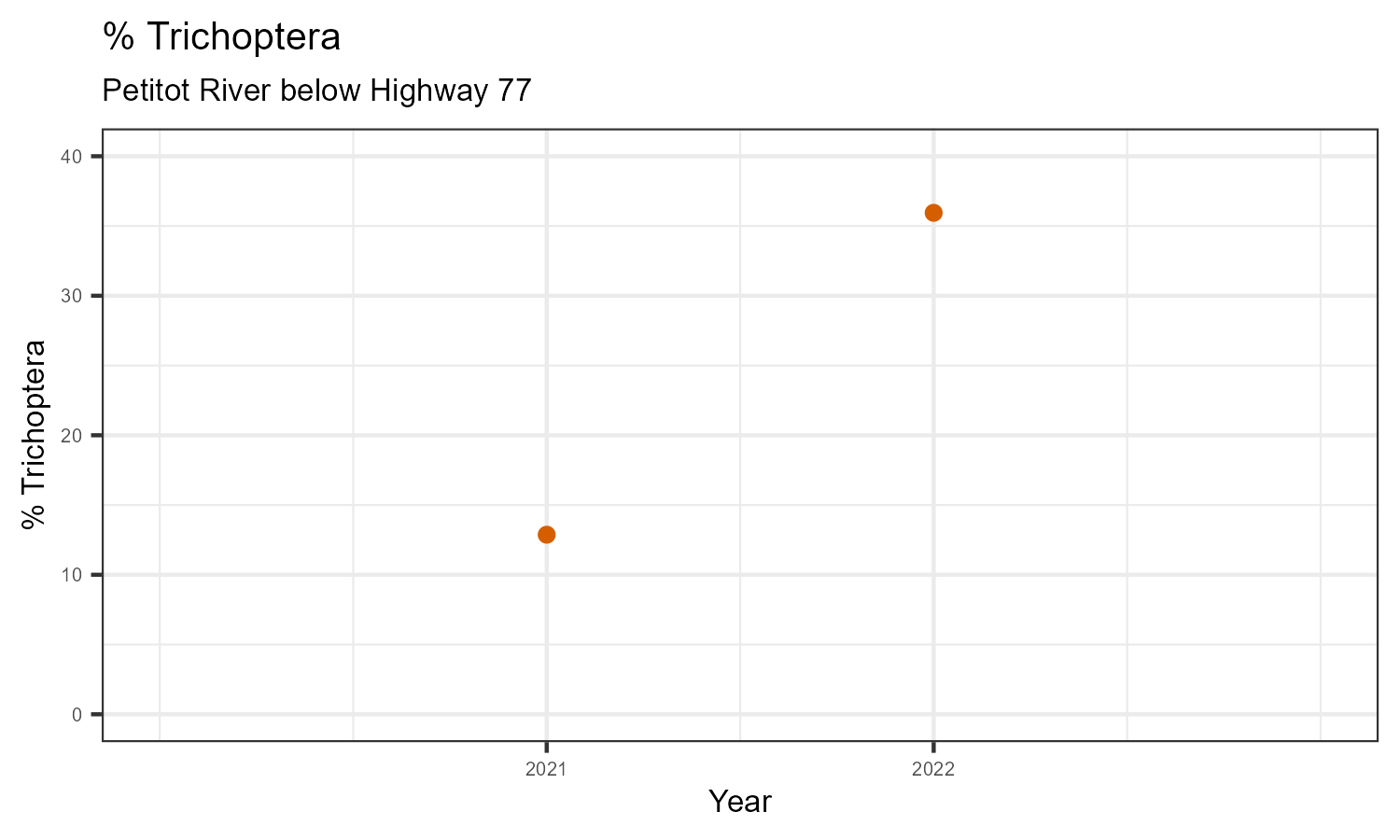
% Trichoptera is the proportion of invertebrates that belong to the taxonomic order Trichoptera. Trichoptera are commonly called caddisflies. They are sensitive to pollution. The % Trichoptera may decrease in response to habitat disturbances like poor water quality.
| 2021 | 2022 | |
|---|---|---|
| Total abundance | 606.00 | 217.00 |
| % EPT | 81.85 | 71.43 |
| % Ephemeroptera | 61.39 | 31.80 |
| % Plecoptera | 7.59 | 3.69 |
| % Trichoptera | 12.87 | 35.94 |
| % Chironomidae | 8.25 | 17.05 |
| % Diptera and non-insects | 15.84 | 21.20 |
| % Filterers | 24.09 | 47.93 |
| % Gatherers | 85.15 | 82.49 |
| % Predators | 47.19 | 77.88 |
| % Scrapers | 83.50 | 78.34 |
| % Shredders | 11.55 | 24.88 |
| Family richness | 21.00 | 19.00 |
| EPT families | 14.00 | 13.00 |
| Ephemeroptera families | 5.00 | 5.00 |
| Plecoptera families | 4.00 | 2.00 |
| Trichoptera families | 5.00 | 6.00 |
| Diptera families | 2.00 | 1.00 |
| Long-Lived family richness | 1.00 | 0.00 |
| Clinger family richness | 14.00 | 12.00 |
| Intolerant family richness | 11.00 | 9.00 |
| % Tolerant family abundance | 2.97 | 3.69 |
| % Top 2 dominant families | 58.00 | 44.24 |
| Simpsons diversity | 0.79 | 0.85 |
| Simpsons evenness | 0.23 | 0.36 |
| Hilsenhoff Biotic Index (NW) | 4.20 | 4.30 |
% EPT
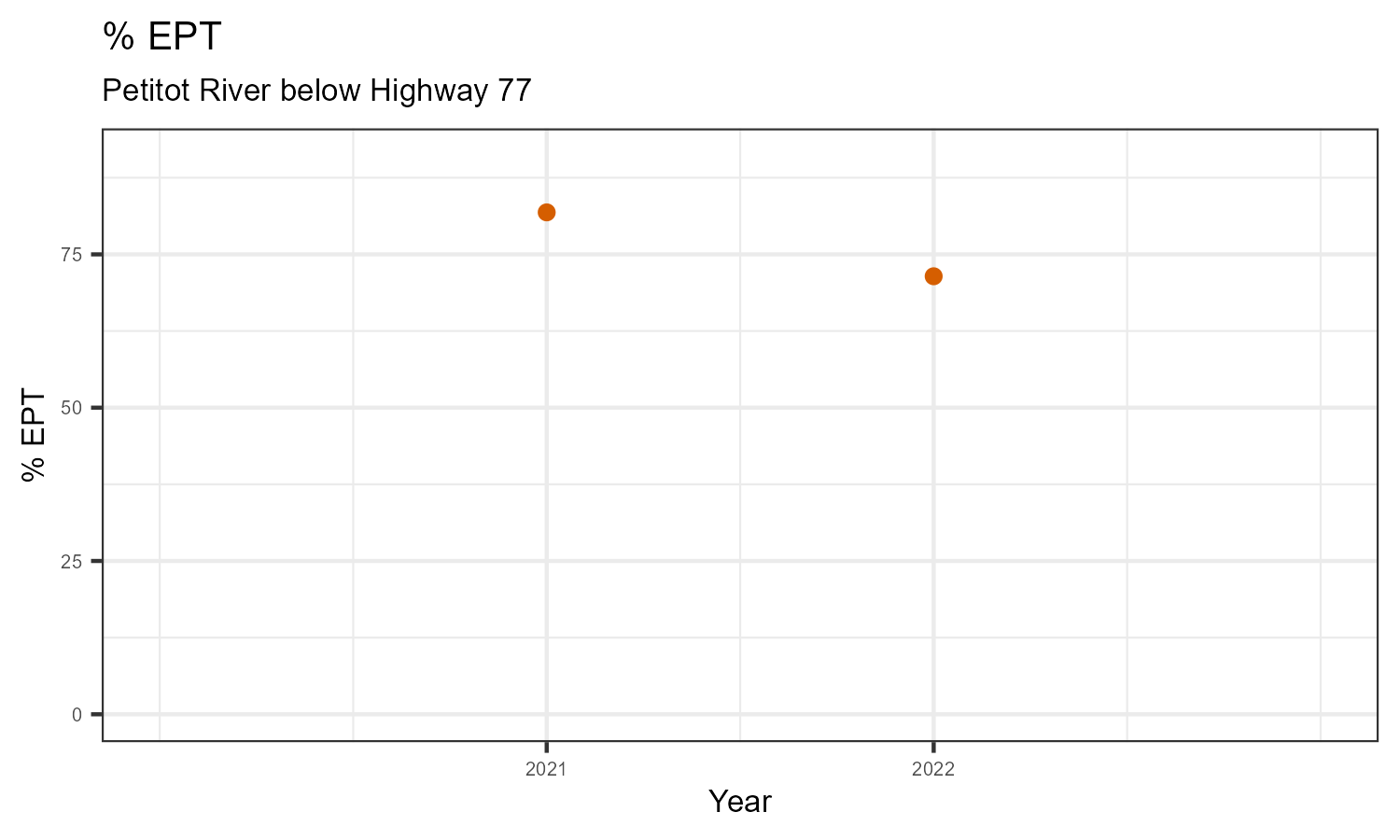
% EPT is the proportion of invertebrates that belong to one of the taxonomic orders of Ephemeroptera (mayflies), Plecoptera (stoneflies), or Trichoptera (caddisflies). These types of insects are often grouped together under the term “EPT”. They are typically the most sensitive to habitat disturbances like poor water quality.
| 2021 | 2022 | |
|---|---|---|
| Total abundance | 606.00 | 217.00 |
| % EPT | 81.85 | 71.43 |
| % Ephemeroptera | 61.39 | 31.80 |
| % Plecoptera | 7.59 | 3.69 |
| % Trichoptera | 12.87 | 35.94 |
| % Chironomidae | 8.25 | 17.05 |
| % Diptera and non-insects | 15.84 | 21.20 |
| % Filterers | 24.09 | 47.93 |
| % Gatherers | 85.15 | 82.49 |
| % Predators | 47.19 | 77.88 |
| % Scrapers | 83.50 | 78.34 |
| % Shredders | 11.55 | 24.88 |
| Family richness | 21.00 | 19.00 |
| EPT families | 14.00 | 13.00 |
| Ephemeroptera families | 5.00 | 5.00 |
| Plecoptera families | 4.00 | 2.00 |
| Trichoptera families | 5.00 | 6.00 |
| Diptera families | 2.00 | 1.00 |
| Long-Lived family richness | 1.00 | 0.00 |
| Clinger family richness | 14.00 | 12.00 |
| Intolerant family richness | 11.00 | 9.00 |
| % Tolerant family abundance | 2.97 | 3.69 |
| % Top 2 dominant families | 58.00 | 44.24 |
| Simpsons diversity | 0.79 | 0.85 |
| Simpsons evenness | 0.23 | 0.36 |
| Hilsenhoff Biotic Index (NW) | 4.20 | 4.30 |
% Chironomidae
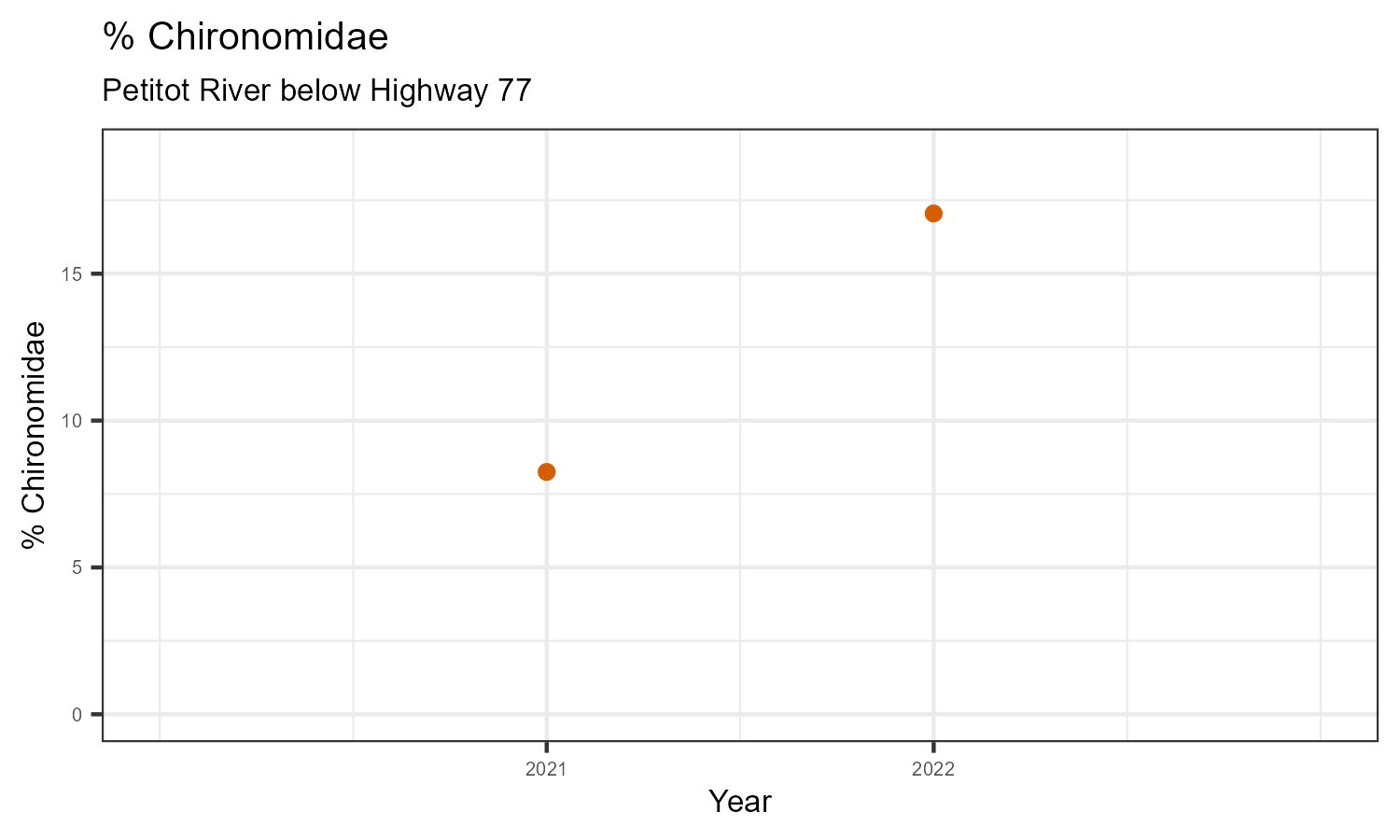
% Chironomidae is the proportion of invertebrates that belong to the taxonomic family Chironomidae. Chironomidae are non-biting midges and are often the most abundant family in a stream. Their pollution tolerance varies widely between different species.
| 2021 | 2022 | |
|---|---|---|
| Total abundance | 606.00 | 217.00 |
| % EPT | 81.85 | 71.43 |
| % Ephemeroptera | 61.39 | 31.80 |
| % Plecoptera | 7.59 | 3.69 |
| % Trichoptera | 12.87 | 35.94 |
| % Chironomidae | 8.25 | 17.05 |
| % Diptera and non-insects | 15.84 | 21.20 |
| % Filterers | 24.09 | 47.93 |
| % Gatherers | 85.15 | 82.49 |
| % Predators | 47.19 | 77.88 |
| % Scrapers | 83.50 | 78.34 |
| % Shredders | 11.55 | 24.88 |
| Family richness | 21.00 | 19.00 |
| EPT families | 14.00 | 13.00 |
| Ephemeroptera families | 5.00 | 5.00 |
| Plecoptera families | 4.00 | 2.00 |
| Trichoptera families | 5.00 | 6.00 |
| Diptera families | 2.00 | 1.00 |
| Long-Lived family richness | 1.00 | 0.00 |
| Clinger family richness | 14.00 | 12.00 |
| Intolerant family richness | 11.00 | 9.00 |
| % Tolerant family abundance | 2.97 | 3.69 |
| % Top 2 dominant families | 58.00 | 44.24 |
| Simpsons diversity | 0.79 | 0.85 |
| Simpsons evenness | 0.23 | 0.36 |
| Hilsenhoff Biotic Index (NW) | 4.20 | 4.30 |
% Diptera and non-insects
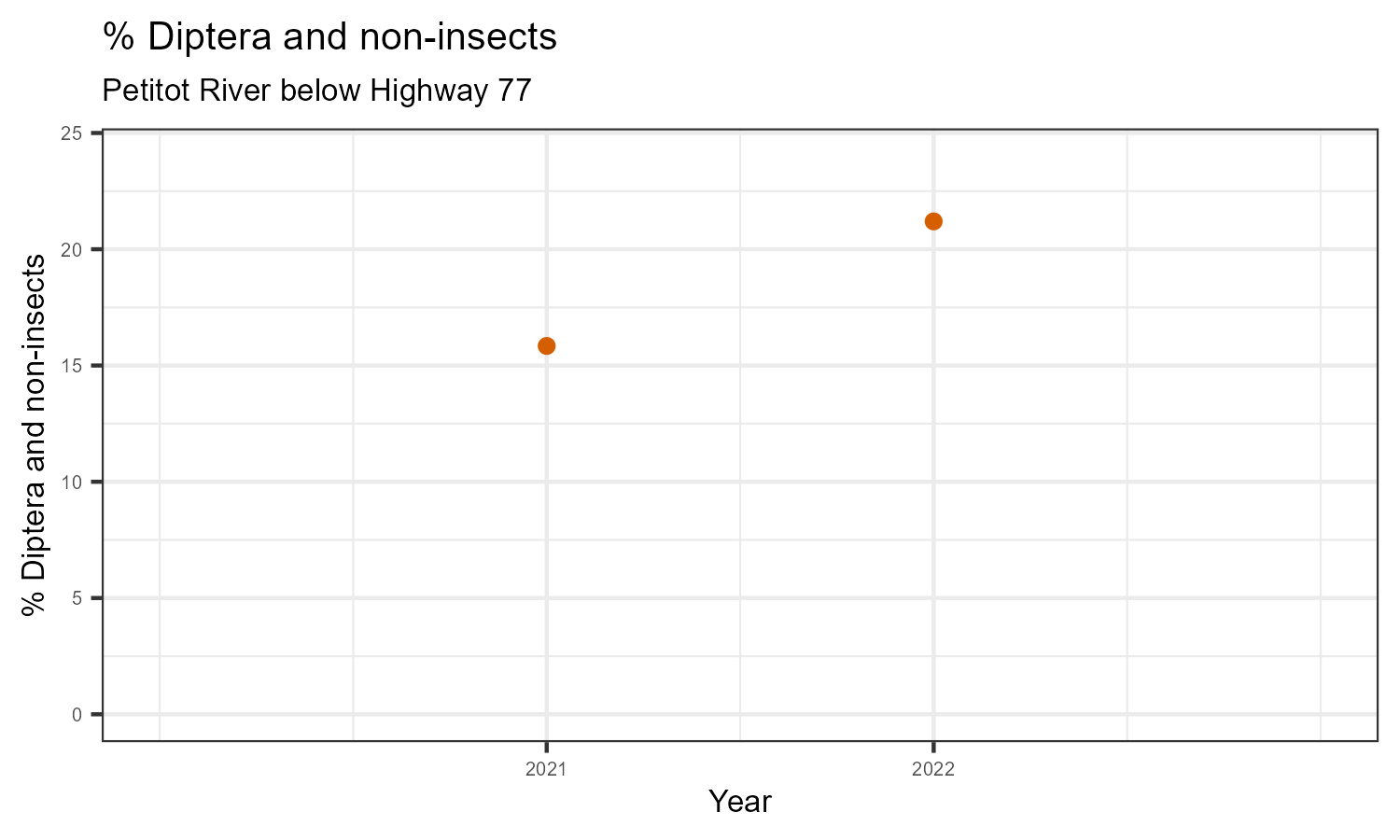
% Diptera and non-insects is the proportion of invertebrates that either are not insects, or are insects in the taxonomic order Diptera. Diptera are flies, and along with non-insects they represent the more pollution tolerant members of the aquatic community. The % Diptera and non-insects may increase in response to habitat disturbances like poor water quality.
| 2021 | 2022 | |
|---|---|---|
| Total abundance | 606.00 | 217.00 |
| % EPT | 81.85 | 71.43 |
| % Ephemeroptera | 61.39 | 31.80 |
| % Plecoptera | 7.59 | 3.69 |
| % Trichoptera | 12.87 | 35.94 |
| % Chironomidae | 8.25 | 17.05 |
| % Diptera and non-insects | 15.84 | 21.20 |
| % Filterers | 24.09 | 47.93 |
| % Gatherers | 85.15 | 82.49 |
| % Predators | 47.19 | 77.88 |
| % Scrapers | 83.50 | 78.34 |
| % Shredders | 11.55 | 24.88 |
| Family richness | 21.00 | 19.00 |
| EPT families | 14.00 | 13.00 |
| Ephemeroptera families | 5.00 | 5.00 |
| Plecoptera families | 4.00 | 2.00 |
| Trichoptera families | 5.00 | 6.00 |
| Diptera families | 2.00 | 1.00 |
| Long-Lived family richness | 1.00 | 0.00 |
| Clinger family richness | 14.00 | 12.00 |
| Intolerant family richness | 11.00 | 9.00 |
| % Tolerant family abundance | 2.97 | 3.69 |
| % Top 2 dominant families | 58.00 | 44.24 |
| Simpsons diversity | 0.79 | 0.85 |
| Simpsons evenness | 0.23 | 0.36 |
| Hilsenhoff Biotic Index (NW) | 4.20 | 4.30 |
% Top 2 dominant families
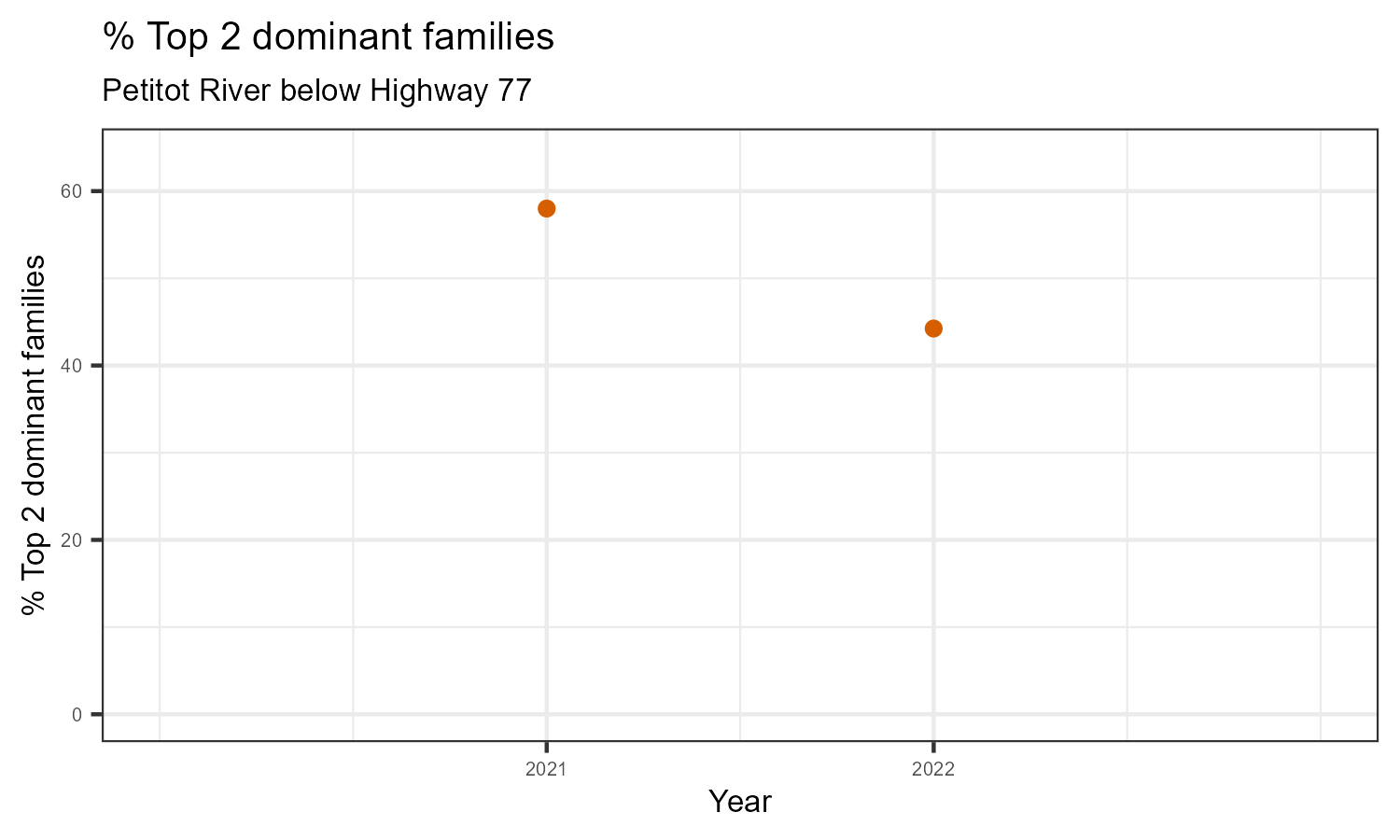
% Top 2 dominant families is the proportion of the total sample represented by the two most abundant families of invertebrates. A healthy aquatic community should have a balance of many types of invertebrates. If only one or two families dominate the community, this can be a sign of habitat disturbance. The percentage of the two most dominant families in the community may increase in response to disturbance.
| 2021 | 2022 | |
|---|---|---|
| Total abundance | 606.00 | 217.00 |
| % EPT | 81.85 | 71.43 |
| % Ephemeroptera | 61.39 | 31.80 |
| % Plecoptera | 7.59 | 3.69 |
| % Trichoptera | 12.87 | 35.94 |
| % Chironomidae | 8.25 | 17.05 |
| % Diptera and non-insects | 15.84 | 21.20 |
| % Filterers | 24.09 | 47.93 |
| % Gatherers | 85.15 | 82.49 |
| % Predators | 47.19 | 77.88 |
| % Scrapers | 83.50 | 78.34 |
| % Shredders | 11.55 | 24.88 |
| Family richness | 21.00 | 19.00 |
| EPT families | 14.00 | 13.00 |
| Ephemeroptera families | 5.00 | 5.00 |
| Plecoptera families | 4.00 | 2.00 |
| Trichoptera families | 5.00 | 6.00 |
| Diptera families | 2.00 | 1.00 |
| Long-Lived family richness | 1.00 | 0.00 |
| Clinger family richness | 14.00 | 12.00 |
| Intolerant family richness | 11.00 | 9.00 |
| % Tolerant family abundance | 2.97 | 3.69 |
| % Top 2 dominant families | 58.00 | 44.24 |
| Simpsons diversity | 0.79 | 0.85 |
| Simpsons evenness | 0.23 | 0.36 |
| Hilsenhoff Biotic Index (NW) | 4.20 | 4.30 |
Richness
Family richness
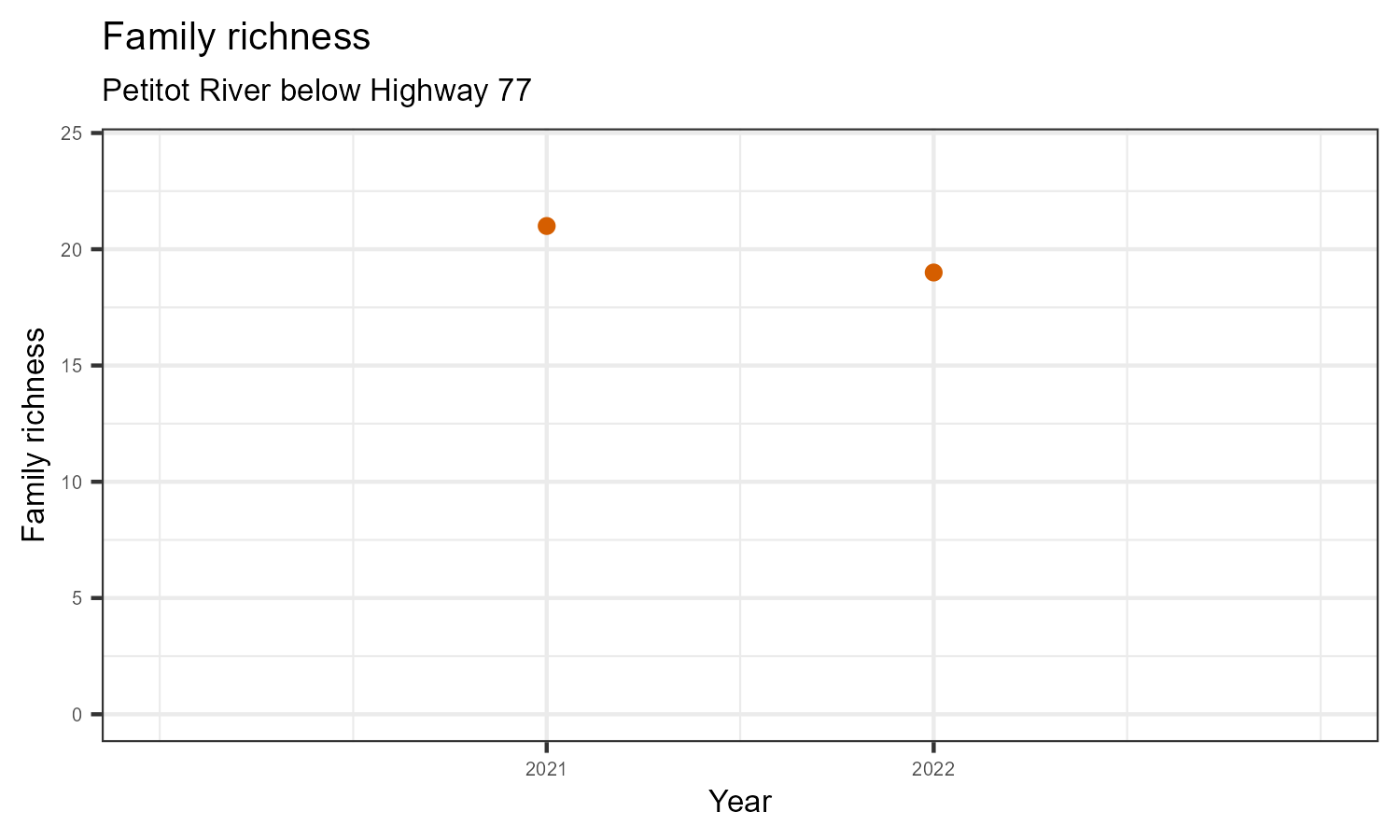
Family richness is the total number of taxonomic families identified. Family richness can decline in response to habitat disturbances or introduction of invasive species.
| 2021 | 2022 | |
|---|---|---|
| Total abundance | 606.00 | 217.00 |
| % EPT | 81.85 | 71.43 |
| % Ephemeroptera | 61.39 | 31.80 |
| % Plecoptera | 7.59 | 3.69 |
| % Trichoptera | 12.87 | 35.94 |
| % Chironomidae | 8.25 | 17.05 |
| % Diptera and non-insects | 15.84 | 21.20 |
| % Filterers | 24.09 | 47.93 |
| % Gatherers | 85.15 | 82.49 |
| % Predators | 47.19 | 77.88 |
| % Scrapers | 83.50 | 78.34 |
| % Shredders | 11.55 | 24.88 |
| Family richness | 21.00 | 19.00 |
| EPT families | 14.00 | 13.00 |
| Ephemeroptera families | 5.00 | 5.00 |
| Plecoptera families | 4.00 | 2.00 |
| Trichoptera families | 5.00 | 6.00 |
| Diptera families | 2.00 | 1.00 |
| Long-Lived family richness | 1.00 | 0.00 |
| Clinger family richness | 14.00 | 12.00 |
| Intolerant family richness | 11.00 | 9.00 |
| % Tolerant family abundance | 2.97 | 3.69 |
| % Top 2 dominant families | 58.00 | 44.24 |
| Simpsons diversity | 0.79 | 0.85 |
| Simpsons evenness | 0.23 | 0.36 |
| Hilsenhoff Biotic Index (NW) | 4.20 | 4.30 |
Ephemeroptera families
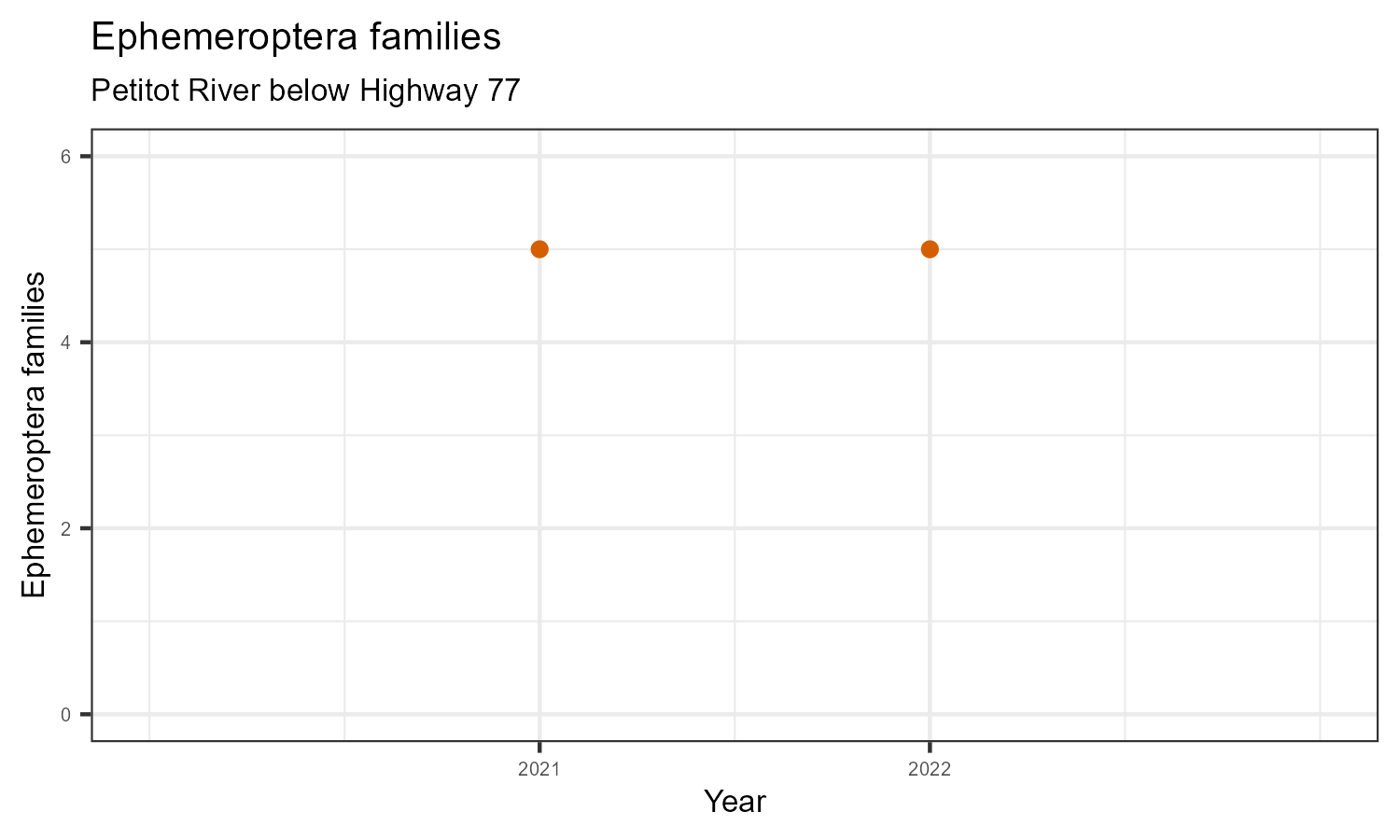
Ephemeroptera family richness is measured by counting how many taxonomic families belong to the order Ephemeroptera. Ephemeroptera are commonly known as mayflies. They are pollution sensitive, so Ephemeroptera family richness may decrease in response to habitat disturbances like poor water quality.
| 2021 | 2022 | |
|---|---|---|
| Total abundance | 606.00 | 217.00 |
| % EPT | 81.85 | 71.43 |
| % Ephemeroptera | 61.39 | 31.80 |
| % Plecoptera | 7.59 | 3.69 |
| % Trichoptera | 12.87 | 35.94 |
| % Chironomidae | 8.25 | 17.05 |
| % Diptera and non-insects | 15.84 | 21.20 |
| % Filterers | 24.09 | 47.93 |
| % Gatherers | 85.15 | 82.49 |
| % Predators | 47.19 | 77.88 |
| % Scrapers | 83.50 | 78.34 |
| % Shredders | 11.55 | 24.88 |
| Family richness | 21.00 | 19.00 |
| EPT families | 14.00 | 13.00 |
| Ephemeroptera families | 5.00 | 5.00 |
| Plecoptera families | 4.00 | 2.00 |
| Trichoptera families | 5.00 | 6.00 |
| Diptera families | 2.00 | 1.00 |
| Long-Lived family richness | 1.00 | 0.00 |
| Clinger family richness | 14.00 | 12.00 |
| Intolerant family richness | 11.00 | 9.00 |
| % Tolerant family abundance | 2.97 | 3.69 |
| % Top 2 dominant families | 58.00 | 44.24 |
| Simpsons diversity | 0.79 | 0.85 |
| Simpsons evenness | 0.23 | 0.36 |
| Hilsenhoff Biotic Index (NW) | 4.20 | 4.30 |
Plecoptera families
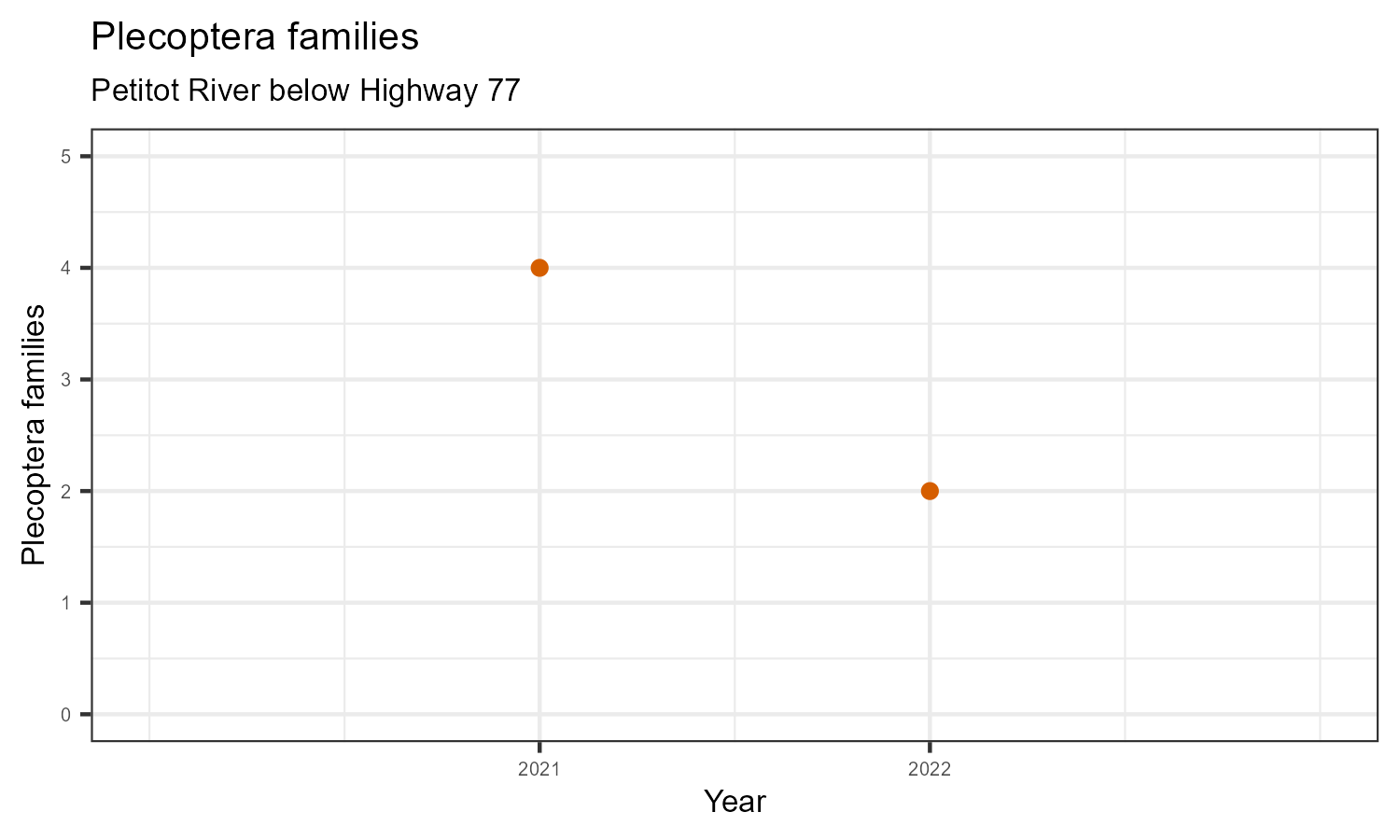
Plecoptera family richness is measured by counting how many taxonomic families in a sample belong to the order Plecoptera. Plecoptera are commonly known as stoneflies. They are pollution sensitive, so Plecoptera family richness may decrease in response to habitat disturbances like poor water quality.
| 2021 | 2022 | |
|---|---|---|
| Total abundance | 606.00 | 217.00 |
| % EPT | 81.85 | 71.43 |
| % Ephemeroptera | 61.39 | 31.80 |
| % Plecoptera | 7.59 | 3.69 |
| % Trichoptera | 12.87 | 35.94 |
| % Chironomidae | 8.25 | 17.05 |
| % Diptera and non-insects | 15.84 | 21.20 |
| % Filterers | 24.09 | 47.93 |
| % Gatherers | 85.15 | 82.49 |
| % Predators | 47.19 | 77.88 |
| % Scrapers | 83.50 | 78.34 |
| % Shredders | 11.55 | 24.88 |
| Family richness | 21.00 | 19.00 |
| EPT families | 14.00 | 13.00 |
| Ephemeroptera families | 5.00 | 5.00 |
| Plecoptera families | 4.00 | 2.00 |
| Trichoptera families | 5.00 | 6.00 |
| Diptera families | 2.00 | 1.00 |
| Long-Lived family richness | 1.00 | 0.00 |
| Clinger family richness | 14.00 | 12.00 |
| Intolerant family richness | 11.00 | 9.00 |
| % Tolerant family abundance | 2.97 | 3.69 |
| % Top 2 dominant families | 58.00 | 44.24 |
| Simpsons diversity | 0.79 | 0.85 |
| Simpsons evenness | 0.23 | 0.36 |
| Hilsenhoff Biotic Index (NW) | 4.20 | 4.30 |
Trichoptera families
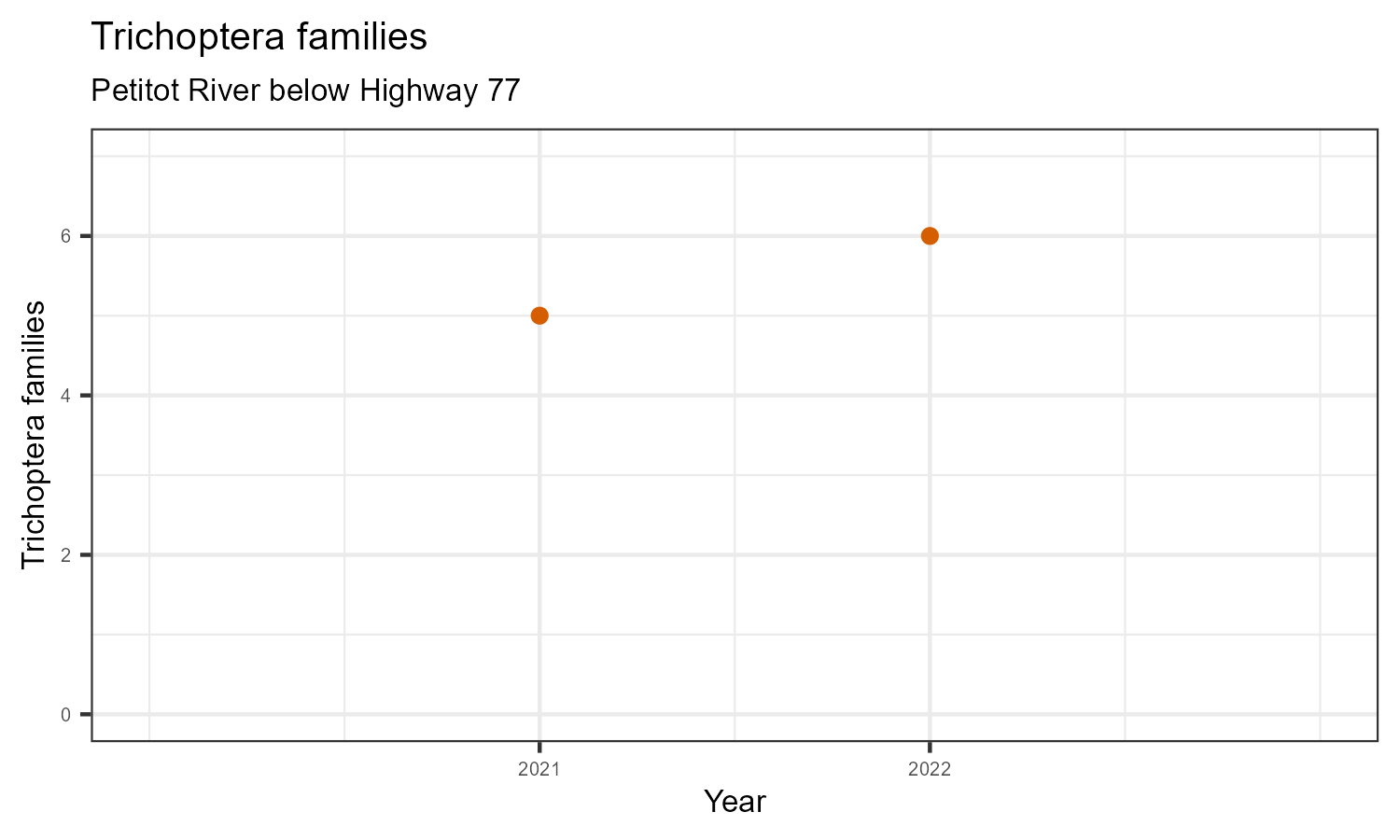
Trichoptera family richness is measured by counting how many taxonomic families in a sample belong to the order Trichoptera. Trichoptera are commonly known as caddisflies. They are pollution sensitive, so Trichoptera family richness may decrease in response to habitat disturbances like poor water quality.
| 2021 | 2022 | |
|---|---|---|
| Total abundance | 606.00 | 217.00 |
| % EPT | 81.85 | 71.43 |
| % Ephemeroptera | 61.39 | 31.80 |
| % Plecoptera | 7.59 | 3.69 |
| % Trichoptera | 12.87 | 35.94 |
| % Chironomidae | 8.25 | 17.05 |
| % Diptera and non-insects | 15.84 | 21.20 |
| % Filterers | 24.09 | 47.93 |
| % Gatherers | 85.15 | 82.49 |
| % Predators | 47.19 | 77.88 |
| % Scrapers | 83.50 | 78.34 |
| % Shredders | 11.55 | 24.88 |
| Family richness | 21.00 | 19.00 |
| EPT families | 14.00 | 13.00 |
| Ephemeroptera families | 5.00 | 5.00 |
| Plecoptera families | 4.00 | 2.00 |
| Trichoptera families | 5.00 | 6.00 |
| Diptera families | 2.00 | 1.00 |
| Long-Lived family richness | 1.00 | 0.00 |
| Clinger family richness | 14.00 | 12.00 |
| Intolerant family richness | 11.00 | 9.00 |
| % Tolerant family abundance | 2.97 | 3.69 |
| % Top 2 dominant families | 58.00 | 44.24 |
| Simpsons diversity | 0.79 | 0.85 |
| Simpsons evenness | 0.23 | 0.36 |
| Hilsenhoff Biotic Index (NW) | 4.20 | 4.30 |
EPT families
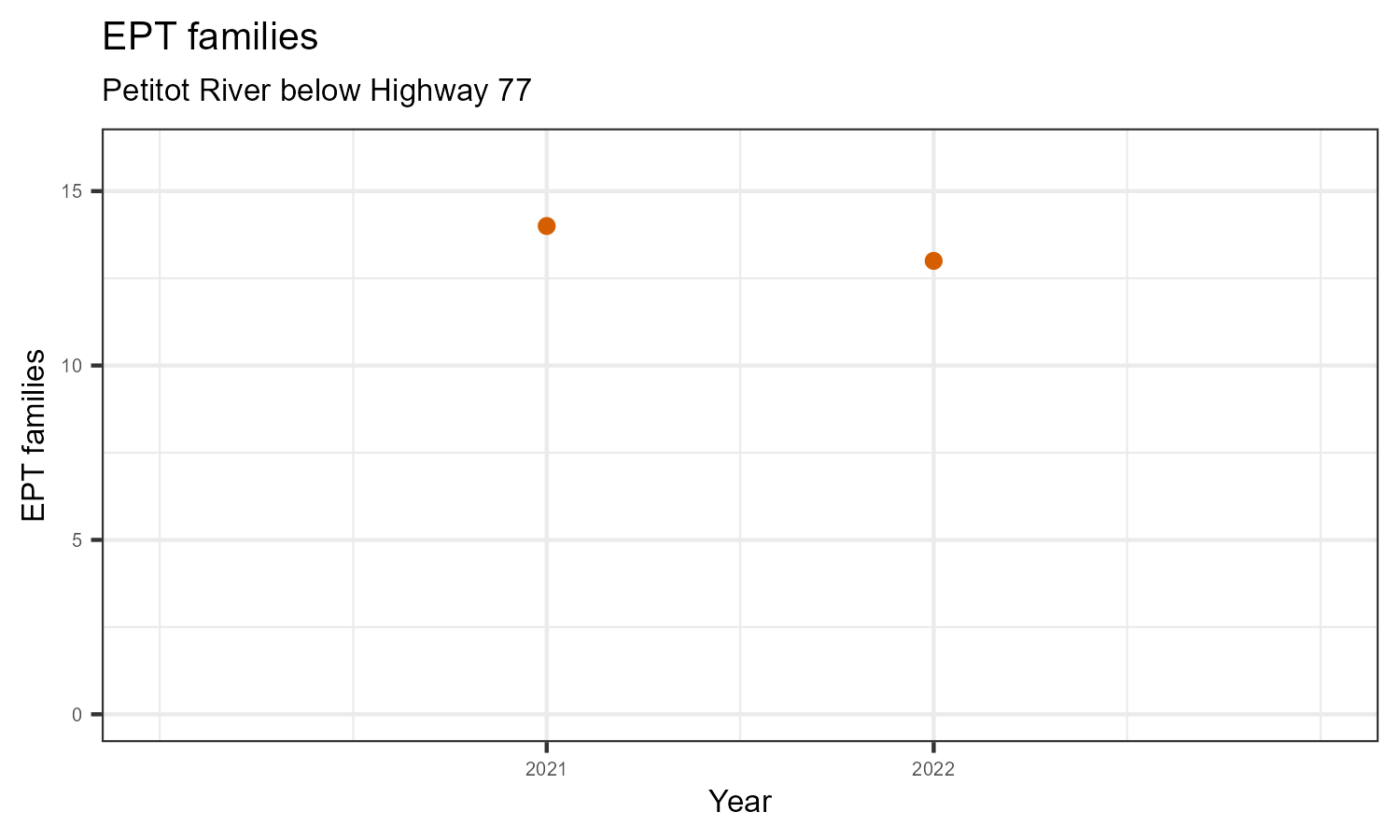
EPT family richness is measured by counting how many taxonomic families belong to one of the pollution sensitive EPT orders: Ephemeroptera (mayflies), Plecoptera (stoneflies), or Trichoptera (caddisflies). EPT family richness may decrease in response to habitat disturbances like poor water quality.
| 2021 | 2022 | |
|---|---|---|
| Total abundance | 606.00 | 217.00 |
| % EPT | 81.85 | 71.43 |
| % Ephemeroptera | 61.39 | 31.80 |
| % Plecoptera | 7.59 | 3.69 |
| % Trichoptera | 12.87 | 35.94 |
| % Chironomidae | 8.25 | 17.05 |
| % Diptera and non-insects | 15.84 | 21.20 |
| % Filterers | 24.09 | 47.93 |
| % Gatherers | 85.15 | 82.49 |
| % Predators | 47.19 | 77.88 |
| % Scrapers | 83.50 | 78.34 |
| % Shredders | 11.55 | 24.88 |
| Family richness | 21.00 | 19.00 |
| EPT families | 14.00 | 13.00 |
| Ephemeroptera families | 5.00 | 5.00 |
| Plecoptera families | 4.00 | 2.00 |
| Trichoptera families | 5.00 | 6.00 |
| Diptera families | 2.00 | 1.00 |
| Long-Lived family richness | 1.00 | 0.00 |
| Clinger family richness | 14.00 | 12.00 |
| Intolerant family richness | 11.00 | 9.00 |
| % Tolerant family abundance | 2.97 | 3.69 |
| % Top 2 dominant families | 58.00 | 44.24 |
| Simpsons diversity | 0.79 | 0.85 |
| Simpsons evenness | 0.23 | 0.36 |
| Hilsenhoff Biotic Index (NW) | 4.20 | 4.30 |
Diptera families
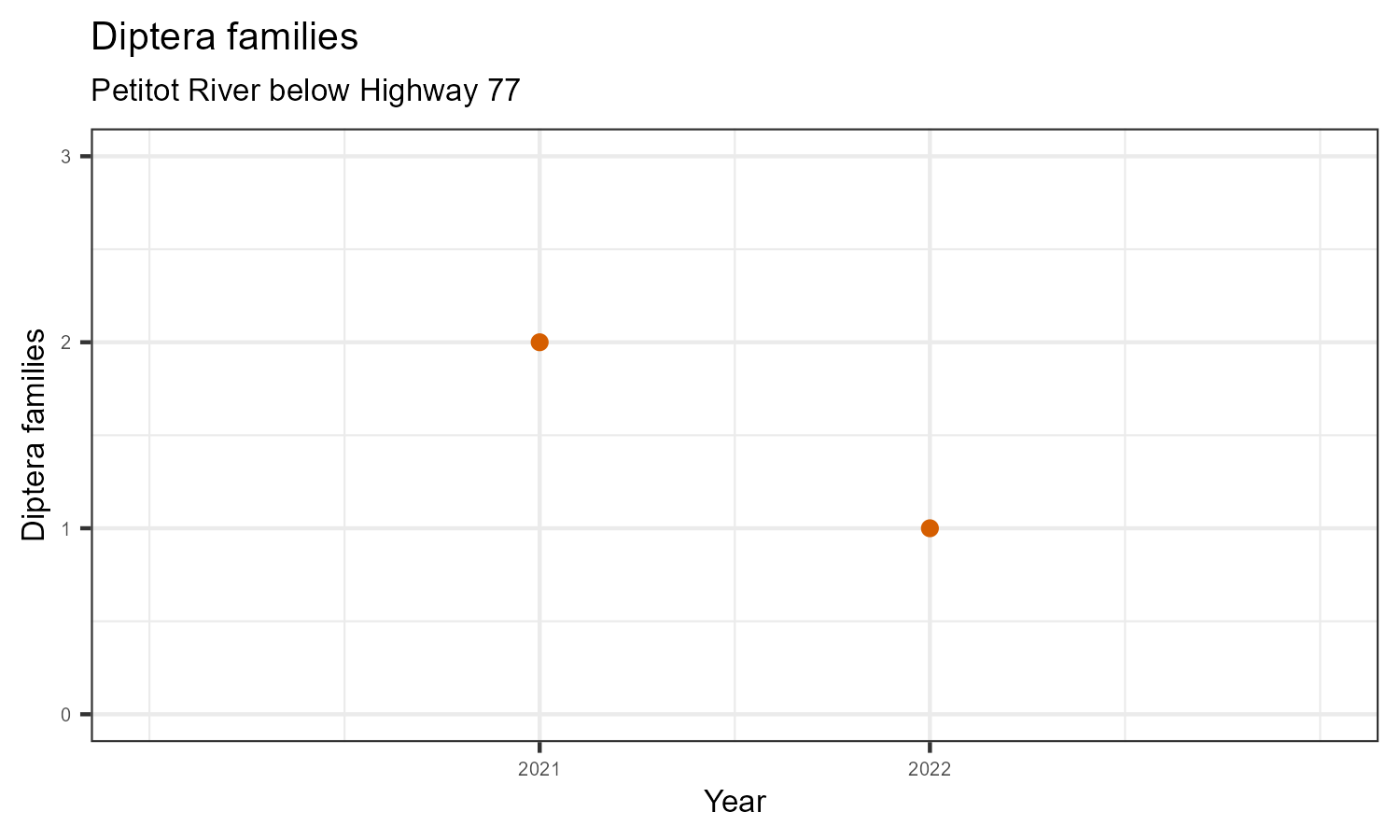
Diptera family richness is measured by counting how many taxonomic families belong to the order Diptera. Diptera are commonly known as flies. Flies tend to be pollution tolerant, so Diptera family richness may increase in response to habitat disturbances like poor water quality.
| 2021 | 2022 | |
|---|---|---|
| Total abundance | 606.00 | 217.00 |
| % EPT | 81.85 | 71.43 |
| % Ephemeroptera | 61.39 | 31.80 |
| % Plecoptera | 7.59 | 3.69 |
| % Trichoptera | 12.87 | 35.94 |
| % Chironomidae | 8.25 | 17.05 |
| % Diptera and non-insects | 15.84 | 21.20 |
| % Filterers | 24.09 | 47.93 |
| % Gatherers | 85.15 | 82.49 |
| % Predators | 47.19 | 77.88 |
| % Scrapers | 83.50 | 78.34 |
| % Shredders | 11.55 | 24.88 |
| Family richness | 21.00 | 19.00 |
| EPT families | 14.00 | 13.00 |
| Ephemeroptera families | 5.00 | 5.00 |
| Plecoptera families | 4.00 | 2.00 |
| Trichoptera families | 5.00 | 6.00 |
| Diptera families | 2.00 | 1.00 |
| Long-Lived family richness | 1.00 | 0.00 |
| Clinger family richness | 14.00 | 12.00 |
| Intolerant family richness | 11.00 | 9.00 |
| % Tolerant family abundance | 2.97 | 3.69 |
| % Top 2 dominant families | 58.00 | 44.24 |
| Simpsons diversity | 0.79 | 0.85 |
| Simpsons evenness | 0.23 | 0.36 |
| Hilsenhoff Biotic Index (NW) | 4.20 | 4.30 |
Long-Lived family richness
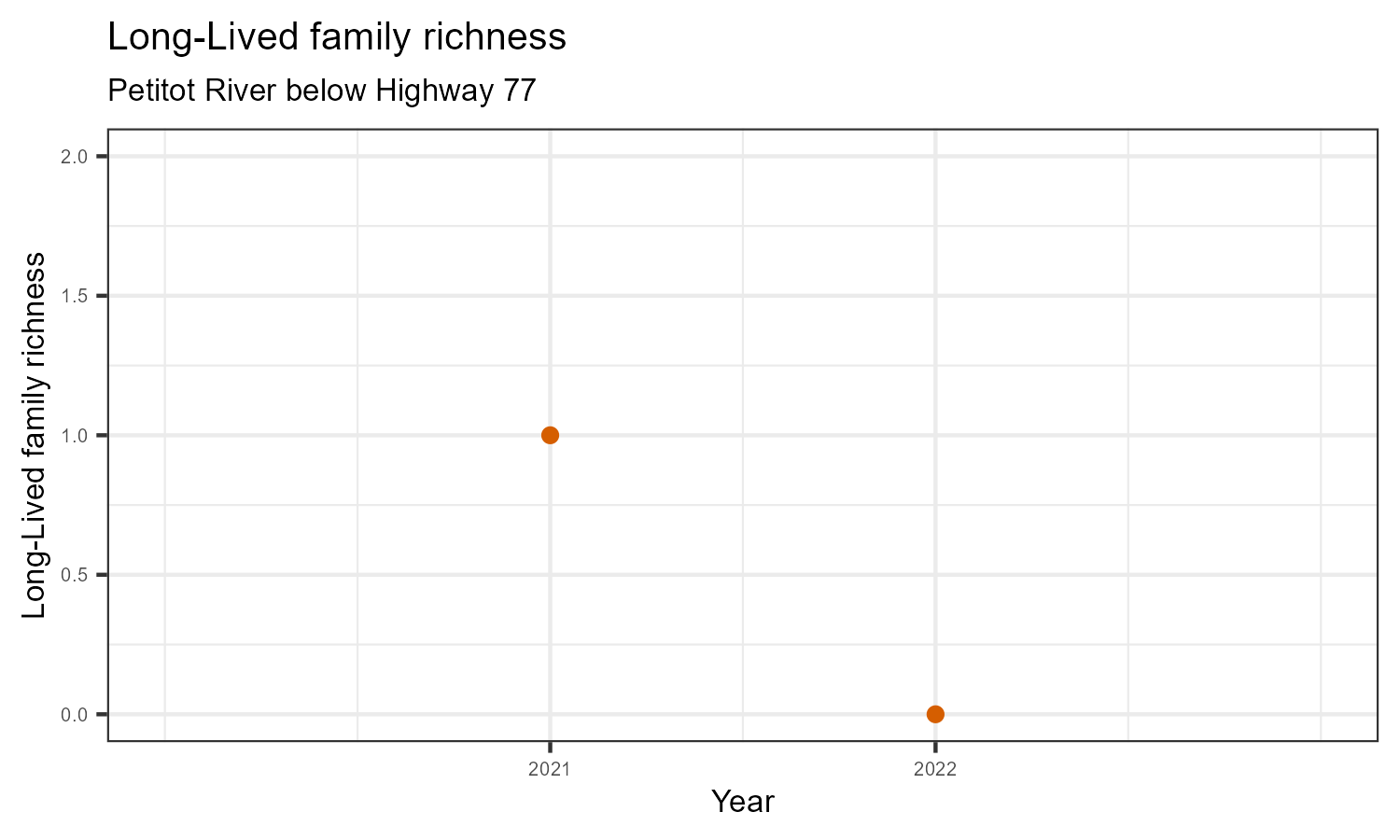
Long-lived family richness counts the number of taxonomic families that need more than 1 year to complete their life cycle. These families have been exposed to conditions in the water over a longer period. They provide information on historical and current water quality conditions. The number of long-lived families may decrease in response to habitat disturbances like poor water quality.
| 2021 | 2022 | |
|---|---|---|
| Total abundance | 606.00 | 217.00 |
| % EPT | 81.85 | 71.43 |
| % Ephemeroptera | 61.39 | 31.80 |
| % Plecoptera | 7.59 | 3.69 |
| % Trichoptera | 12.87 | 35.94 |
| % Chironomidae | 8.25 | 17.05 |
| % Diptera and non-insects | 15.84 | 21.20 |
| % Filterers | 24.09 | 47.93 |
| % Gatherers | 85.15 | 82.49 |
| % Predators | 47.19 | 77.88 |
| % Scrapers | 83.50 | 78.34 |
| % Shredders | 11.55 | 24.88 |
| Family richness | 21.00 | 19.00 |
| EPT families | 14.00 | 13.00 |
| Ephemeroptera families | 5.00 | 5.00 |
| Plecoptera families | 4.00 | 2.00 |
| Trichoptera families | 5.00 | 6.00 |
| Diptera families | 2.00 | 1.00 |
| Long-Lived family richness | 1.00 | 0.00 |
| Clinger family richness | 14.00 | 12.00 |
| Intolerant family richness | 11.00 | 9.00 |
| % Tolerant family abundance | 2.97 | 3.69 |
| % Top 2 dominant families | 58.00 | 44.24 |
| Simpsons diversity | 0.79 | 0.85 |
| Simpsons evenness | 0.23 | 0.36 |
| Hilsenhoff Biotic Index (NW) | 4.20 | 4.30 |
Simpsons diversity
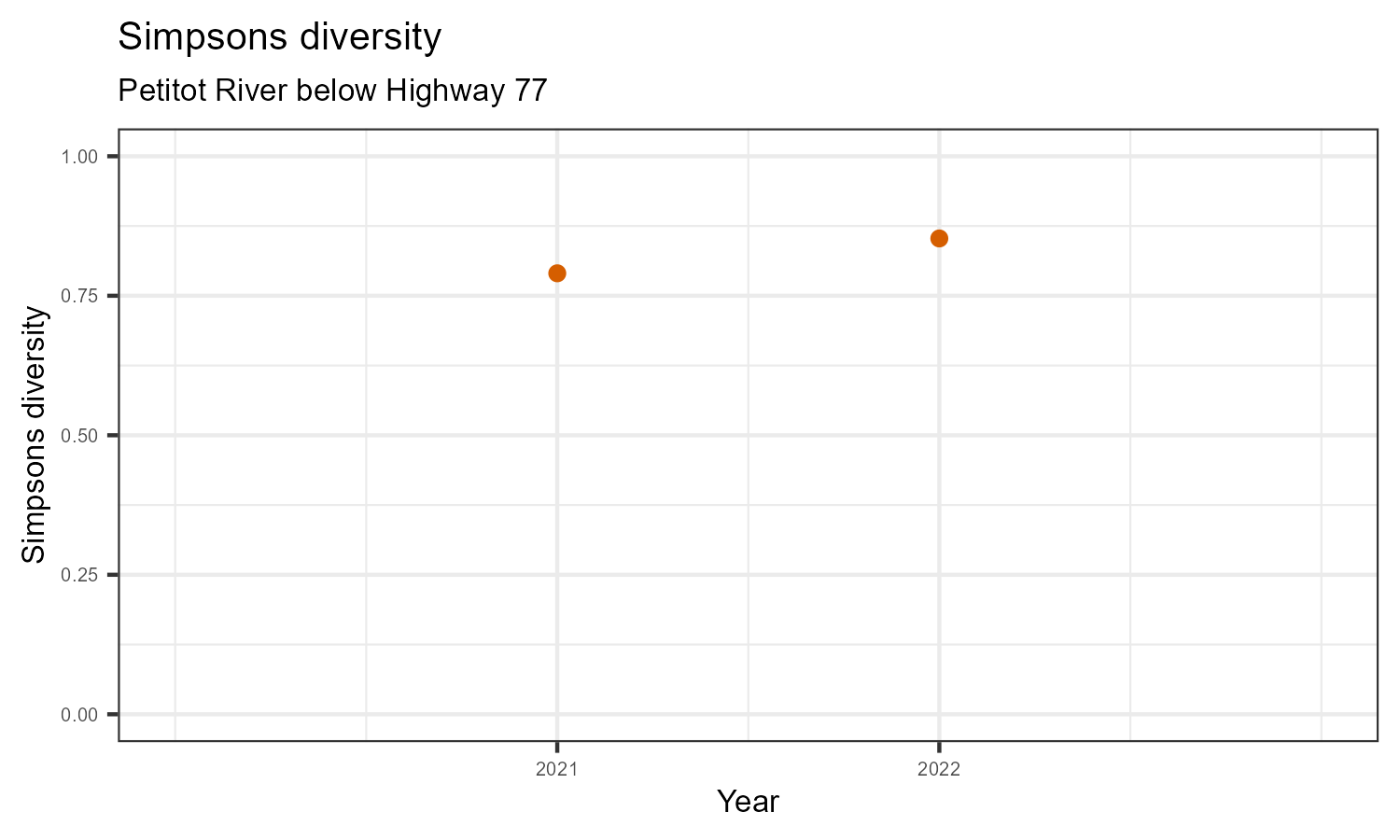
Simpson’s diversity is an index that measures the number of taxonomic families present as well as the relative number of individuals in each family. Simpson’s diversity increases as invertebrate family richness increases. It also increases when the families show similar, or balanced, abundance. Balanced, diverse communities are an indicator of a healthy ecosystem. Simpson’s diversity may decrease in response to habitat disturbance.
| 2021 | 2022 | |
|---|---|---|
| Total abundance | 606.00 | 217.00 |
| % EPT | 81.85 | 71.43 |
| % Ephemeroptera | 61.39 | 31.80 |
| % Plecoptera | 7.59 | 3.69 |
| % Trichoptera | 12.87 | 35.94 |
| % Chironomidae | 8.25 | 17.05 |
| % Diptera and non-insects | 15.84 | 21.20 |
| % Filterers | 24.09 | 47.93 |
| % Gatherers | 85.15 | 82.49 |
| % Predators | 47.19 | 77.88 |
| % Scrapers | 83.50 | 78.34 |
| % Shredders | 11.55 | 24.88 |
| Family richness | 21.00 | 19.00 |
| EPT families | 14.00 | 13.00 |
| Ephemeroptera families | 5.00 | 5.00 |
| Plecoptera families | 4.00 | 2.00 |
| Trichoptera families | 5.00 | 6.00 |
| Diptera families | 2.00 | 1.00 |
| Long-Lived family richness | 1.00 | 0.00 |
| Clinger family richness | 14.00 | 12.00 |
| Intolerant family richness | 11.00 | 9.00 |
| % Tolerant family abundance | 2.97 | 3.69 |
| % Top 2 dominant families | 58.00 | 44.24 |
| Simpsons diversity | 0.79 | 0.85 |
| Simpsons evenness | 0.23 | 0.36 |
| Hilsenhoff Biotic Index (NW) | 4.20 | 4.30 |
Simpsons evenness
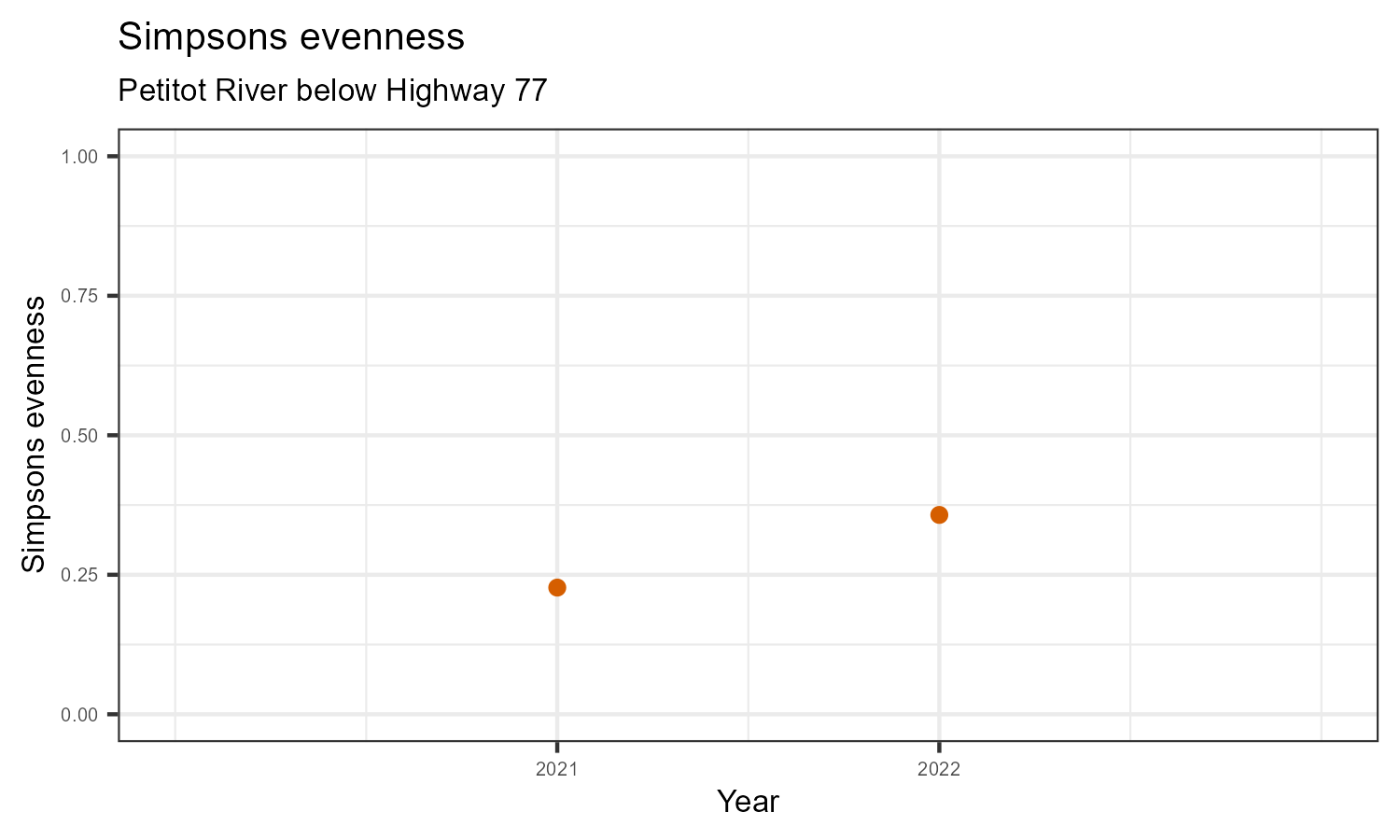
Simpson’s evenness is an index that measures whether the number of individuals in various taxonomic families is similar, or balanced. Balanced communities are an indicator of a healthy ecosystem. Simpson’s evenness may decrease in response to habitat disturbances.
| 2021 | 2022 | |
|---|---|---|
| Total abundance | 606.00 | 217.00 |
| % EPT | 81.85 | 71.43 |
| % Ephemeroptera | 61.39 | 31.80 |
| % Plecoptera | 7.59 | 3.69 |
| % Trichoptera | 12.87 | 35.94 |
| % Chironomidae | 8.25 | 17.05 |
| % Diptera and non-insects | 15.84 | 21.20 |
| % Filterers | 24.09 | 47.93 |
| % Gatherers | 85.15 | 82.49 |
| % Predators | 47.19 | 77.88 |
| % Scrapers | 83.50 | 78.34 |
| % Shredders | 11.55 | 24.88 |
| Family richness | 21.00 | 19.00 |
| EPT families | 14.00 | 13.00 |
| Ephemeroptera families | 5.00 | 5.00 |
| Plecoptera families | 4.00 | 2.00 |
| Trichoptera families | 5.00 | 6.00 |
| Diptera families | 2.00 | 1.00 |
| Long-Lived family richness | 1.00 | 0.00 |
| Clinger family richness | 14.00 | 12.00 |
| Intolerant family richness | 11.00 | 9.00 |
| % Tolerant family abundance | 2.97 | 3.69 |
| % Top 2 dominant families | 58.00 | 44.24 |
| Simpsons diversity | 0.79 | 0.85 |
| Simpsons evenness | 0.23 | 0.36 |
| Hilsenhoff Biotic Index (NW) | 4.20 | 4.30 |
Functional Group
% Filterers
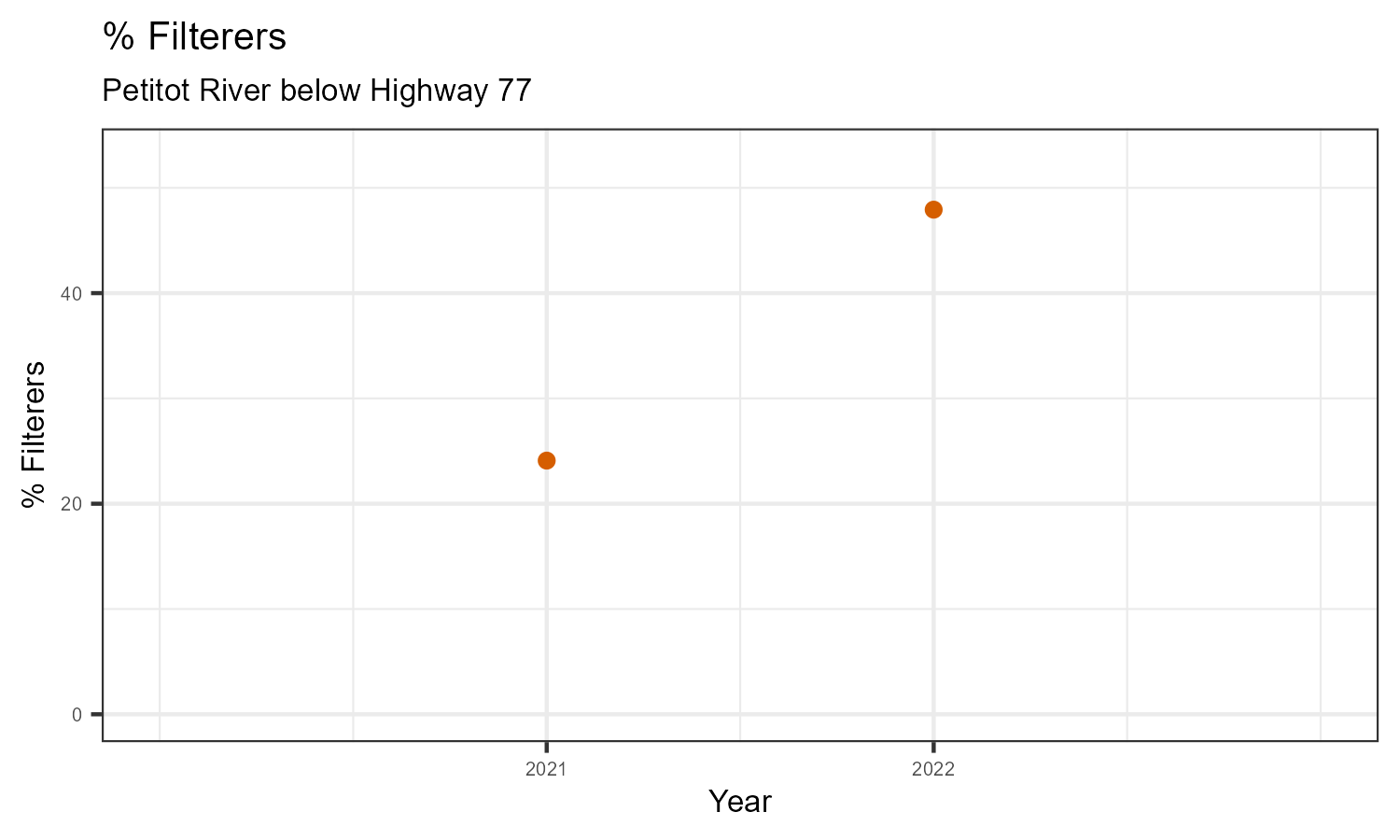
% Filterers is the proportion of taxonomic familes present that feed by collecting fine, floating organic material from the water column. The proportion of filterers is expected to increase at a site in response to disturbance.
| 2021 | 2022 | |
|---|---|---|
| Total abundance | 606.00 | 217.00 |
| % EPT | 81.85 | 71.43 |
| % Ephemeroptera | 61.39 | 31.80 |
| % Plecoptera | 7.59 | 3.69 |
| % Trichoptera | 12.87 | 35.94 |
| % Chironomidae | 8.25 | 17.05 |
| % Diptera and non-insects | 15.84 | 21.20 |
| % Filterers | 24.09 | 47.93 |
| % Gatherers | 85.15 | 82.49 |
| % Predators | 47.19 | 77.88 |
| % Scrapers | 83.50 | 78.34 |
| % Shredders | 11.55 | 24.88 |
| Family richness | 21.00 | 19.00 |
| EPT families | 14.00 | 13.00 |
| Ephemeroptera families | 5.00 | 5.00 |
| Plecoptera families | 4.00 | 2.00 |
| Trichoptera families | 5.00 | 6.00 |
| Diptera families | 2.00 | 1.00 |
| Long-Lived family richness | 1.00 | 0.00 |
| Clinger family richness | 14.00 | 12.00 |
| Intolerant family richness | 11.00 | 9.00 |
| % Tolerant family abundance | 2.97 | 3.69 |
| % Top 2 dominant families | 58.00 | 44.24 |
| Simpsons diversity | 0.79 | 0.85 |
| Simpsons evenness | 0.23 | 0.36 |
| Hilsenhoff Biotic Index (NW) | 4.20 | 4.30 |
% Gatherers
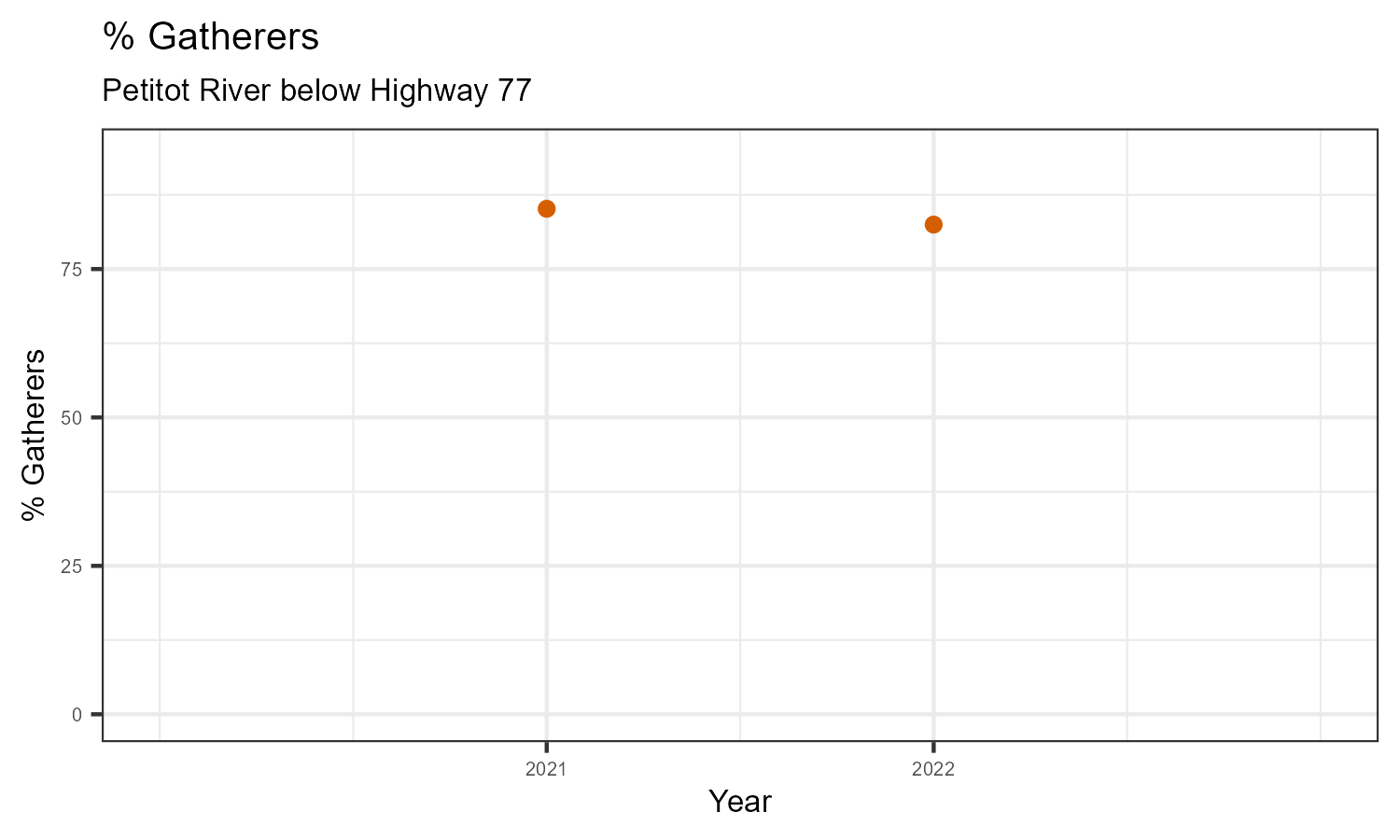
% Gatherers is the proportion of taxonomic familes present that feed primarily on fine organic matter in the water. The proportion of gatherers is expected to increase at a site in response to disturbance.
| 2021 | 2022 | |
|---|---|---|
| Total abundance | 606.00 | 217.00 |
| % EPT | 81.85 | 71.43 |
| % Ephemeroptera | 61.39 | 31.80 |
| % Plecoptera | 7.59 | 3.69 |
| % Trichoptera | 12.87 | 35.94 |
| % Chironomidae | 8.25 | 17.05 |
| % Diptera and non-insects | 15.84 | 21.20 |
| % Filterers | 24.09 | 47.93 |
| % Gatherers | 85.15 | 82.49 |
| % Predators | 47.19 | 77.88 |
| % Scrapers | 83.50 | 78.34 |
| % Shredders | 11.55 | 24.88 |
| Family richness | 21.00 | 19.00 |
| EPT families | 14.00 | 13.00 |
| Ephemeroptera families | 5.00 | 5.00 |
| Plecoptera families | 4.00 | 2.00 |
| Trichoptera families | 5.00 | 6.00 |
| Diptera families | 2.00 | 1.00 |
| Long-Lived family richness | 1.00 | 0.00 |
| Clinger family richness | 14.00 | 12.00 |
| Intolerant family richness | 11.00 | 9.00 |
| % Tolerant family abundance | 2.97 | 3.69 |
| % Top 2 dominant families | 58.00 | 44.24 |
| Simpsons diversity | 0.79 | 0.85 |
| Simpsons evenness | 0.23 | 0.36 |
| Hilsenhoff Biotic Index (NW) | 4.20 | 4.30 |
% Predators
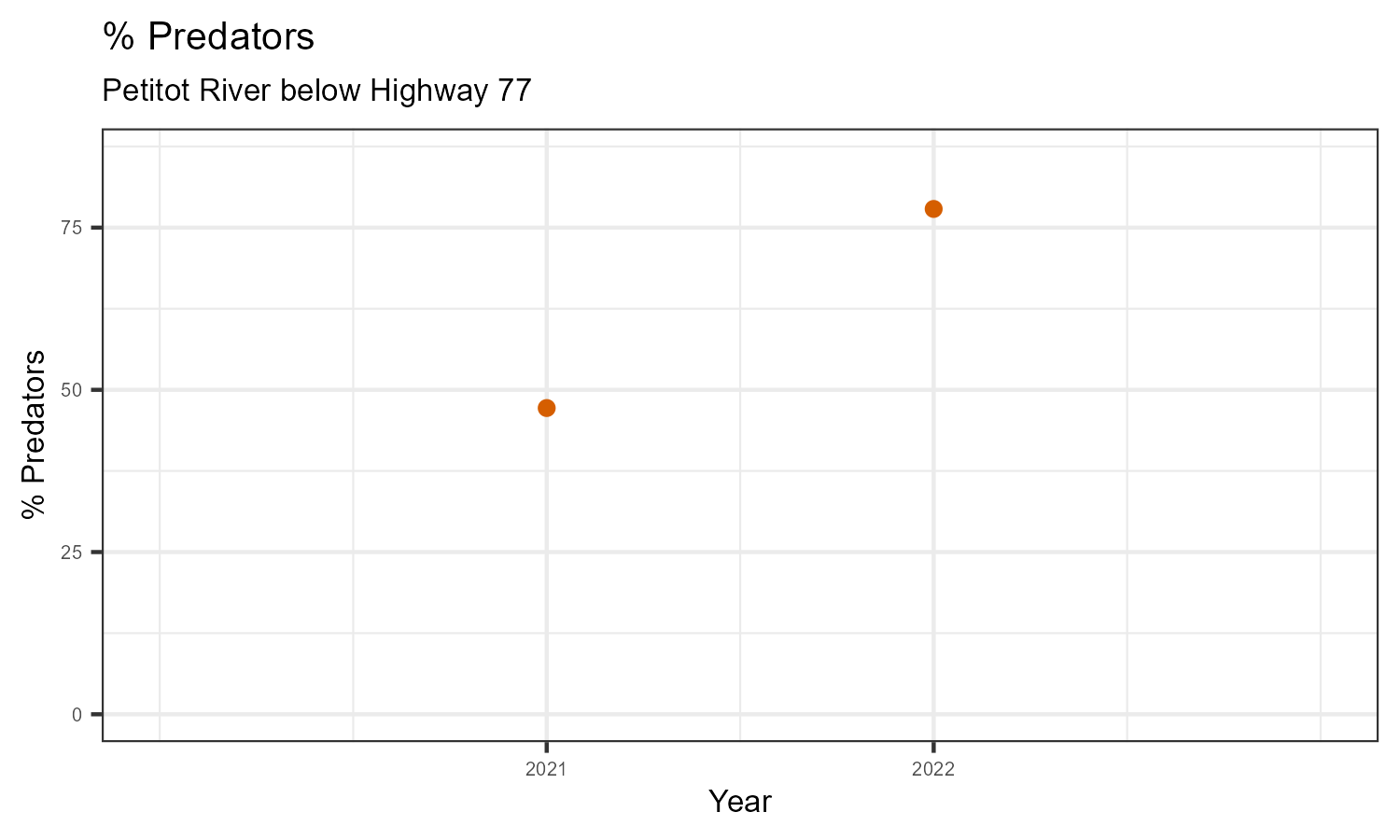
% Predators is the proportion of taxonomic familes present that feed primarily on other organisms. The proportion of predators is expected to decline at a site in response to disturbance.
| 2021 | 2022 | |
|---|---|---|
| Total abundance | 606.00 | 217.00 |
| % EPT | 81.85 | 71.43 |
| % Ephemeroptera | 61.39 | 31.80 |
| % Plecoptera | 7.59 | 3.69 |
| % Trichoptera | 12.87 | 35.94 |
| % Chironomidae | 8.25 | 17.05 |
| % Diptera and non-insects | 15.84 | 21.20 |
| % Filterers | 24.09 | 47.93 |
| % Gatherers | 85.15 | 82.49 |
| % Predators | 47.19 | 77.88 |
| % Scrapers | 83.50 | 78.34 |
| % Shredders | 11.55 | 24.88 |
| Family richness | 21.00 | 19.00 |
| EPT families | 14.00 | 13.00 |
| Ephemeroptera families | 5.00 | 5.00 |
| Plecoptera families | 4.00 | 2.00 |
| Trichoptera families | 5.00 | 6.00 |
| Diptera families | 2.00 | 1.00 |
| Long-Lived family richness | 1.00 | 0.00 |
| Clinger family richness | 14.00 | 12.00 |
| Intolerant family richness | 11.00 | 9.00 |
| % Tolerant family abundance | 2.97 | 3.69 |
| % Top 2 dominant families | 58.00 | 44.24 |
| Simpsons diversity | 0.79 | 0.85 |
| Simpsons evenness | 0.23 | 0.36 |
| Hilsenhoff Biotic Index (NW) | 4.20 | 4.30 |
% Scrapers
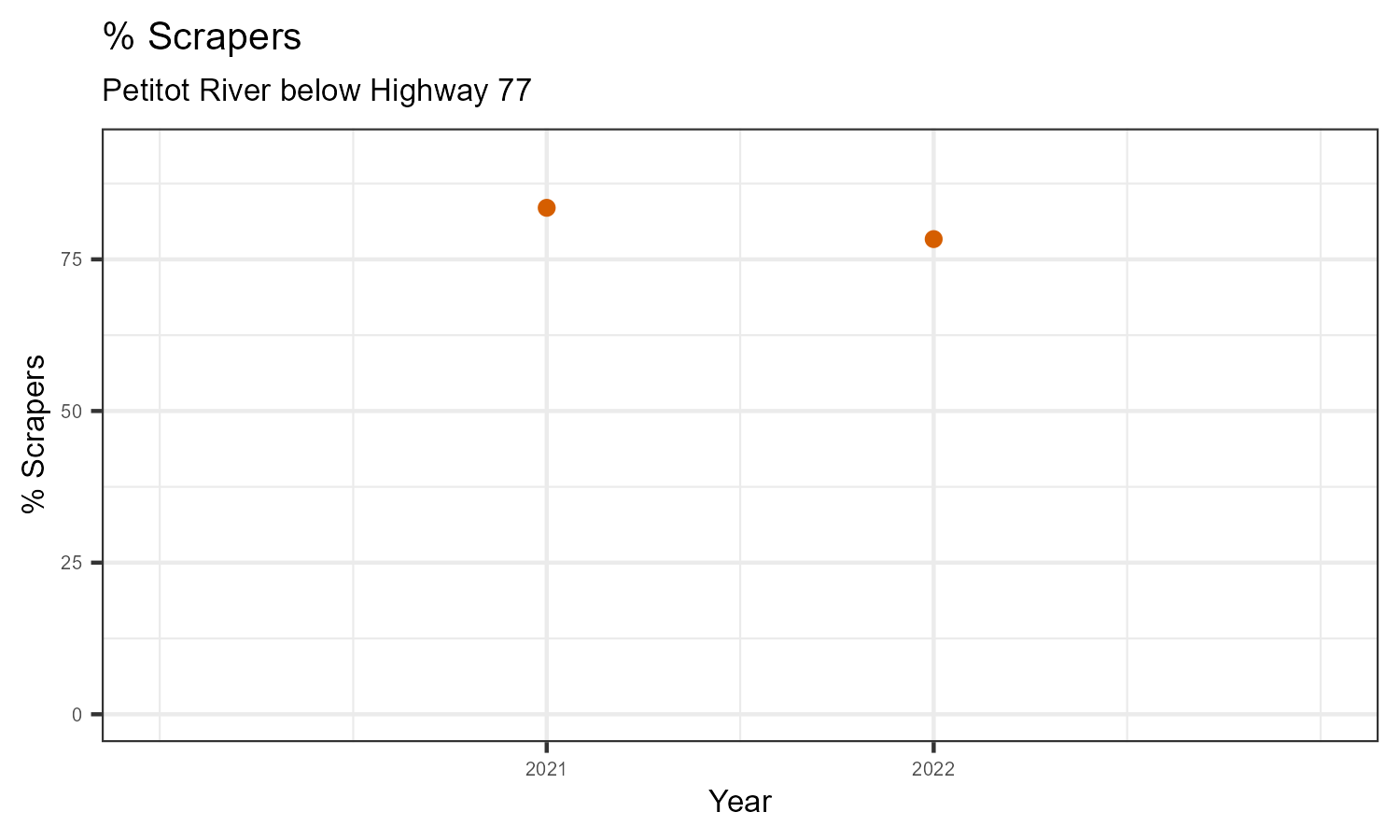
% Scrapers is the proportion of taxonomic familes present that feed by grazing on the algae growing on rocks and other underwater surfaces. The proportion of scrapers is expected to decrease at a site in response to disturbance.
| 2021 | 2022 | |
|---|---|---|
| Total abundance | 606.00 | 217.00 |
| % EPT | 81.85 | 71.43 |
| % Ephemeroptera | 61.39 | 31.80 |
| % Plecoptera | 7.59 | 3.69 |
| % Trichoptera | 12.87 | 35.94 |
| % Chironomidae | 8.25 | 17.05 |
| % Diptera and non-insects | 15.84 | 21.20 |
| % Filterers | 24.09 | 47.93 |
| % Gatherers | 85.15 | 82.49 |
| % Predators | 47.19 | 77.88 |
| % Scrapers | 83.50 | 78.34 |
| % Shredders | 11.55 | 24.88 |
| Family richness | 21.00 | 19.00 |
| EPT families | 14.00 | 13.00 |
| Ephemeroptera families | 5.00 | 5.00 |
| Plecoptera families | 4.00 | 2.00 |
| Trichoptera families | 5.00 | 6.00 |
| Diptera families | 2.00 | 1.00 |
| Long-Lived family richness | 1.00 | 0.00 |
| Clinger family richness | 14.00 | 12.00 |
| Intolerant family richness | 11.00 | 9.00 |
| % Tolerant family abundance | 2.97 | 3.69 |
| % Top 2 dominant families | 58.00 | 44.24 |
| Simpsons diversity | 0.79 | 0.85 |
| Simpsons evenness | 0.23 | 0.36 |
| Hilsenhoff Biotic Index (NW) | 4.20 | 4.30 |
% Shredders
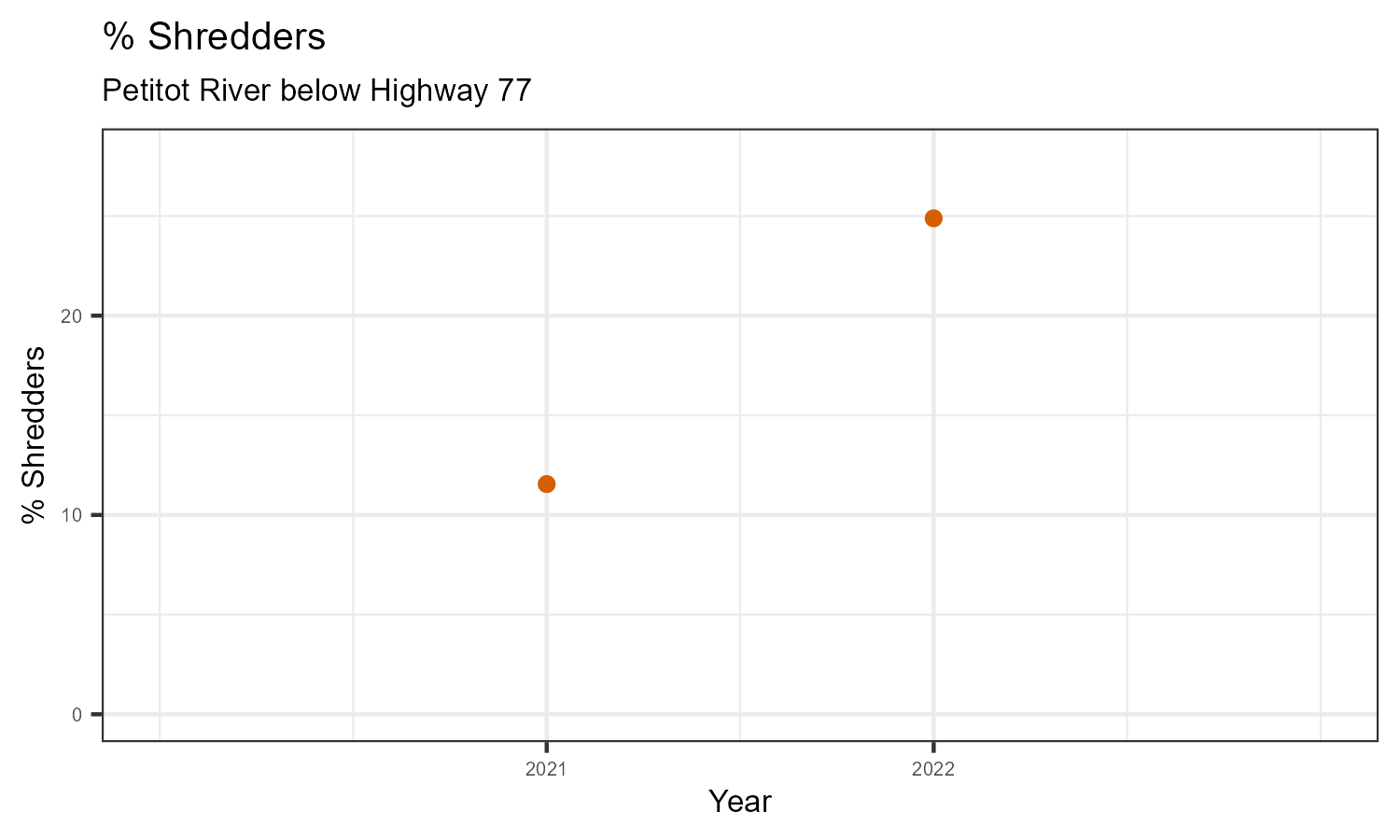
% Shredders is the proportion of taxonomic familes present that feed on leaf litter and other coarse particulate organic matter in the water. The proportion of shredders is expected to decrease at a site in response to disturbance.
| 2021 | 2022 | |
|---|---|---|
| Total abundance | 606.00 | 217.00 |
| % EPT | 81.85 | 71.43 |
| % Ephemeroptera | 61.39 | 31.80 |
| % Plecoptera | 7.59 | 3.69 |
| % Trichoptera | 12.87 | 35.94 |
| % Chironomidae | 8.25 | 17.05 |
| % Diptera and non-insects | 15.84 | 21.20 |
| % Filterers | 24.09 | 47.93 |
| % Gatherers | 85.15 | 82.49 |
| % Predators | 47.19 | 77.88 |
| % Scrapers | 83.50 | 78.34 |
| % Shredders | 11.55 | 24.88 |
| Family richness | 21.00 | 19.00 |
| EPT families | 14.00 | 13.00 |
| Ephemeroptera families | 5.00 | 5.00 |
| Plecoptera families | 4.00 | 2.00 |
| Trichoptera families | 5.00 | 6.00 |
| Diptera families | 2.00 | 1.00 |
| Long-Lived family richness | 1.00 | 0.00 |
| Clinger family richness | 14.00 | 12.00 |
| Intolerant family richness | 11.00 | 9.00 |
| % Tolerant family abundance | 2.97 | 3.69 |
| % Top 2 dominant families | 58.00 | 44.24 |
| Simpsons diversity | 0.79 | 0.85 |
| Simpsons evenness | 0.23 | 0.36 |
| Hilsenhoff Biotic Index (NW) | 4.20 | 4.30 |
Clinger family richness
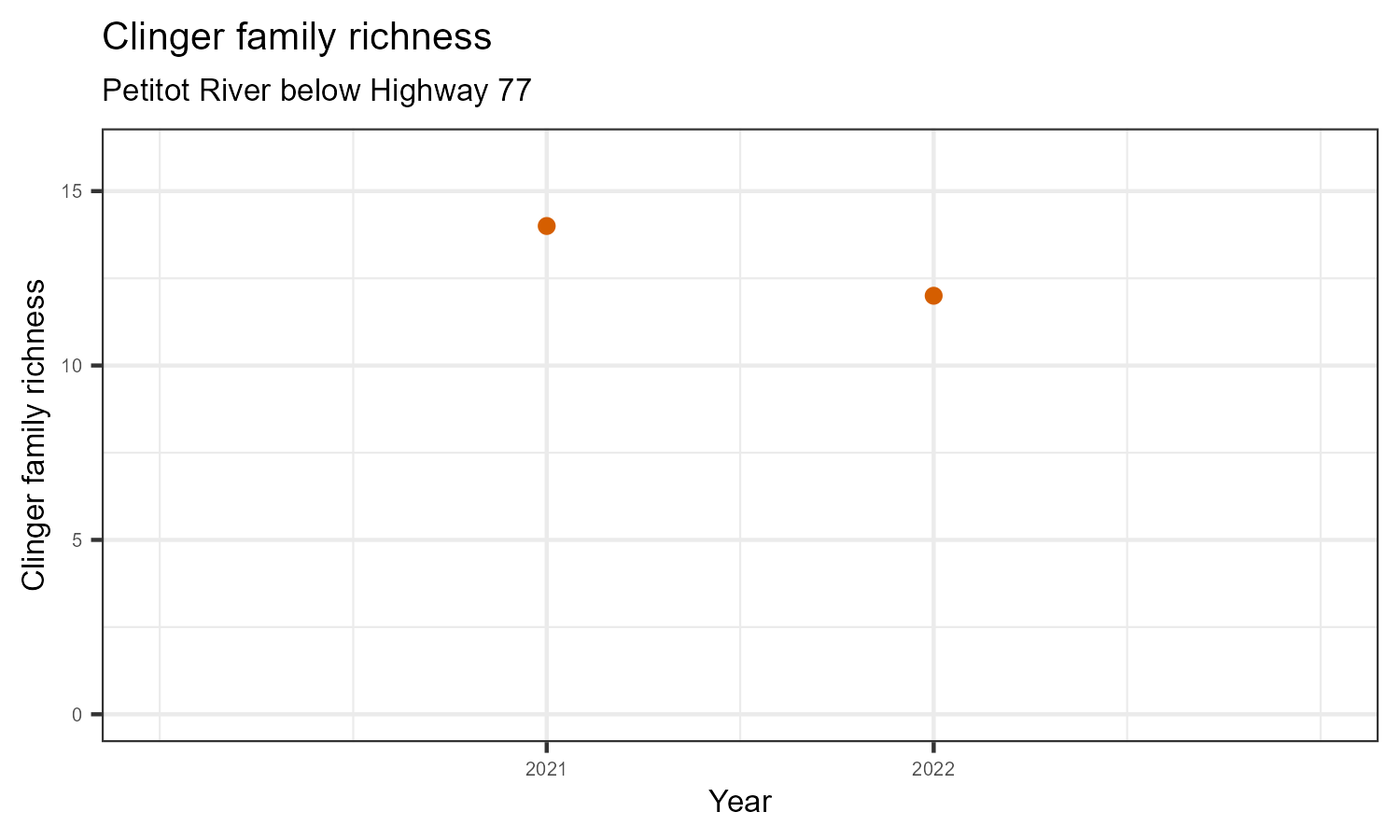
Clinger family richness counts the number of taxonomic families that tend to cling to rock surfaces. Common clingers include Simuliidae (blackflies), Ephemerellidae (mayflies), and Perlodidae (stoneflies). Clingers typically live in the gaps between rocks and cobble on streambeds. When fine sediments fill these gaps, the number of clinger families may decrease.
| 2021 | 2022 | |
|---|---|---|
| Total abundance | 606.00 | 217.00 |
| % EPT | 81.85 | 71.43 |
| % Ephemeroptera | 61.39 | 31.80 |
| % Plecoptera | 7.59 | 3.69 |
| % Trichoptera | 12.87 | 35.94 |
| % Chironomidae | 8.25 | 17.05 |
| % Diptera and non-insects | 15.84 | 21.20 |
| % Filterers | 24.09 | 47.93 |
| % Gatherers | 85.15 | 82.49 |
| % Predators | 47.19 | 77.88 |
| % Scrapers | 83.50 | 78.34 |
| % Shredders | 11.55 | 24.88 |
| Family richness | 21.00 | 19.00 |
| EPT families | 14.00 | 13.00 |
| Ephemeroptera families | 5.00 | 5.00 |
| Plecoptera families | 4.00 | 2.00 |
| Trichoptera families | 5.00 | 6.00 |
| Diptera families | 2.00 | 1.00 |
| Long-Lived family richness | 1.00 | 0.00 |
| Clinger family richness | 14.00 | 12.00 |
| Intolerant family richness | 11.00 | 9.00 |
| % Tolerant family abundance | 2.97 | 3.69 |
| % Top 2 dominant families | 58.00 | 44.24 |
| Simpsons diversity | 0.79 | 0.85 |
| Simpsons evenness | 0.23 | 0.36 |
| Hilsenhoff Biotic Index (NW) | 4.20 | 4.30 |
Biotic Index
Intolerant family richness
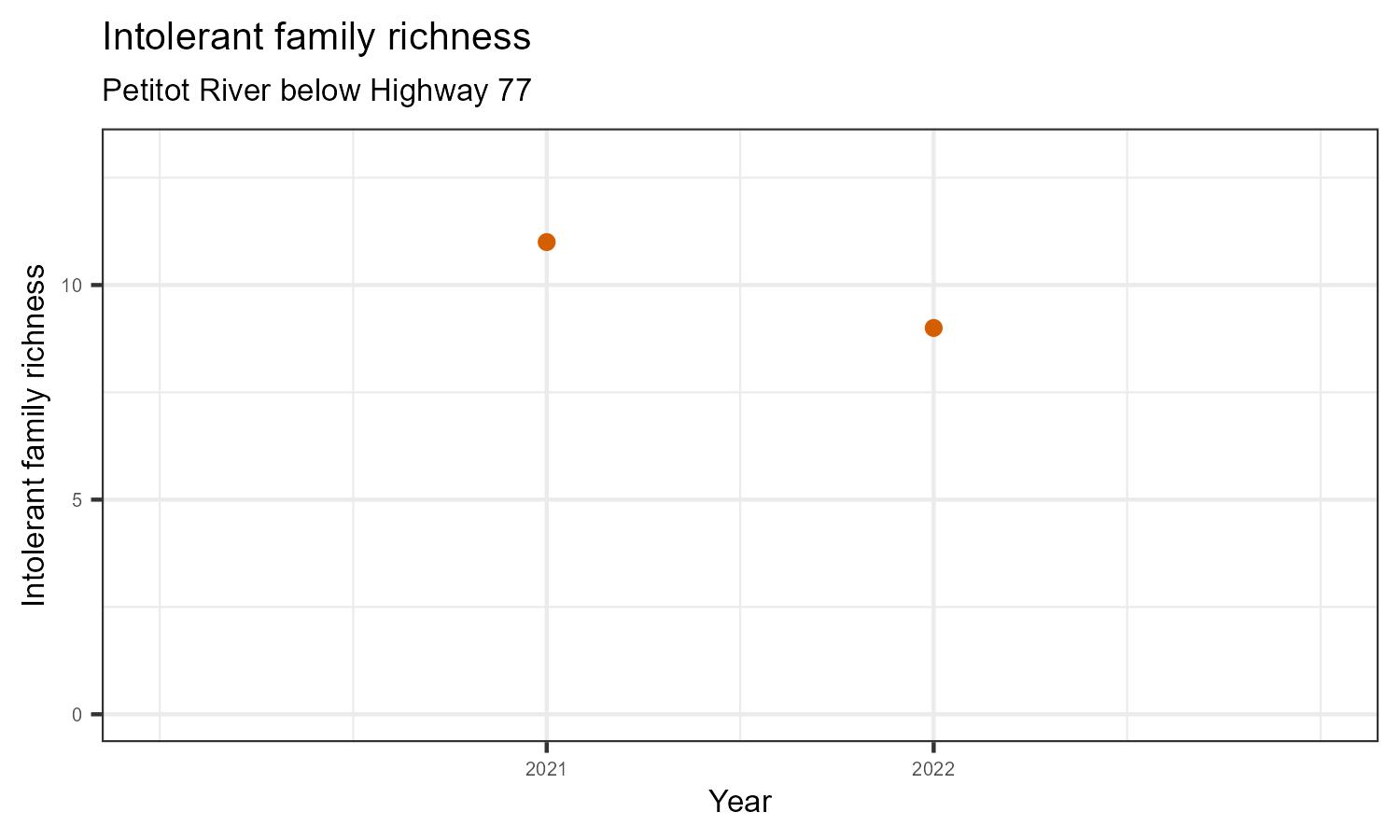
Intolerant family richness counts the number of taxonomic families that are sensitive (intolerant) to pollution, according to the Hilsenhoff Biotic Index. Intolerant family richness may decrease as water pollution increases.
| 2021 | 2022 | |
|---|---|---|
| Total abundance | 606.00 | 217.00 |
| % EPT | 81.85 | 71.43 |
| % Ephemeroptera | 61.39 | 31.80 |
| % Plecoptera | 7.59 | 3.69 |
| % Trichoptera | 12.87 | 35.94 |
| % Chironomidae | 8.25 | 17.05 |
| % Diptera and non-insects | 15.84 | 21.20 |
| % Filterers | 24.09 | 47.93 |
| % Gatherers | 85.15 | 82.49 |
| % Predators | 47.19 | 77.88 |
| % Scrapers | 83.50 | 78.34 |
| % Shredders | 11.55 | 24.88 |
| Family richness | 21.00 | 19.00 |
| EPT families | 14.00 | 13.00 |
| Ephemeroptera families | 5.00 | 5.00 |
| Plecoptera families | 4.00 | 2.00 |
| Trichoptera families | 5.00 | 6.00 |
| Diptera families | 2.00 | 1.00 |
| Long-Lived family richness | 1.00 | 0.00 |
| Clinger family richness | 14.00 | 12.00 |
| Intolerant family richness | 11.00 | 9.00 |
| % Tolerant family abundance | 2.97 | 3.69 |
| % Top 2 dominant families | 58.00 | 44.24 |
| Simpsons diversity | 0.79 | 0.85 |
| Simpsons evenness | 0.23 | 0.36 |
| Hilsenhoff Biotic Index (NW) | 4.20 | 4.30 |
% Tolerant family abundance
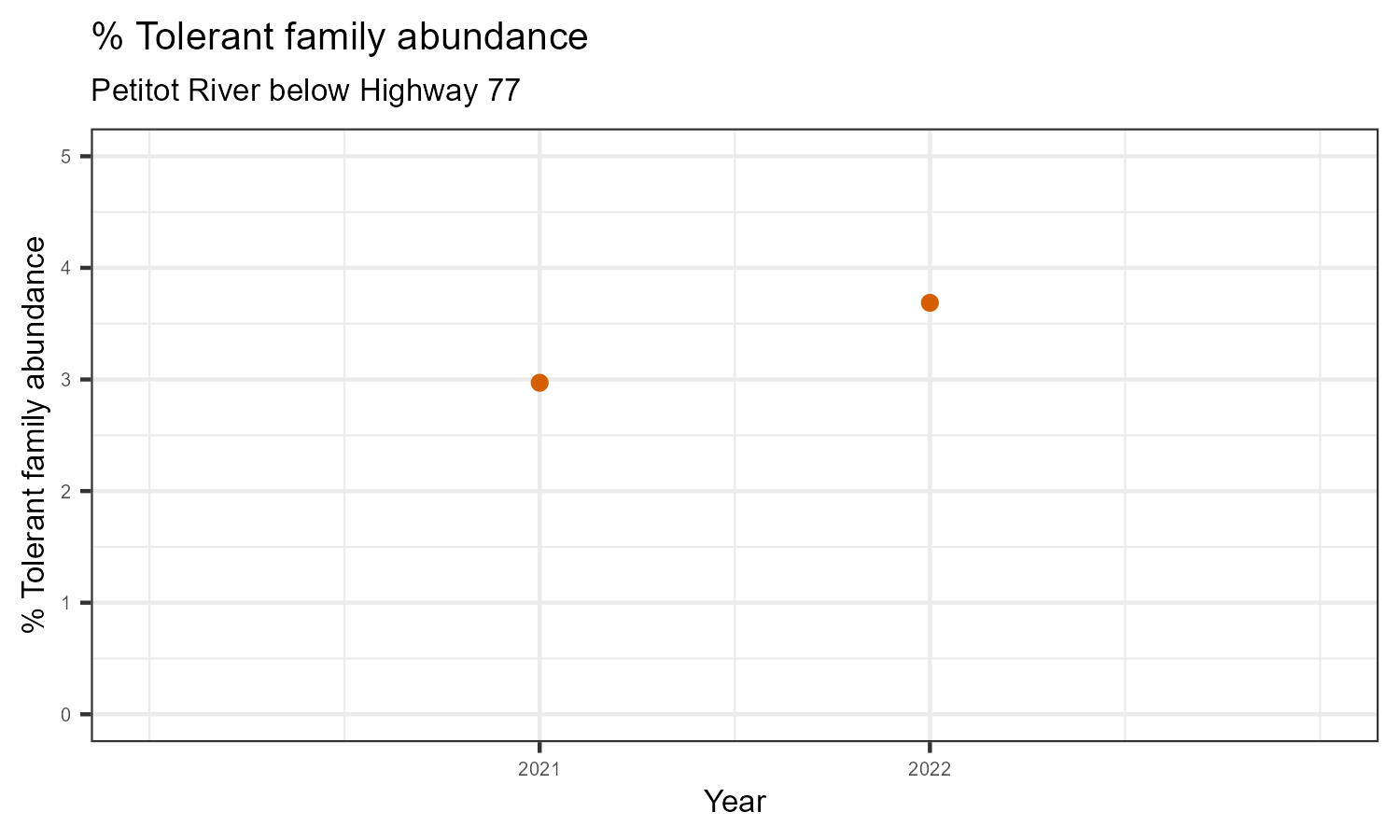
% Tolerant family abundance is the proportion of taxonomic families that are tolerant to pollution, according to the Hilsenhoff Biotic Index. The % tolerant family abundance may increase as water pollution increases.
| 2021 | 2022 | |
|---|---|---|
| Total abundance | 606.00 | 217.00 |
| % EPT | 81.85 | 71.43 |
| % Ephemeroptera | 61.39 | 31.80 |
| % Plecoptera | 7.59 | 3.69 |
| % Trichoptera | 12.87 | 35.94 |
| % Chironomidae | 8.25 | 17.05 |
| % Diptera and non-insects | 15.84 | 21.20 |
| % Filterers | 24.09 | 47.93 |
| % Gatherers | 85.15 | 82.49 |
| % Predators | 47.19 | 77.88 |
| % Scrapers | 83.50 | 78.34 |
| % Shredders | 11.55 | 24.88 |
| Family richness | 21.00 | 19.00 |
| EPT families | 14.00 | 13.00 |
| Ephemeroptera families | 5.00 | 5.00 |
| Plecoptera families | 4.00 | 2.00 |
| Trichoptera families | 5.00 | 6.00 |
| Diptera families | 2.00 | 1.00 |
| Long-Lived family richness | 1.00 | 0.00 |
| Clinger family richness | 14.00 | 12.00 |
| Intolerant family richness | 11.00 | 9.00 |
| % Tolerant family abundance | 2.97 | 3.69 |
| % Top 2 dominant families | 58.00 | 44.24 |
| Simpsons diversity | 0.79 | 0.85 |
| Simpsons evenness | 0.23 | 0.36 |
| Hilsenhoff Biotic Index (NW) | 4.20 | 4.30 |
Hilsenhoff Biotic Index (NW)
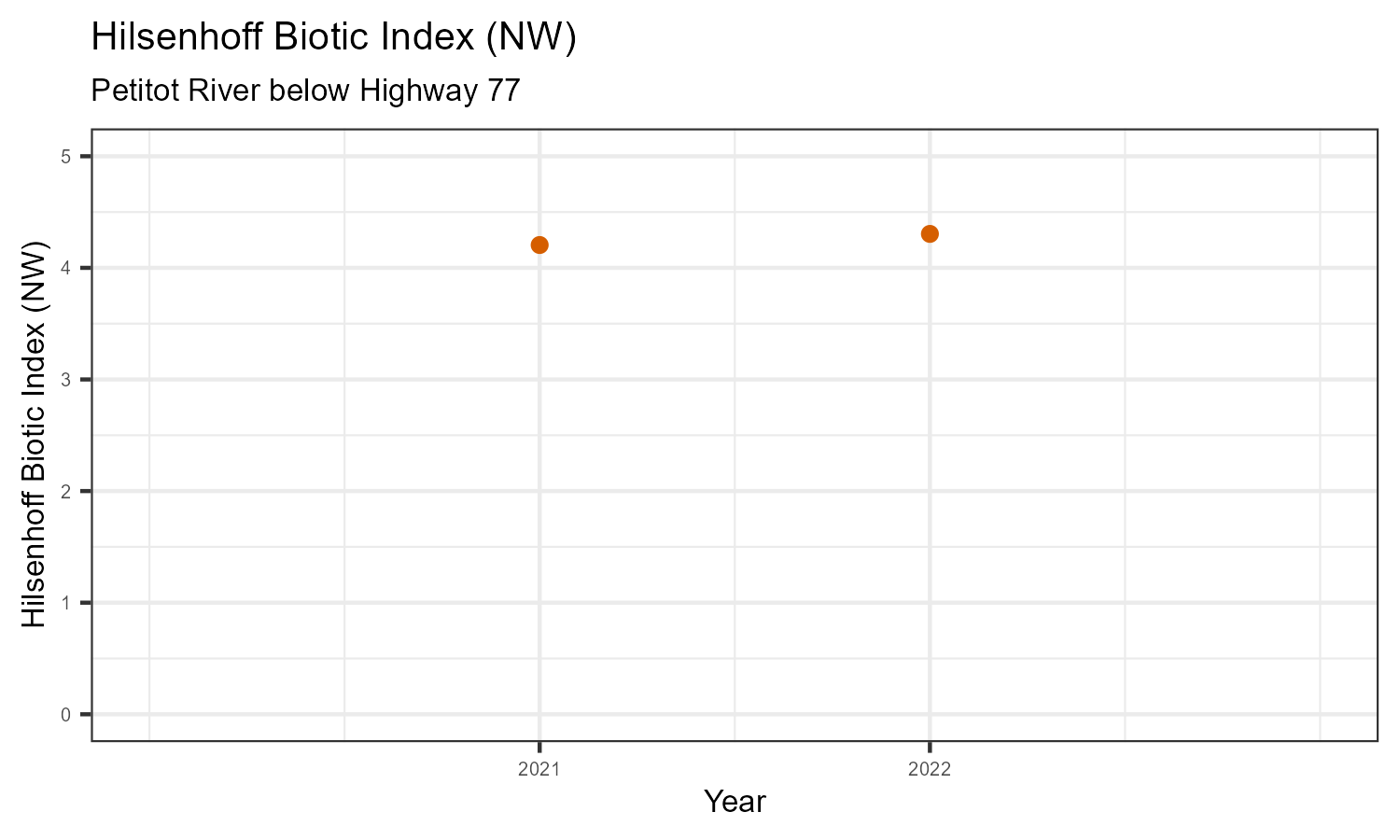
Hilsenhoff Biotic Index (NW) calculates a value based on the invertebrates present, their abundances, and their tolerance (or intolerance) to water pollution. Sensitive (intolerant) invertebrates receive low scores, and tolerant ones receive high scores. This index produces a value between 0 and 10, where 0 indicates excellent water quality and 10 indicates very poor water quality. The Hilsenhoff Biotic Index tolerance values are specific to the geographic area for which they were developed - in this case, northwest North America.
| 2021 | 2022 | |
|---|---|---|
| Total abundance | 606.00 | 217.00 |
| % EPT | 81.85 | 71.43 |
| % Ephemeroptera | 61.39 | 31.80 |
| % Plecoptera | 7.59 | 3.69 |
| % Trichoptera | 12.87 | 35.94 |
| % Chironomidae | 8.25 | 17.05 |
| % Diptera and non-insects | 15.84 | 21.20 |
| % Filterers | 24.09 | 47.93 |
| % Gatherers | 85.15 | 82.49 |
| % Predators | 47.19 | 77.88 |
| % Scrapers | 83.50 | 78.34 |
| % Shredders | 11.55 | 24.88 |
| Family richness | 21.00 | 19.00 |
| EPT families | 14.00 | 13.00 |
| Ephemeroptera families | 5.00 | 5.00 |
| Plecoptera families | 4.00 | 2.00 |
| Trichoptera families | 5.00 | 6.00 |
| Diptera families | 2.00 | 1.00 |
| Long-Lived family richness | 1.00 | 0.00 |
| Clinger family richness | 14.00 | 12.00 |
| Intolerant family richness | 11.00 | 9.00 |
| % Tolerant family abundance | 2.97 | 3.69 |
| % Top 2 dominant families | 58.00 | 44.24 |
| Simpsons diversity | 0.79 | 0.85 |
| Simpsons evenness | 0.23 | 0.36 |
| Hilsenhoff Biotic Index (NW) | 4.20 | 4.30 |
End of individual parameter tabs
This graph shows individual metric values at this station over all years of sampling. If the station values for a metric were zero in all years of sampling, that metric was not graphed.
References and Other Useful Links
- Visit Biomonitoring B.C. for more information on water quality biomonitoring in B.C.
- Learn more about the Canadian Aquatic Biomonitoring Network.
Web Browser Support
To view the interactive map, graphs, and reports, you must use an up-to-date version of one of these browsers: Chrome™, Firefox®, Microsoft Edge, or Safari. Reports and graphs may not display for Windows 7, Internet Explorer 11 users
