
Shuswap River above Mara Lake (SHU01)
British Columbia and Canada conduct biomonitoring at most water quality stations in the network. Benthic macroinvertebrates are collected every three years using Canadian Aquatic Biomonitoring Network (CABIN) sampling protocols.
Summary of biological condition in 2023
The biological condition at this station was assessed for 2023, the most recent year of sampling. The benthic macroinvertebrate community was analysed by comparing it to similar sites in a CABIN reference model for the Fraser River basin.
This station was compared to Group 3 of the Fraser Basin 2021 reference model.
CABIN assessment result: Highly Divergent
Bray-Curtis dissimilarity value: 0.94 (94% dissimilar)
RIVPACS ratio: 0.3
For additional context, individual metrics were calculated for all years of sampling at this station:
CABIN assessment
A CABIN assessment analyses the whole community structure at a station. It takes into account the types and numbers of benthic macroinvertebrates found in a sample. It assigns the station to one of four categories: Similar to Reference, Mildly Divergent, Divergent, or Highly Divergent.
The CABIN assessment plot below compares the overall benthic macroinvertebrate community at this station ( ● ) to similar sites from the reference model ( ● ). In 2023 this station assessed as Highly Divergent.
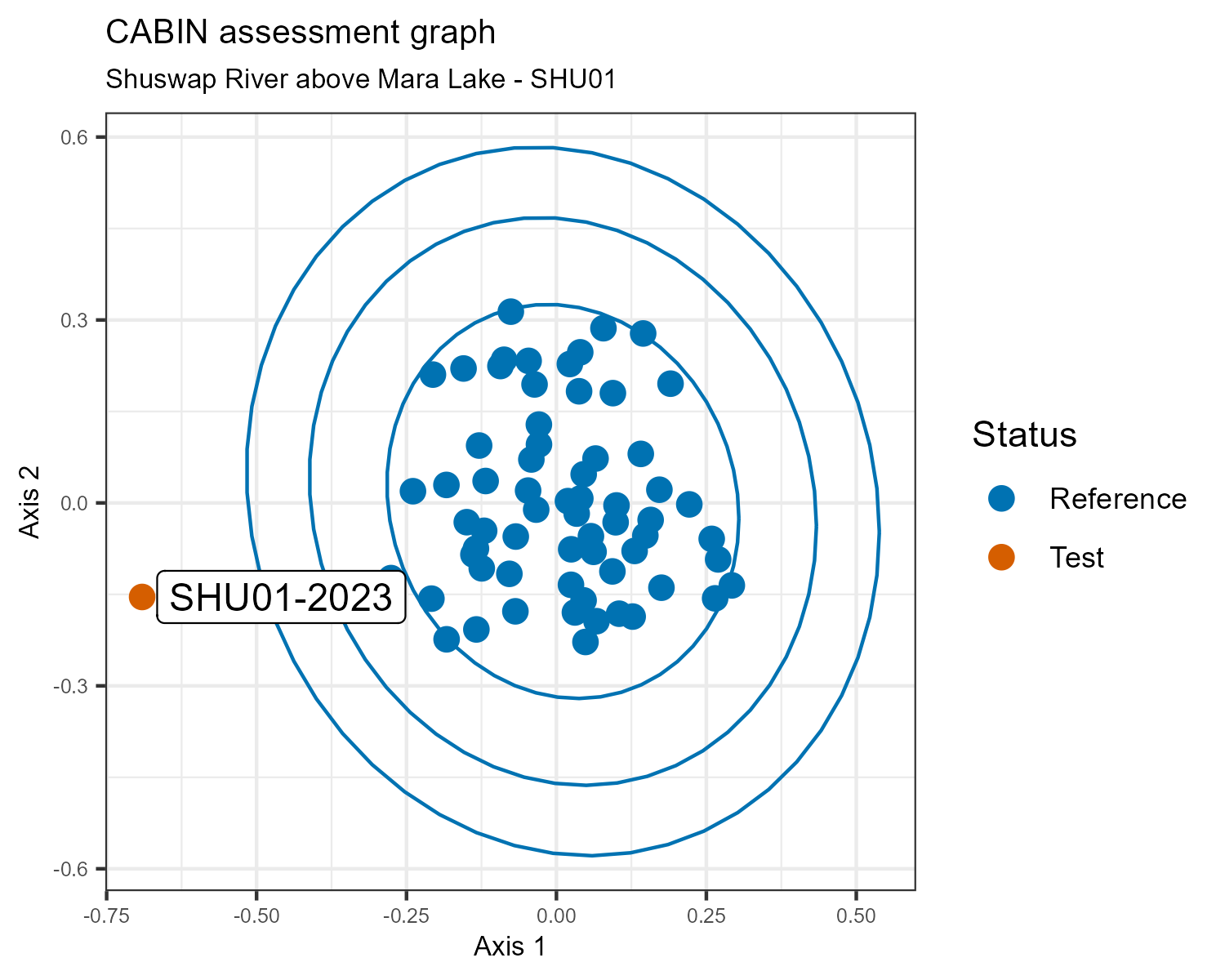
This graph is called an ordination plot. It is like a scatter plot, where every dot represents the benthic macroinvertebrate community at one sampling site. Sites with similar communities are close together; sites with different communities are far apart.
A CABIN assessment considers this water quality monitoring station the “test” site, and compares it to a group of sites with similar habitat features from the Fraser Basin 2021 CABIN reference model. Sites in the reference model have little or no human activity in their watersheds, so they are considered to represent pristine or best possible biological conditions. If the test site is close to the reference sites on the plot, it is also considered to be in good biological condition.
Three confidence ellipses are drawn around the group of reference sites at the 90%, 99%, and 99.9% confidence levels. The 90% ellipse is the innermost ellipse, and 90% of sites in reference condition should fall within it. The ellipses divide the plot into the four assessment categories a test site may fall into: Similar to Reference (within 90% ellipse), Mildly Divergent (90% to 99% ellipse), Divergent (99% to 99.9% ellipse), and Highly Divergent (outside the 99.9% ellipse).
Bray-Curtis dissimilarity value
The Bray-Curtis dissimilarity value compares the benthic macroinvertebrate community at this station to the median community of similar sites from the reference model. Bray-Curtis values can range from 0 to 1. A value of 0 means “0% dissimilarity”, in other words, the communities are identical. A value of 1 means “100% dissimilarity”, in other words, the communities are completely different.
In 2023 the Bray-Curtis dissimilarity value for this station was 0.94 (94% dissimilar from reference).
RIVPACS ratio
RIVPACS stands for ‘River Invertebrate Prediction and Classification System’. The RIVPACS ratio divides the number of benthic macroinvertebrate families found at a station by the number of families expected from similar reference sites. The result is called an Observed to Expected (O:E) ratio.
A low O:E ratio (well below 1) means that many of the benthic macroinvertebrate families expected at the station were not observed; a ratio near 1 means that the expected number were observed. An O:E ratio above 1 means that more families than expected were observed.
The number of families observed at this station was divided by the number of families found at more than half of similar reference sites. In 2023 the O:E ratio for this station was 0.3.
Benthic community metrics in 2023
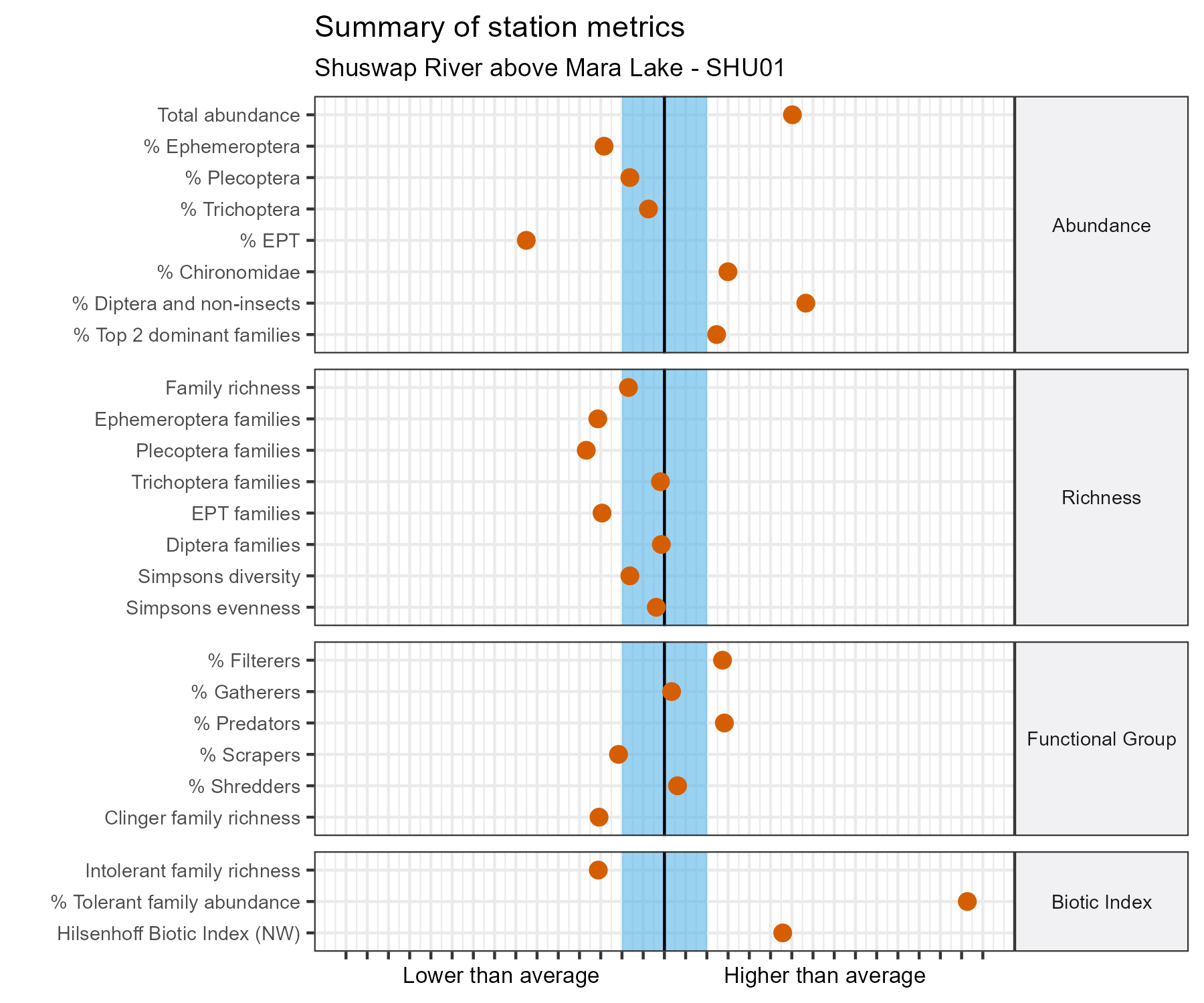
The graph below compares various metrics of the benthic macroinvertebrate community at this station ( ● ) to the natural variation of values at similar reference sites (▮). The black line represents the average value in the reference group for each metric.
| Group | Parameter | SHU01 - 2023 | Group 3 mean | Standard deviation |
|---|---|---|---|---|
| Abundance | Total abundance | 3310.0 | 966.2 | 388.7 |
| % Ephemeroptera | 2.7 | 48.7 | 16.2 | |
| % Plecoptera | 0.0 | 21.6 | 13.3 | |
| % Trichoptera | 1.8 | 10.1 | 11.0 | |
| % EPT | 4.5 | 80.4 | 11.7 | |
| % Chironomidae | 39.6 | 11.8 | 9.3 | |
| % Diptera and non-insects | 95.2 | 19.2 | 11.4 | |
| % Top 2 dominant families | 81.9 | 53.2 | 11.7 | |
| Richness | Family richness | 11.0 | 18.5 | 4.5 |
| Ephemeroptera families | 1.0 | 3.9 | 0.9 | |
| Plecoptera families | 0.0 | 4.9 | 1.3 | |
| Trichoptera families | 3.0 | 3.3 | 1.6 | |
| EPT families | 4.0 | 12.1 | 2.8 | |
| Diptera families | 3.0 | 3.2 | 1.2 | |
| Simpsons diversity | 0.7 | 0.8 | 0.1 | |
| Simpsons evenness | 0.3 | 0.3 | 0.1 | |
| Functional Group | % Filterers | 39.6 | 14.6 | 9.1 |
| % Gatherers | 86.7 | 82.0 | 14.0 | |
| % Predators | 96.7 | 50.4 | 16.4 | |
| % Scrapers | 43.2 | 75.4 | 14.9 | |
| % Shredders | 42.0 | 33.0 | 14.6 | |
| Clinger family richness | 4.0 | 12.1 | 2.6 | |
| Biotic Index | Intolerant family richness | 2.0 | 9.7 | 2.5 |
| % Tolerant family abundance | 49.5 | 2.5 | 3.3 | |
| Hilsenhoff Biotic Index (NW) | 7.5 | 3.0 | 0.8 |
For each metric shown in the graph, the value at this station has been standarized by the standard deviation of the values from the relevant reference model group (in this case, Group 3 of the Fraser Basin 2021 reference model). The black line represents the mean value for that metric in the reference group. The blue bar represents two standard deviations of the reference group above and below the mean.
Benthic community metrics, 2014 to 2023
-
Click on the tabs below to explore individual metrics values over time.
Values for this station ( ● ) are
compared to the range of values at similar reference sites (▮). The black line represents the median
reference value.
Abundance
Total abundance
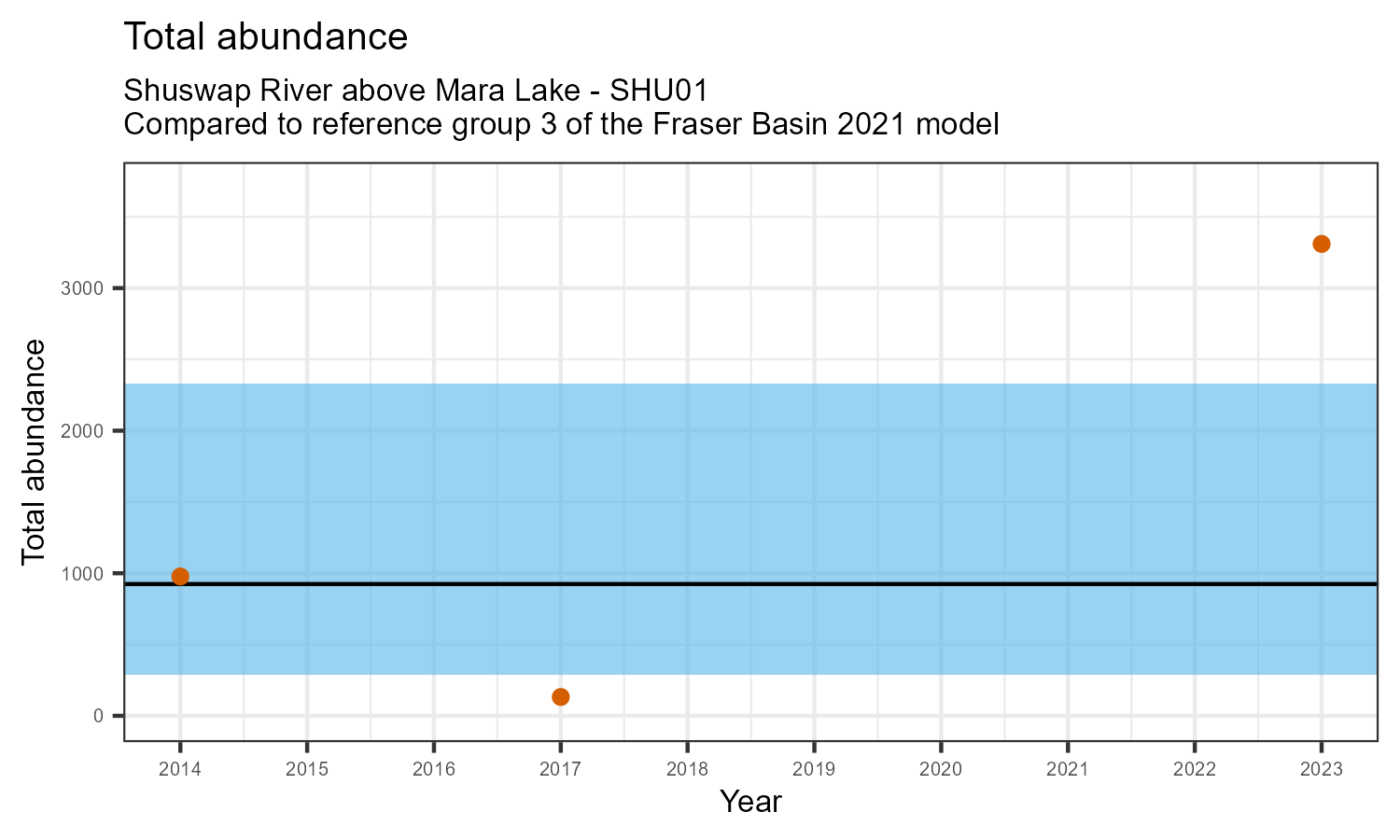
Total abundance counts every invertebrate in a sample. Abundance may increase or decrease in response to habitat disturbance.
| 2014 | 2017 | 2023 | Minimum | Median | Maximum | |
|---|---|---|---|---|---|---|
| Total abundance | 977.01 | 132.00 | 3310.00 | 285.00 | 924.31 | 2328.19 |
| % EPT | 11.70 | 12.12 | 4.53 | 49.84 | 80.95 | 98.73 |
| % Ephemeroptera | 8.48 | 4.55 | 2.72 | 15.92 | 47.87 | 87.06 |
| % Plecoptera | 0.58 | 3.79 | 0.00 | 4.29 | 20.15 | 79.10 |
| % Trichoptera | 2.63 | 3.79 | 1.81 | 0.00 | 6.53 | 58.66 |
| % Chironomidae | 73.40 | 86.36 | 39.58 | 0.00 | 9.83 | 38.93 |
| % Diptera and non-insects | 87.14 | 87.88 | 95.17 | 1.27 | 18.93 | 49.84 |
| % Filterers | 74.86 | 87.12 | 39.58 | 1.40 | 12.59 | 38.93 |
| % Gatherers | 86.26 | 91.67 | 86.71 | 38.46 | 86.84 | 97.52 |
| % Predators | 89.18 | 93.18 | 96.68 | 17.59 | 50.11 | 84.67 |
| % Scrapers | 83.34 | 90.91 | 43.20 | 31.09 | 79.02 | 95.27 |
| % Shredders | 76.61 | 87.88 | 41.99 | 6.94 | 31.77 | 67.66 |
| Family richness | 15.00 | 11.00 | 11.00 | 10.00 | 19.00 | 27.00 |
| EPT families | 5.00 | 8.00 | 4.00 | 6.00 | 12.50 | 18.00 |
| Ephemeroptera families | 3.00 | 3.00 | 1.00 | 2.00 | 4.00 | 6.00 |
| Plecoptera families | 0.00 | 4.00 | 0.00 | 2.00 | 5.00 | 8.00 |
| Trichoptera families | 2.00 | 1.00 | 3.00 | 0.00 | 3.50 | 6.00 |
| Diptera families | 3.00 | 2.00 | 3.00 | 1.00 | 3.00 | 6.00 |
| Coleoptera families | 1.00 | 0.00 | 1.00 | 0.00 | 0.00 | 1.00 |
| Long-Lived family richness | 1.00 | 1.00 | 1.00 | 0.00 | 0.00 | 2.00 |
| Clinger family richness | 4.00 | 7.00 | 4.00 | 7.00 | 12.00 | 17.00 |
| Intolerant family richness | 3.00 | 6.00 | 2.00 | 3.00 | 10.00 | 16.00 |
| % Tolerant family abundance | 10.23 | 0.76 | 49.55 | 0.00 | 1.34 | 18.48 |
| % Top 2 dominant families | 83.14 | 91.54 | 81.87 | 28.57 | 53.37 | 81.70 |
| Simpsons diversity | 0.44 | 0.23 | 0.66 | 0.48 | 0.81 | 0.91 |
| Simpsons evenness | 0.12 | 0.12 | 0.26 | 0.10 | 0.31 | 0.67 |
| Hilsenhoff Biotic Index (NW) | 5.91 | 6.27 | 7.50 | 0.94 | 2.91 | 4.58 |
% Ephemeroptera
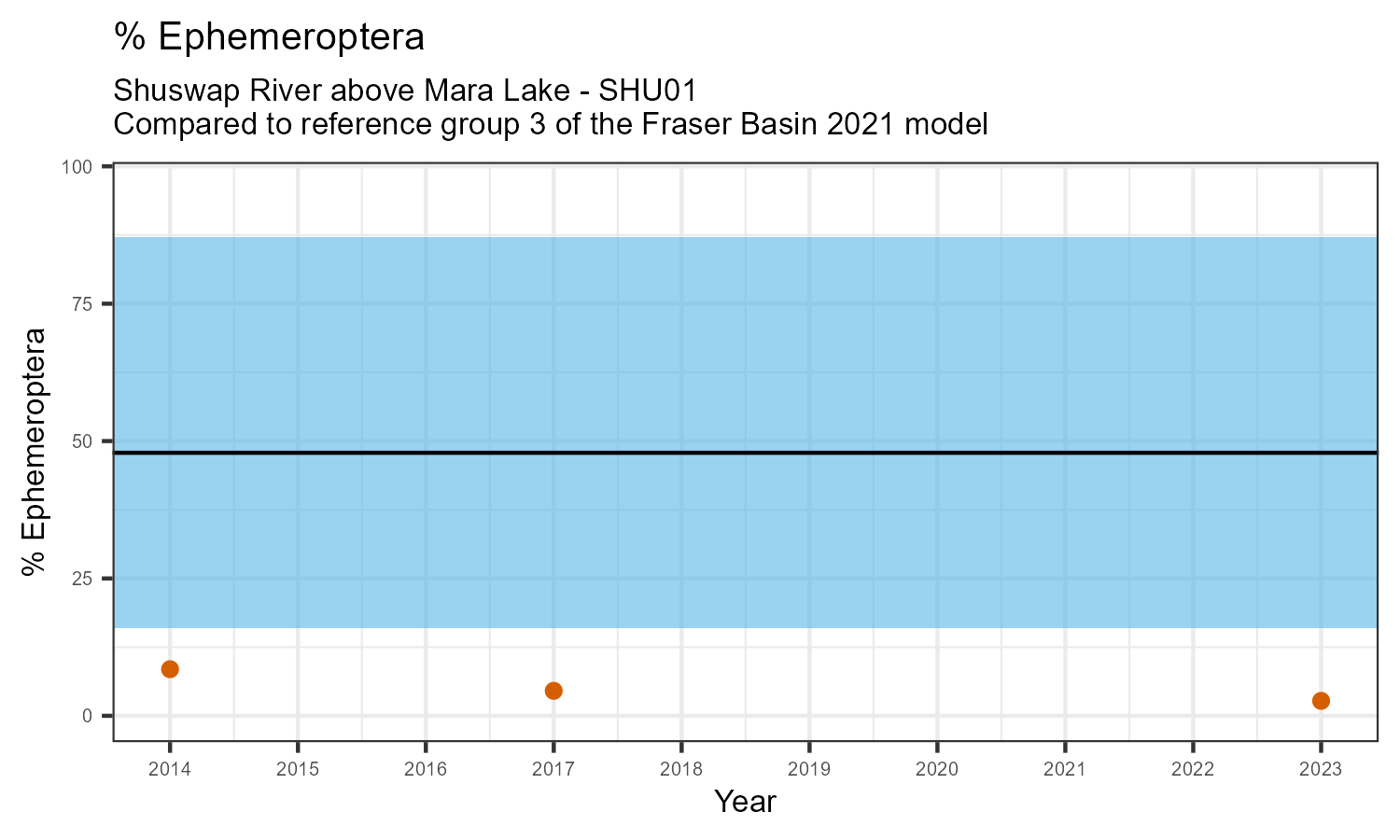
% Ephemeroptera is the proportion of invertebrates that belong to the taxonomic order Ephemeroptera. Ephemeroptera are commonly called mayflies. They are sensitive to pollution. The % Ephemeroptera may decrease in response to habitat disturbances like poor water quality.
| 2014 | 2017 | 2023 | Minimum | Median | Maximum | |
|---|---|---|---|---|---|---|
| Total abundance | 977.01 | 132.00 | 3310.00 | 285.00 | 924.31 | 2328.19 |
| % EPT | 11.70 | 12.12 | 4.53 | 49.84 | 80.95 | 98.73 |
| % Ephemeroptera | 8.48 | 4.55 | 2.72 | 15.92 | 47.87 | 87.06 |
| % Plecoptera | 0.58 | 3.79 | 0.00 | 4.29 | 20.15 | 79.10 |
| % Trichoptera | 2.63 | 3.79 | 1.81 | 0.00 | 6.53 | 58.66 |
| % Chironomidae | 73.40 | 86.36 | 39.58 | 0.00 | 9.83 | 38.93 |
| % Diptera and non-insects | 87.14 | 87.88 | 95.17 | 1.27 | 18.93 | 49.84 |
| % Filterers | 74.86 | 87.12 | 39.58 | 1.40 | 12.59 | 38.93 |
| % Gatherers | 86.26 | 91.67 | 86.71 | 38.46 | 86.84 | 97.52 |
| % Predators | 89.18 | 93.18 | 96.68 | 17.59 | 50.11 | 84.67 |
| % Scrapers | 83.34 | 90.91 | 43.20 | 31.09 | 79.02 | 95.27 |
| % Shredders | 76.61 | 87.88 | 41.99 | 6.94 | 31.77 | 67.66 |
| Family richness | 15.00 | 11.00 | 11.00 | 10.00 | 19.00 | 27.00 |
| EPT families | 5.00 | 8.00 | 4.00 | 6.00 | 12.50 | 18.00 |
| Ephemeroptera families | 3.00 | 3.00 | 1.00 | 2.00 | 4.00 | 6.00 |
| Plecoptera families | 0.00 | 4.00 | 0.00 | 2.00 | 5.00 | 8.00 |
| Trichoptera families | 2.00 | 1.00 | 3.00 | 0.00 | 3.50 | 6.00 |
| Diptera families | 3.00 | 2.00 | 3.00 | 1.00 | 3.00 | 6.00 |
| Coleoptera families | 1.00 | 0.00 | 1.00 | 0.00 | 0.00 | 1.00 |
| Long-Lived family richness | 1.00 | 1.00 | 1.00 | 0.00 | 0.00 | 2.00 |
| Clinger family richness | 4.00 | 7.00 | 4.00 | 7.00 | 12.00 | 17.00 |
| Intolerant family richness | 3.00 | 6.00 | 2.00 | 3.00 | 10.00 | 16.00 |
| % Tolerant family abundance | 10.23 | 0.76 | 49.55 | 0.00 | 1.34 | 18.48 |
| % Top 2 dominant families | 83.14 | 91.54 | 81.87 | 28.57 | 53.37 | 81.70 |
| Simpsons diversity | 0.44 | 0.23 | 0.66 | 0.48 | 0.81 | 0.91 |
| Simpsons evenness | 0.12 | 0.12 | 0.26 | 0.10 | 0.31 | 0.67 |
| Hilsenhoff Biotic Index (NW) | 5.91 | 6.27 | 7.50 | 0.94 | 2.91 | 4.58 |
% Plecoptera
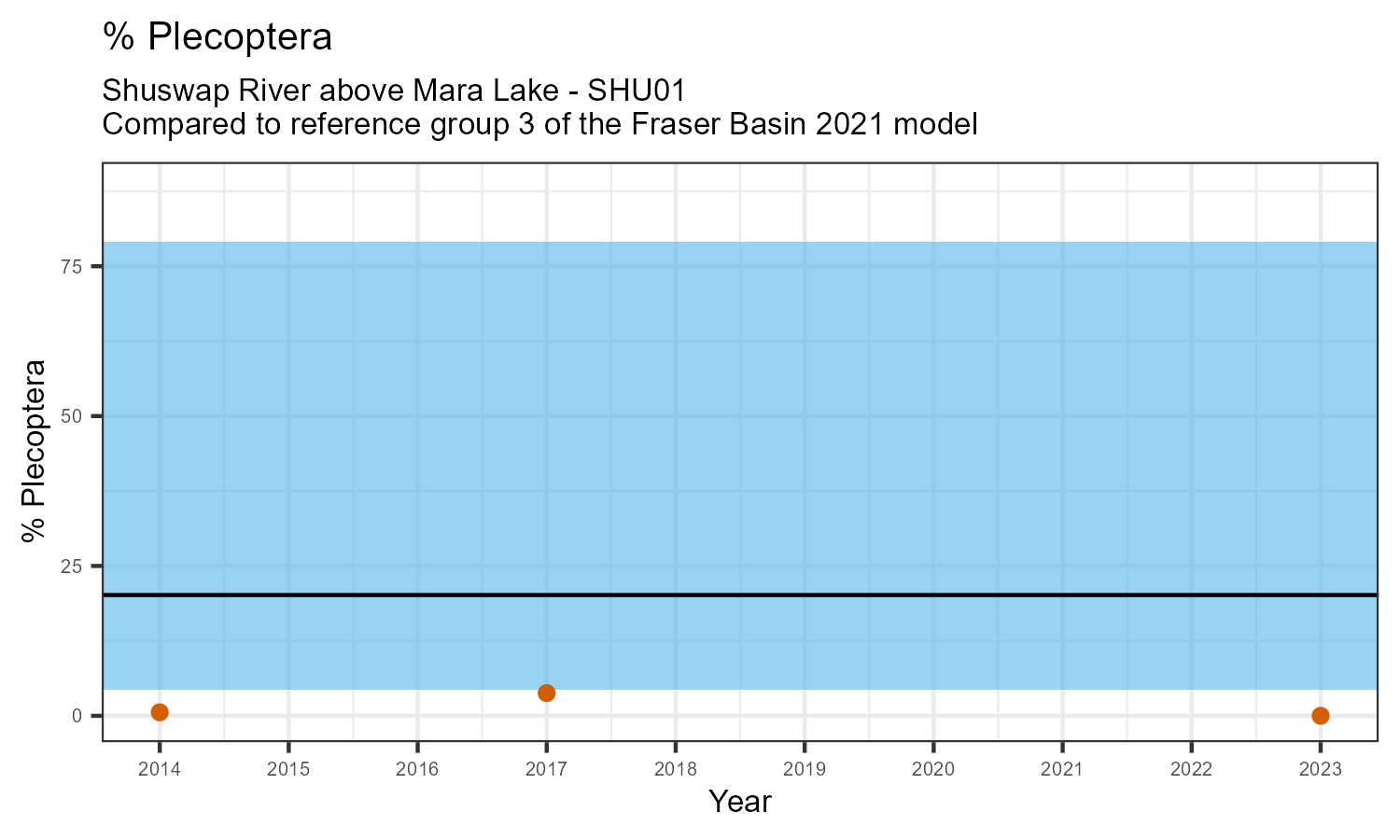
% Plecoptera is the proportion of invertebrates that belong to the taxonomic order Plecoptera. Plecoptera are commonly called stoneflies. They are sensitive to pollution. The % Plecoptera may decrease in response to habitat disturbances like poor water quality.
| 2014 | 2017 | 2023 | Minimum | Median | Maximum | |
|---|---|---|---|---|---|---|
| Total abundance | 977.01 | 132.00 | 3310.00 | 285.00 | 924.31 | 2328.19 |
| % EPT | 11.70 | 12.12 | 4.53 | 49.84 | 80.95 | 98.73 |
| % Ephemeroptera | 8.48 | 4.55 | 2.72 | 15.92 | 47.87 | 87.06 |
| % Plecoptera | 0.58 | 3.79 | 0.00 | 4.29 | 20.15 | 79.10 |
| % Trichoptera | 2.63 | 3.79 | 1.81 | 0.00 | 6.53 | 58.66 |
| % Chironomidae | 73.40 | 86.36 | 39.58 | 0.00 | 9.83 | 38.93 |
| % Diptera and non-insects | 87.14 | 87.88 | 95.17 | 1.27 | 18.93 | 49.84 |
| % Filterers | 74.86 | 87.12 | 39.58 | 1.40 | 12.59 | 38.93 |
| % Gatherers | 86.26 | 91.67 | 86.71 | 38.46 | 86.84 | 97.52 |
| % Predators | 89.18 | 93.18 | 96.68 | 17.59 | 50.11 | 84.67 |
| % Scrapers | 83.34 | 90.91 | 43.20 | 31.09 | 79.02 | 95.27 |
| % Shredders | 76.61 | 87.88 | 41.99 | 6.94 | 31.77 | 67.66 |
| Family richness | 15.00 | 11.00 | 11.00 | 10.00 | 19.00 | 27.00 |
| EPT families | 5.00 | 8.00 | 4.00 | 6.00 | 12.50 | 18.00 |
| Ephemeroptera families | 3.00 | 3.00 | 1.00 | 2.00 | 4.00 | 6.00 |
| Plecoptera families | 0.00 | 4.00 | 0.00 | 2.00 | 5.00 | 8.00 |
| Trichoptera families | 2.00 | 1.00 | 3.00 | 0.00 | 3.50 | 6.00 |
| Diptera families | 3.00 | 2.00 | 3.00 | 1.00 | 3.00 | 6.00 |
| Coleoptera families | 1.00 | 0.00 | 1.00 | 0.00 | 0.00 | 1.00 |
| Long-Lived family richness | 1.00 | 1.00 | 1.00 | 0.00 | 0.00 | 2.00 |
| Clinger family richness | 4.00 | 7.00 | 4.00 | 7.00 | 12.00 | 17.00 |
| Intolerant family richness | 3.00 | 6.00 | 2.00 | 3.00 | 10.00 | 16.00 |
| % Tolerant family abundance | 10.23 | 0.76 | 49.55 | 0.00 | 1.34 | 18.48 |
| % Top 2 dominant families | 83.14 | 91.54 | 81.87 | 28.57 | 53.37 | 81.70 |
| Simpsons diversity | 0.44 | 0.23 | 0.66 | 0.48 | 0.81 | 0.91 |
| Simpsons evenness | 0.12 | 0.12 | 0.26 | 0.10 | 0.31 | 0.67 |
| Hilsenhoff Biotic Index (NW) | 5.91 | 6.27 | 7.50 | 0.94 | 2.91 | 4.58 |
% Trichoptera
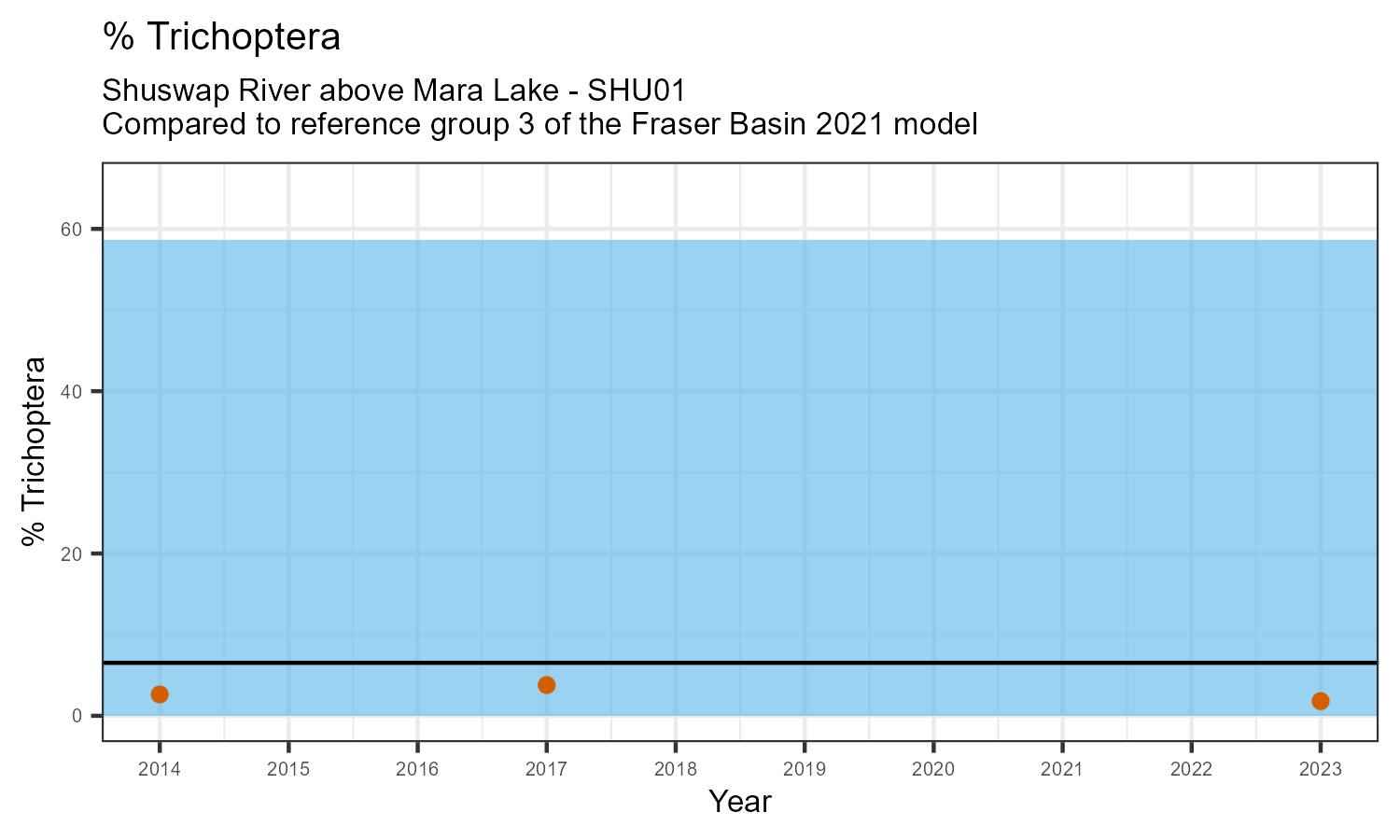
% Trichoptera is the proportion of invertebrates that belong to the taxonomic order Trichoptera. Trichoptera are commonly called caddisflies. They are sensitive to pollution. The % Trichoptera may decrease in response to habitat disturbances like poor water quality.
| 2014 | 2017 | 2023 | Minimum | Median | Maximum | |
|---|---|---|---|---|---|---|
| Total abundance | 977.01 | 132.00 | 3310.00 | 285.00 | 924.31 | 2328.19 |
| % EPT | 11.70 | 12.12 | 4.53 | 49.84 | 80.95 | 98.73 |
| % Ephemeroptera | 8.48 | 4.55 | 2.72 | 15.92 | 47.87 | 87.06 |
| % Plecoptera | 0.58 | 3.79 | 0.00 | 4.29 | 20.15 | 79.10 |
| % Trichoptera | 2.63 | 3.79 | 1.81 | 0.00 | 6.53 | 58.66 |
| % Chironomidae | 73.40 | 86.36 | 39.58 | 0.00 | 9.83 | 38.93 |
| % Diptera and non-insects | 87.14 | 87.88 | 95.17 | 1.27 | 18.93 | 49.84 |
| % Filterers | 74.86 | 87.12 | 39.58 | 1.40 | 12.59 | 38.93 |
| % Gatherers | 86.26 | 91.67 | 86.71 | 38.46 | 86.84 | 97.52 |
| % Predators | 89.18 | 93.18 | 96.68 | 17.59 | 50.11 | 84.67 |
| % Scrapers | 83.34 | 90.91 | 43.20 | 31.09 | 79.02 | 95.27 |
| % Shredders | 76.61 | 87.88 | 41.99 | 6.94 | 31.77 | 67.66 |
| Family richness | 15.00 | 11.00 | 11.00 | 10.00 | 19.00 | 27.00 |
| EPT families | 5.00 | 8.00 | 4.00 | 6.00 | 12.50 | 18.00 |
| Ephemeroptera families | 3.00 | 3.00 | 1.00 | 2.00 | 4.00 | 6.00 |
| Plecoptera families | 0.00 | 4.00 | 0.00 | 2.00 | 5.00 | 8.00 |
| Trichoptera families | 2.00 | 1.00 | 3.00 | 0.00 | 3.50 | 6.00 |
| Diptera families | 3.00 | 2.00 | 3.00 | 1.00 | 3.00 | 6.00 |
| Coleoptera families | 1.00 | 0.00 | 1.00 | 0.00 | 0.00 | 1.00 |
| Long-Lived family richness | 1.00 | 1.00 | 1.00 | 0.00 | 0.00 | 2.00 |
| Clinger family richness | 4.00 | 7.00 | 4.00 | 7.00 | 12.00 | 17.00 |
| Intolerant family richness | 3.00 | 6.00 | 2.00 | 3.00 | 10.00 | 16.00 |
| % Tolerant family abundance | 10.23 | 0.76 | 49.55 | 0.00 | 1.34 | 18.48 |
| % Top 2 dominant families | 83.14 | 91.54 | 81.87 | 28.57 | 53.37 | 81.70 |
| Simpsons diversity | 0.44 | 0.23 | 0.66 | 0.48 | 0.81 | 0.91 |
| Simpsons evenness | 0.12 | 0.12 | 0.26 | 0.10 | 0.31 | 0.67 |
| Hilsenhoff Biotic Index (NW) | 5.91 | 6.27 | 7.50 | 0.94 | 2.91 | 4.58 |
% EPT
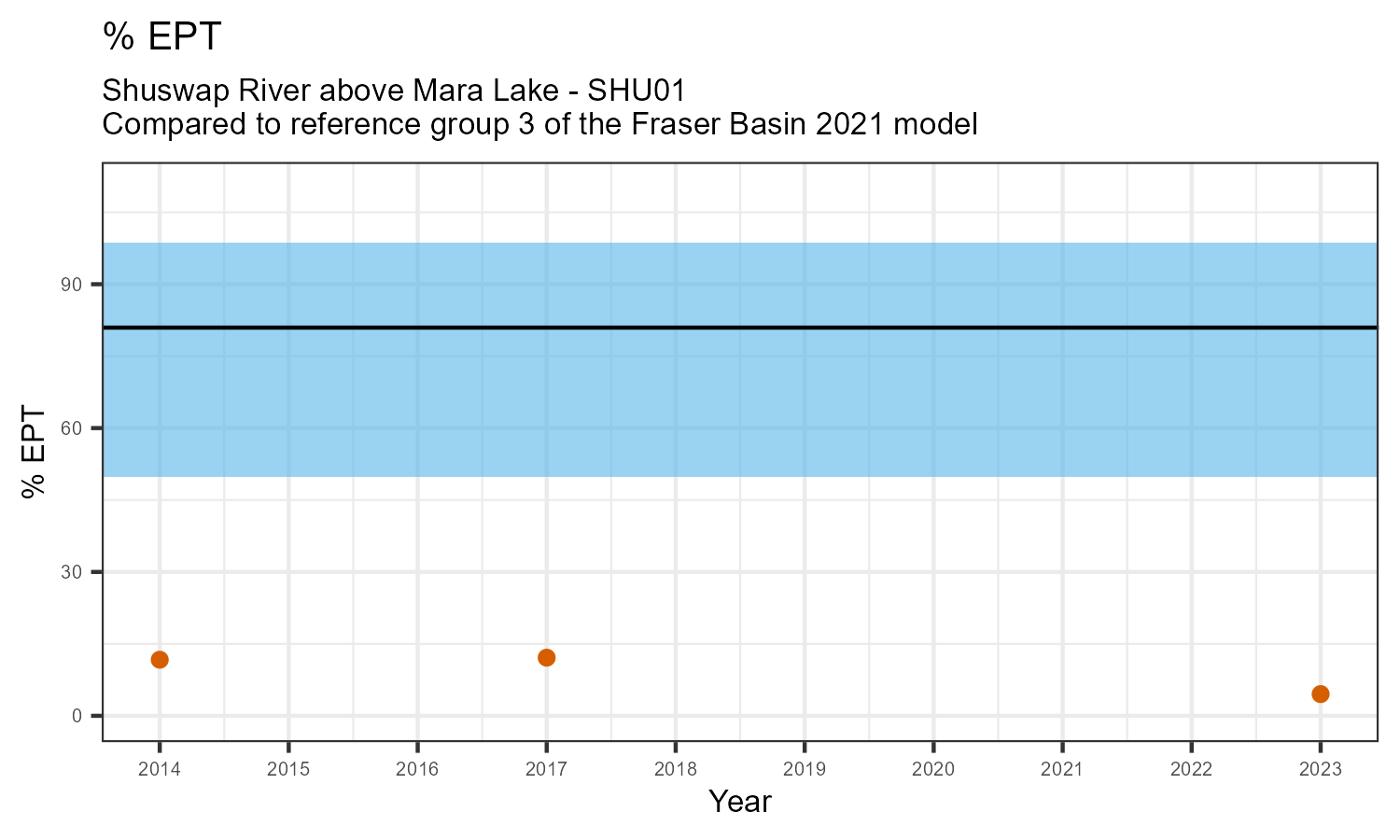
% EPT is the proportion of invertebrates that belong to one of the taxonomic orders of Ephemeroptera (mayflies), Plecoptera (stoneflies), or Trichoptera (caddisflies). These types of insects are often grouped together under the term “EPT”. They are typically the most sensitive to habitat disturbances like poor water quality.
| 2014 | 2017 | 2023 | Minimum | Median | Maximum | |
|---|---|---|---|---|---|---|
| Total abundance | 977.01 | 132.00 | 3310.00 | 285.00 | 924.31 | 2328.19 |
| % EPT | 11.70 | 12.12 | 4.53 | 49.84 | 80.95 | 98.73 |
| % Ephemeroptera | 8.48 | 4.55 | 2.72 | 15.92 | 47.87 | 87.06 |
| % Plecoptera | 0.58 | 3.79 | 0.00 | 4.29 | 20.15 | 79.10 |
| % Trichoptera | 2.63 | 3.79 | 1.81 | 0.00 | 6.53 | 58.66 |
| % Chironomidae | 73.40 | 86.36 | 39.58 | 0.00 | 9.83 | 38.93 |
| % Diptera and non-insects | 87.14 | 87.88 | 95.17 | 1.27 | 18.93 | 49.84 |
| % Filterers | 74.86 | 87.12 | 39.58 | 1.40 | 12.59 | 38.93 |
| % Gatherers | 86.26 | 91.67 | 86.71 | 38.46 | 86.84 | 97.52 |
| % Predators | 89.18 | 93.18 | 96.68 | 17.59 | 50.11 | 84.67 |
| % Scrapers | 83.34 | 90.91 | 43.20 | 31.09 | 79.02 | 95.27 |
| % Shredders | 76.61 | 87.88 | 41.99 | 6.94 | 31.77 | 67.66 |
| Family richness | 15.00 | 11.00 | 11.00 | 10.00 | 19.00 | 27.00 |
| EPT families | 5.00 | 8.00 | 4.00 | 6.00 | 12.50 | 18.00 |
| Ephemeroptera families | 3.00 | 3.00 | 1.00 | 2.00 | 4.00 | 6.00 |
| Plecoptera families | 0.00 | 4.00 | 0.00 | 2.00 | 5.00 | 8.00 |
| Trichoptera families | 2.00 | 1.00 | 3.00 | 0.00 | 3.50 | 6.00 |
| Diptera families | 3.00 | 2.00 | 3.00 | 1.00 | 3.00 | 6.00 |
| Coleoptera families | 1.00 | 0.00 | 1.00 | 0.00 | 0.00 | 1.00 |
| Long-Lived family richness | 1.00 | 1.00 | 1.00 | 0.00 | 0.00 | 2.00 |
| Clinger family richness | 4.00 | 7.00 | 4.00 | 7.00 | 12.00 | 17.00 |
| Intolerant family richness | 3.00 | 6.00 | 2.00 | 3.00 | 10.00 | 16.00 |
| % Tolerant family abundance | 10.23 | 0.76 | 49.55 | 0.00 | 1.34 | 18.48 |
| % Top 2 dominant families | 83.14 | 91.54 | 81.87 | 28.57 | 53.37 | 81.70 |
| Simpsons diversity | 0.44 | 0.23 | 0.66 | 0.48 | 0.81 | 0.91 |
| Simpsons evenness | 0.12 | 0.12 | 0.26 | 0.10 | 0.31 | 0.67 |
| Hilsenhoff Biotic Index (NW) | 5.91 | 6.27 | 7.50 | 0.94 | 2.91 | 4.58 |
% Chironomidae
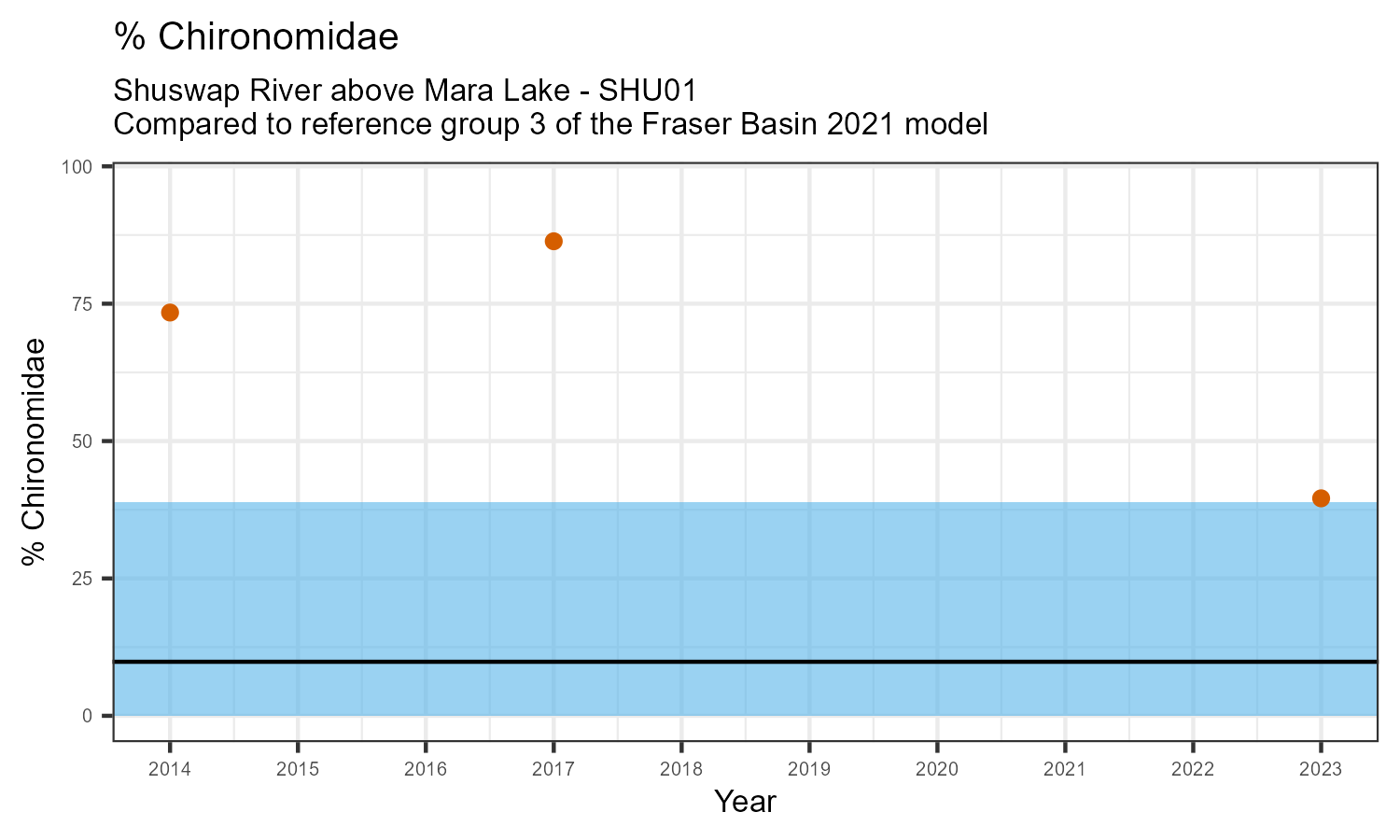
% Chironomidae is the proportion of invertebrates that belong to the taxonomic family Chironomidae. Chironomidae are non-biting midges and are often the most abundant family in a stream. Their pollution tolerance varies widely between different species.
| 2014 | 2017 | 2023 | Minimum | Median | Maximum | |
|---|---|---|---|---|---|---|
| Total abundance | 977.01 | 132.00 | 3310.00 | 285.00 | 924.31 | 2328.19 |
| % EPT | 11.70 | 12.12 | 4.53 | 49.84 | 80.95 | 98.73 |
| % Ephemeroptera | 8.48 | 4.55 | 2.72 | 15.92 | 47.87 | 87.06 |
| % Plecoptera | 0.58 | 3.79 | 0.00 | 4.29 | 20.15 | 79.10 |
| % Trichoptera | 2.63 | 3.79 | 1.81 | 0.00 | 6.53 | 58.66 |
| % Chironomidae | 73.40 | 86.36 | 39.58 | 0.00 | 9.83 | 38.93 |
| % Diptera and non-insects | 87.14 | 87.88 | 95.17 | 1.27 | 18.93 | 49.84 |
| % Filterers | 74.86 | 87.12 | 39.58 | 1.40 | 12.59 | 38.93 |
| % Gatherers | 86.26 | 91.67 | 86.71 | 38.46 | 86.84 | 97.52 |
| % Predators | 89.18 | 93.18 | 96.68 | 17.59 | 50.11 | 84.67 |
| % Scrapers | 83.34 | 90.91 | 43.20 | 31.09 | 79.02 | 95.27 |
| % Shredders | 76.61 | 87.88 | 41.99 | 6.94 | 31.77 | 67.66 |
| Family richness | 15.00 | 11.00 | 11.00 | 10.00 | 19.00 | 27.00 |
| EPT families | 5.00 | 8.00 | 4.00 | 6.00 | 12.50 | 18.00 |
| Ephemeroptera families | 3.00 | 3.00 | 1.00 | 2.00 | 4.00 | 6.00 |
| Plecoptera families | 0.00 | 4.00 | 0.00 | 2.00 | 5.00 | 8.00 |
| Trichoptera families | 2.00 | 1.00 | 3.00 | 0.00 | 3.50 | 6.00 |
| Diptera families | 3.00 | 2.00 | 3.00 | 1.00 | 3.00 | 6.00 |
| Coleoptera families | 1.00 | 0.00 | 1.00 | 0.00 | 0.00 | 1.00 |
| Long-Lived family richness | 1.00 | 1.00 | 1.00 | 0.00 | 0.00 | 2.00 |
| Clinger family richness | 4.00 | 7.00 | 4.00 | 7.00 | 12.00 | 17.00 |
| Intolerant family richness | 3.00 | 6.00 | 2.00 | 3.00 | 10.00 | 16.00 |
| % Tolerant family abundance | 10.23 | 0.76 | 49.55 | 0.00 | 1.34 | 18.48 |
| % Top 2 dominant families | 83.14 | 91.54 | 81.87 | 28.57 | 53.37 | 81.70 |
| Simpsons diversity | 0.44 | 0.23 | 0.66 | 0.48 | 0.81 | 0.91 |
| Simpsons evenness | 0.12 | 0.12 | 0.26 | 0.10 | 0.31 | 0.67 |
| Hilsenhoff Biotic Index (NW) | 5.91 | 6.27 | 7.50 | 0.94 | 2.91 | 4.58 |
% Diptera and non-insects
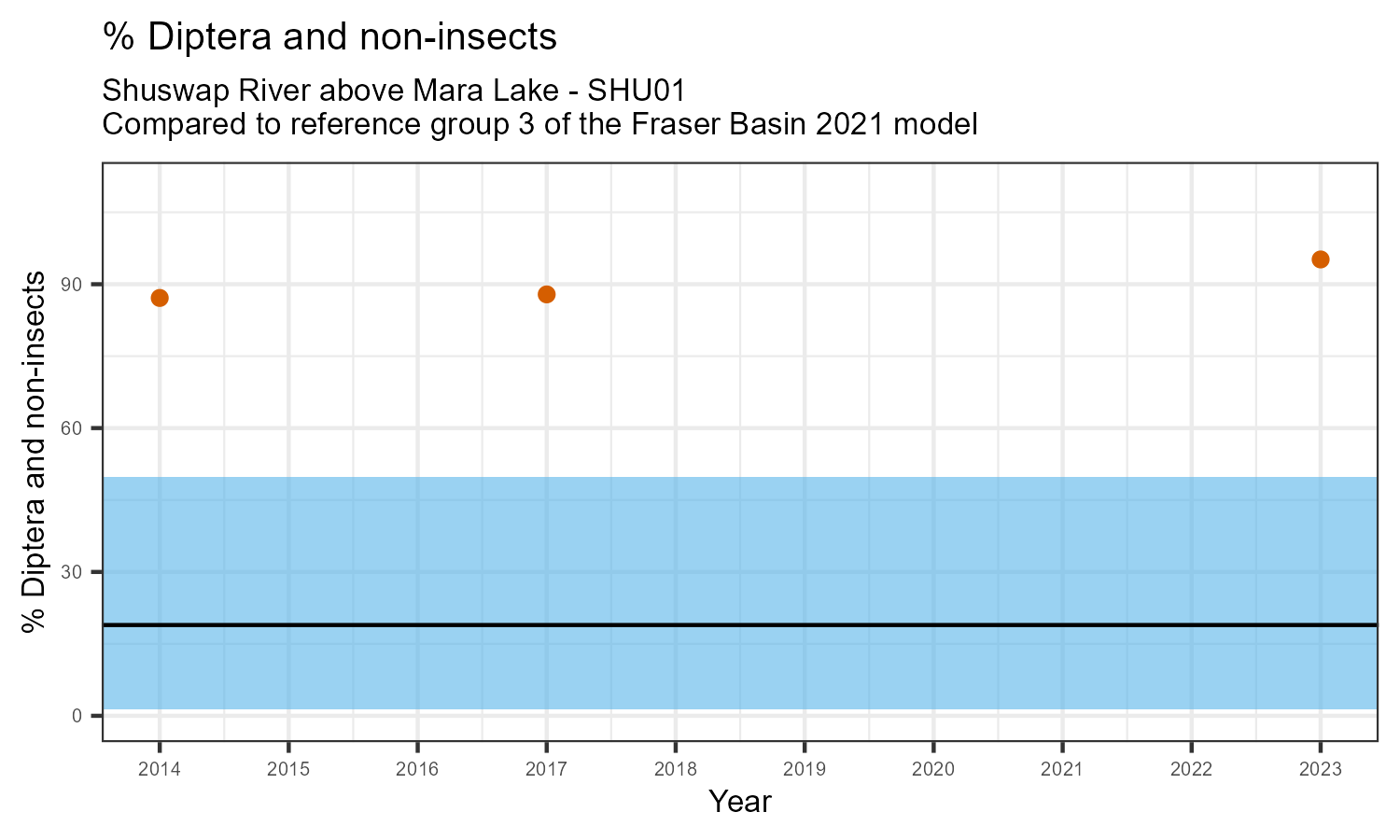
% Diptera and non-insects is the proportion of invertebrates that either are not insects, or are insects in the taxonomic order Diptera. Diptera are flies, and along with non-insects they represent the more pollution tolerant members of the aquatic community. The % Diptera and non-insects may increase in response to habitat disturbances like poor water quality.
| 2014 | 2017 | 2023 | Minimum | Median | Maximum | |
|---|---|---|---|---|---|---|
| Total abundance | 977.01 | 132.00 | 3310.00 | 285.00 | 924.31 | 2328.19 |
| % EPT | 11.70 | 12.12 | 4.53 | 49.84 | 80.95 | 98.73 |
| % Ephemeroptera | 8.48 | 4.55 | 2.72 | 15.92 | 47.87 | 87.06 |
| % Plecoptera | 0.58 | 3.79 | 0.00 | 4.29 | 20.15 | 79.10 |
| % Trichoptera | 2.63 | 3.79 | 1.81 | 0.00 | 6.53 | 58.66 |
| % Chironomidae | 73.40 | 86.36 | 39.58 | 0.00 | 9.83 | 38.93 |
| % Diptera and non-insects | 87.14 | 87.88 | 95.17 | 1.27 | 18.93 | 49.84 |
| % Filterers | 74.86 | 87.12 | 39.58 | 1.40 | 12.59 | 38.93 |
| % Gatherers | 86.26 | 91.67 | 86.71 | 38.46 | 86.84 | 97.52 |
| % Predators | 89.18 | 93.18 | 96.68 | 17.59 | 50.11 | 84.67 |
| % Scrapers | 83.34 | 90.91 | 43.20 | 31.09 | 79.02 | 95.27 |
| % Shredders | 76.61 | 87.88 | 41.99 | 6.94 | 31.77 | 67.66 |
| Family richness | 15.00 | 11.00 | 11.00 | 10.00 | 19.00 | 27.00 |
| EPT families | 5.00 | 8.00 | 4.00 | 6.00 | 12.50 | 18.00 |
| Ephemeroptera families | 3.00 | 3.00 | 1.00 | 2.00 | 4.00 | 6.00 |
| Plecoptera families | 0.00 | 4.00 | 0.00 | 2.00 | 5.00 | 8.00 |
| Trichoptera families | 2.00 | 1.00 | 3.00 | 0.00 | 3.50 | 6.00 |
| Diptera families | 3.00 | 2.00 | 3.00 | 1.00 | 3.00 | 6.00 |
| Coleoptera families | 1.00 | 0.00 | 1.00 | 0.00 | 0.00 | 1.00 |
| Long-Lived family richness | 1.00 | 1.00 | 1.00 | 0.00 | 0.00 | 2.00 |
| Clinger family richness | 4.00 | 7.00 | 4.00 | 7.00 | 12.00 | 17.00 |
| Intolerant family richness | 3.00 | 6.00 | 2.00 | 3.00 | 10.00 | 16.00 |
| % Tolerant family abundance | 10.23 | 0.76 | 49.55 | 0.00 | 1.34 | 18.48 |
| % Top 2 dominant families | 83.14 | 91.54 | 81.87 | 28.57 | 53.37 | 81.70 |
| Simpsons diversity | 0.44 | 0.23 | 0.66 | 0.48 | 0.81 | 0.91 |
| Simpsons evenness | 0.12 | 0.12 | 0.26 | 0.10 | 0.31 | 0.67 |
| Hilsenhoff Biotic Index (NW) | 5.91 | 6.27 | 7.50 | 0.94 | 2.91 | 4.58 |
% Top 2 dominant families
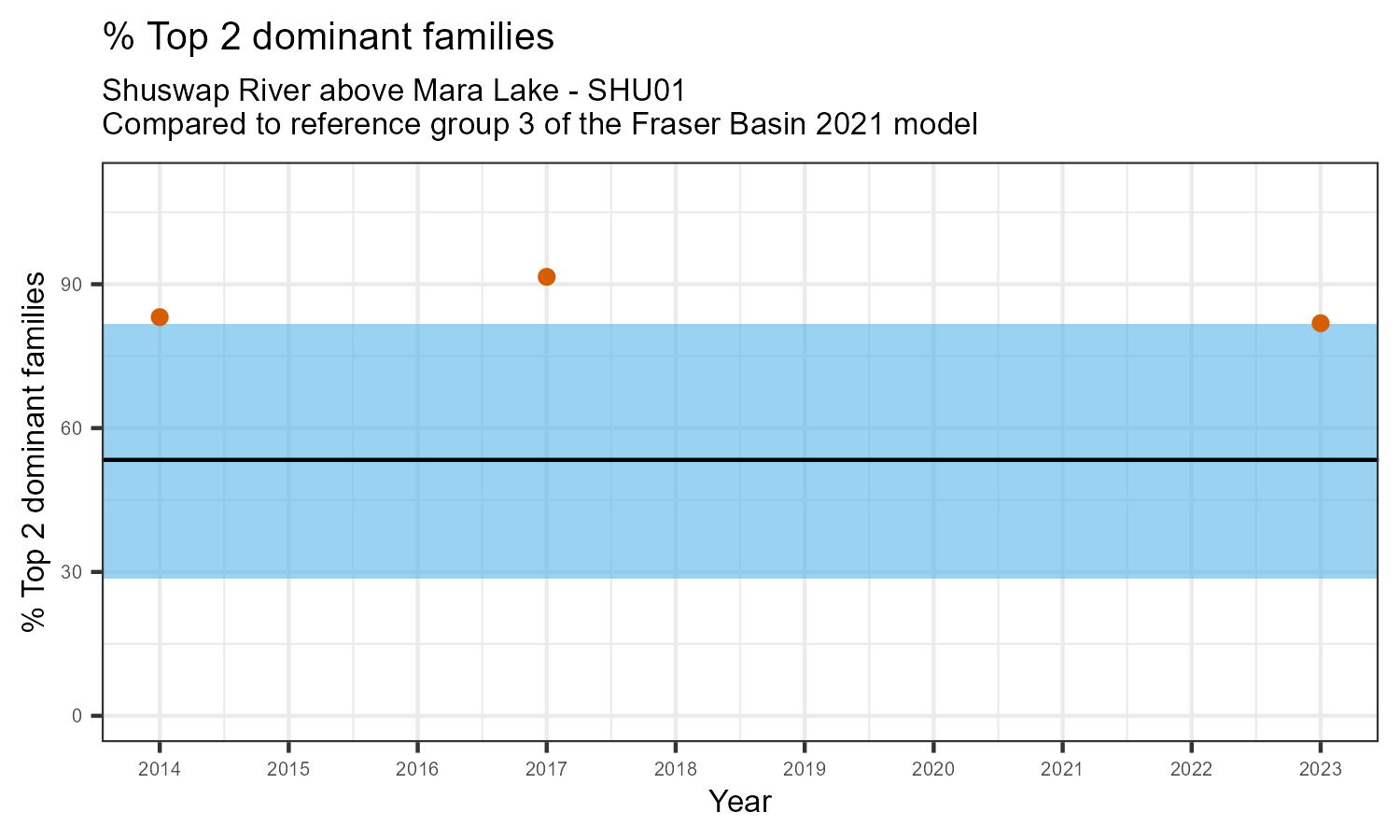
% Top 2 dominant families is the proportion of the total sample represented by the two most abundant families of invertebrates. A healthy aquatic community should have a balance of many types of invertebrates. If only one or two families dominate the community, this can be a sign of habitat disturbance. The percentage of the two most dominant families in the community may increase in response to disturbance.
| 2014 | 2017 | 2023 | Minimum | Median | Maximum | |
|---|---|---|---|---|---|---|
| Total abundance | 977.01 | 132.00 | 3310.00 | 285.00 | 924.31 | 2328.19 |
| % EPT | 11.70 | 12.12 | 4.53 | 49.84 | 80.95 | 98.73 |
| % Ephemeroptera | 8.48 | 4.55 | 2.72 | 15.92 | 47.87 | 87.06 |
| % Plecoptera | 0.58 | 3.79 | 0.00 | 4.29 | 20.15 | 79.10 |
| % Trichoptera | 2.63 | 3.79 | 1.81 | 0.00 | 6.53 | 58.66 |
| % Chironomidae | 73.40 | 86.36 | 39.58 | 0.00 | 9.83 | 38.93 |
| % Diptera and non-insects | 87.14 | 87.88 | 95.17 | 1.27 | 18.93 | 49.84 |
| % Filterers | 74.86 | 87.12 | 39.58 | 1.40 | 12.59 | 38.93 |
| % Gatherers | 86.26 | 91.67 | 86.71 | 38.46 | 86.84 | 97.52 |
| % Predators | 89.18 | 93.18 | 96.68 | 17.59 | 50.11 | 84.67 |
| % Scrapers | 83.34 | 90.91 | 43.20 | 31.09 | 79.02 | 95.27 |
| % Shredders | 76.61 | 87.88 | 41.99 | 6.94 | 31.77 | 67.66 |
| Family richness | 15.00 | 11.00 | 11.00 | 10.00 | 19.00 | 27.00 |
| EPT families | 5.00 | 8.00 | 4.00 | 6.00 | 12.50 | 18.00 |
| Ephemeroptera families | 3.00 | 3.00 | 1.00 | 2.00 | 4.00 | 6.00 |
| Plecoptera families | 0.00 | 4.00 | 0.00 | 2.00 | 5.00 | 8.00 |
| Trichoptera families | 2.00 | 1.00 | 3.00 | 0.00 | 3.50 | 6.00 |
| Diptera families | 3.00 | 2.00 | 3.00 | 1.00 | 3.00 | 6.00 |
| Coleoptera families | 1.00 | 0.00 | 1.00 | 0.00 | 0.00 | 1.00 |
| Long-Lived family richness | 1.00 | 1.00 | 1.00 | 0.00 | 0.00 | 2.00 |
| Clinger family richness | 4.00 | 7.00 | 4.00 | 7.00 | 12.00 | 17.00 |
| Intolerant family richness | 3.00 | 6.00 | 2.00 | 3.00 | 10.00 | 16.00 |
| % Tolerant family abundance | 10.23 | 0.76 | 49.55 | 0.00 | 1.34 | 18.48 |
| % Top 2 dominant families | 83.14 | 91.54 | 81.87 | 28.57 | 53.37 | 81.70 |
| Simpsons diversity | 0.44 | 0.23 | 0.66 | 0.48 | 0.81 | 0.91 |
| Simpsons evenness | 0.12 | 0.12 | 0.26 | 0.10 | 0.31 | 0.67 |
| Hilsenhoff Biotic Index (NW) | 5.91 | 6.27 | 7.50 | 0.94 | 2.91 | 4.58 |
Richness
Family richness
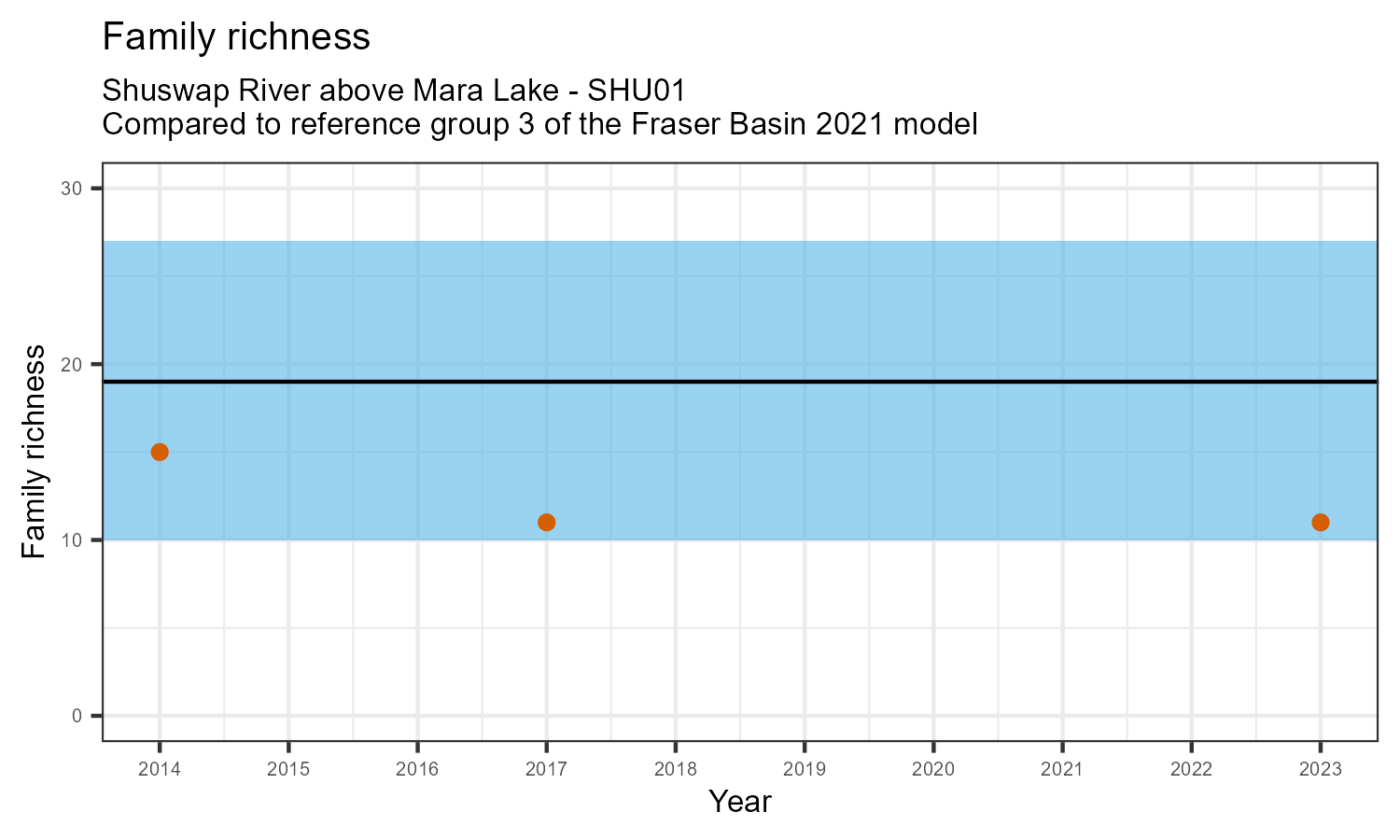
Family richness is the total number of taxonomic families identified. Family richness can decline in response to habitat disturbances or introduction of invasive species.
| 2014 | 2017 | 2023 | Minimum | Median | Maximum | |
|---|---|---|---|---|---|---|
| Total abundance | 977.01 | 132.00 | 3310.00 | 285.00 | 924.31 | 2328.19 |
| % EPT | 11.70 | 12.12 | 4.53 | 49.84 | 80.95 | 98.73 |
| % Ephemeroptera | 8.48 | 4.55 | 2.72 | 15.92 | 47.87 | 87.06 |
| % Plecoptera | 0.58 | 3.79 | 0.00 | 4.29 | 20.15 | 79.10 |
| % Trichoptera | 2.63 | 3.79 | 1.81 | 0.00 | 6.53 | 58.66 |
| % Chironomidae | 73.40 | 86.36 | 39.58 | 0.00 | 9.83 | 38.93 |
| % Diptera and non-insects | 87.14 | 87.88 | 95.17 | 1.27 | 18.93 | 49.84 |
| % Filterers | 74.86 | 87.12 | 39.58 | 1.40 | 12.59 | 38.93 |
| % Gatherers | 86.26 | 91.67 | 86.71 | 38.46 | 86.84 | 97.52 |
| % Predators | 89.18 | 93.18 | 96.68 | 17.59 | 50.11 | 84.67 |
| % Scrapers | 83.34 | 90.91 | 43.20 | 31.09 | 79.02 | 95.27 |
| % Shredders | 76.61 | 87.88 | 41.99 | 6.94 | 31.77 | 67.66 |
| Family richness | 15.00 | 11.00 | 11.00 | 10.00 | 19.00 | 27.00 |
| EPT families | 5.00 | 8.00 | 4.00 | 6.00 | 12.50 | 18.00 |
| Ephemeroptera families | 3.00 | 3.00 | 1.00 | 2.00 | 4.00 | 6.00 |
| Plecoptera families | 0.00 | 4.00 | 0.00 | 2.00 | 5.00 | 8.00 |
| Trichoptera families | 2.00 | 1.00 | 3.00 | 0.00 | 3.50 | 6.00 |
| Diptera families | 3.00 | 2.00 | 3.00 | 1.00 | 3.00 | 6.00 |
| Coleoptera families | 1.00 | 0.00 | 1.00 | 0.00 | 0.00 | 1.00 |
| Long-Lived family richness | 1.00 | 1.00 | 1.00 | 0.00 | 0.00 | 2.00 |
| Clinger family richness | 4.00 | 7.00 | 4.00 | 7.00 | 12.00 | 17.00 |
| Intolerant family richness | 3.00 | 6.00 | 2.00 | 3.00 | 10.00 | 16.00 |
| % Tolerant family abundance | 10.23 | 0.76 | 49.55 | 0.00 | 1.34 | 18.48 |
| % Top 2 dominant families | 83.14 | 91.54 | 81.87 | 28.57 | 53.37 | 81.70 |
| Simpsons diversity | 0.44 | 0.23 | 0.66 | 0.48 | 0.81 | 0.91 |
| Simpsons evenness | 0.12 | 0.12 | 0.26 | 0.10 | 0.31 | 0.67 |
| Hilsenhoff Biotic Index (NW) | 5.91 | 6.27 | 7.50 | 0.94 | 2.91 | 4.58 |
Ephemeroptera families
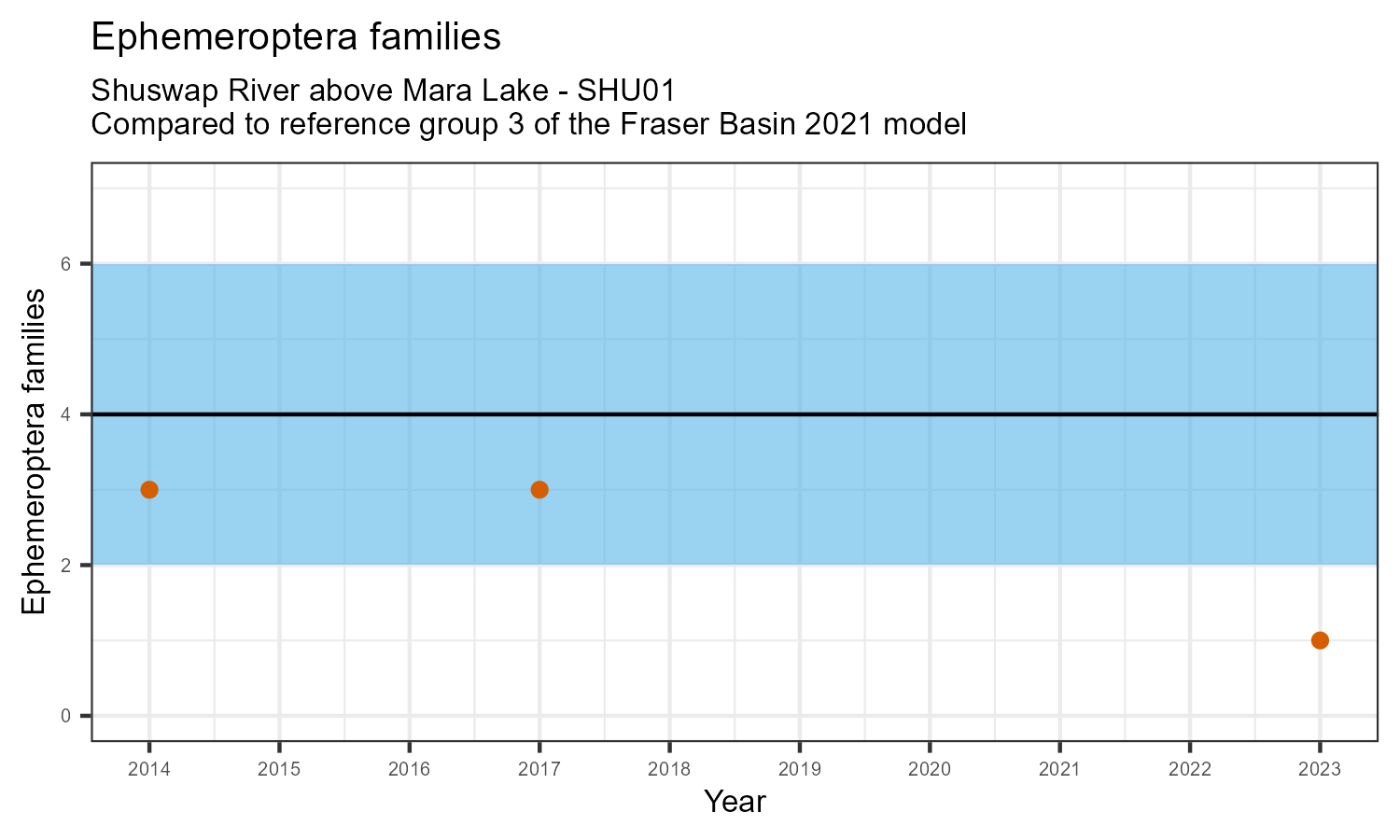
Ephemeroptera family richness is measured by counting how many taxonomic families belong to the order Ephemeroptera. Ephemeroptera are commonly known as mayflies. They are pollution sensitive, so Ephemeroptera family richness may decrease in response to habitat disturbances like poor water quality.
| 2014 | 2017 | 2023 | Minimum | Median | Maximum | |
|---|---|---|---|---|---|---|
| Total abundance | 977.01 | 132.00 | 3310.00 | 285.00 | 924.31 | 2328.19 |
| % EPT | 11.70 | 12.12 | 4.53 | 49.84 | 80.95 | 98.73 |
| % Ephemeroptera | 8.48 | 4.55 | 2.72 | 15.92 | 47.87 | 87.06 |
| % Plecoptera | 0.58 | 3.79 | 0.00 | 4.29 | 20.15 | 79.10 |
| % Trichoptera | 2.63 | 3.79 | 1.81 | 0.00 | 6.53 | 58.66 |
| % Chironomidae | 73.40 | 86.36 | 39.58 | 0.00 | 9.83 | 38.93 |
| % Diptera and non-insects | 87.14 | 87.88 | 95.17 | 1.27 | 18.93 | 49.84 |
| % Filterers | 74.86 | 87.12 | 39.58 | 1.40 | 12.59 | 38.93 |
| % Gatherers | 86.26 | 91.67 | 86.71 | 38.46 | 86.84 | 97.52 |
| % Predators | 89.18 | 93.18 | 96.68 | 17.59 | 50.11 | 84.67 |
| % Scrapers | 83.34 | 90.91 | 43.20 | 31.09 | 79.02 | 95.27 |
| % Shredders | 76.61 | 87.88 | 41.99 | 6.94 | 31.77 | 67.66 |
| Family richness | 15.00 | 11.00 | 11.00 | 10.00 | 19.00 | 27.00 |
| EPT families | 5.00 | 8.00 | 4.00 | 6.00 | 12.50 | 18.00 |
| Ephemeroptera families | 3.00 | 3.00 | 1.00 | 2.00 | 4.00 | 6.00 |
| Plecoptera families | 0.00 | 4.00 | 0.00 | 2.00 | 5.00 | 8.00 |
| Trichoptera families | 2.00 | 1.00 | 3.00 | 0.00 | 3.50 | 6.00 |
| Diptera families | 3.00 | 2.00 | 3.00 | 1.00 | 3.00 | 6.00 |
| Coleoptera families | 1.00 | 0.00 | 1.00 | 0.00 | 0.00 | 1.00 |
| Long-Lived family richness | 1.00 | 1.00 | 1.00 | 0.00 | 0.00 | 2.00 |
| Clinger family richness | 4.00 | 7.00 | 4.00 | 7.00 | 12.00 | 17.00 |
| Intolerant family richness | 3.00 | 6.00 | 2.00 | 3.00 | 10.00 | 16.00 |
| % Tolerant family abundance | 10.23 | 0.76 | 49.55 | 0.00 | 1.34 | 18.48 |
| % Top 2 dominant families | 83.14 | 91.54 | 81.87 | 28.57 | 53.37 | 81.70 |
| Simpsons diversity | 0.44 | 0.23 | 0.66 | 0.48 | 0.81 | 0.91 |
| Simpsons evenness | 0.12 | 0.12 | 0.26 | 0.10 | 0.31 | 0.67 |
| Hilsenhoff Biotic Index (NW) | 5.91 | 6.27 | 7.50 | 0.94 | 2.91 | 4.58 |
Plecoptera families
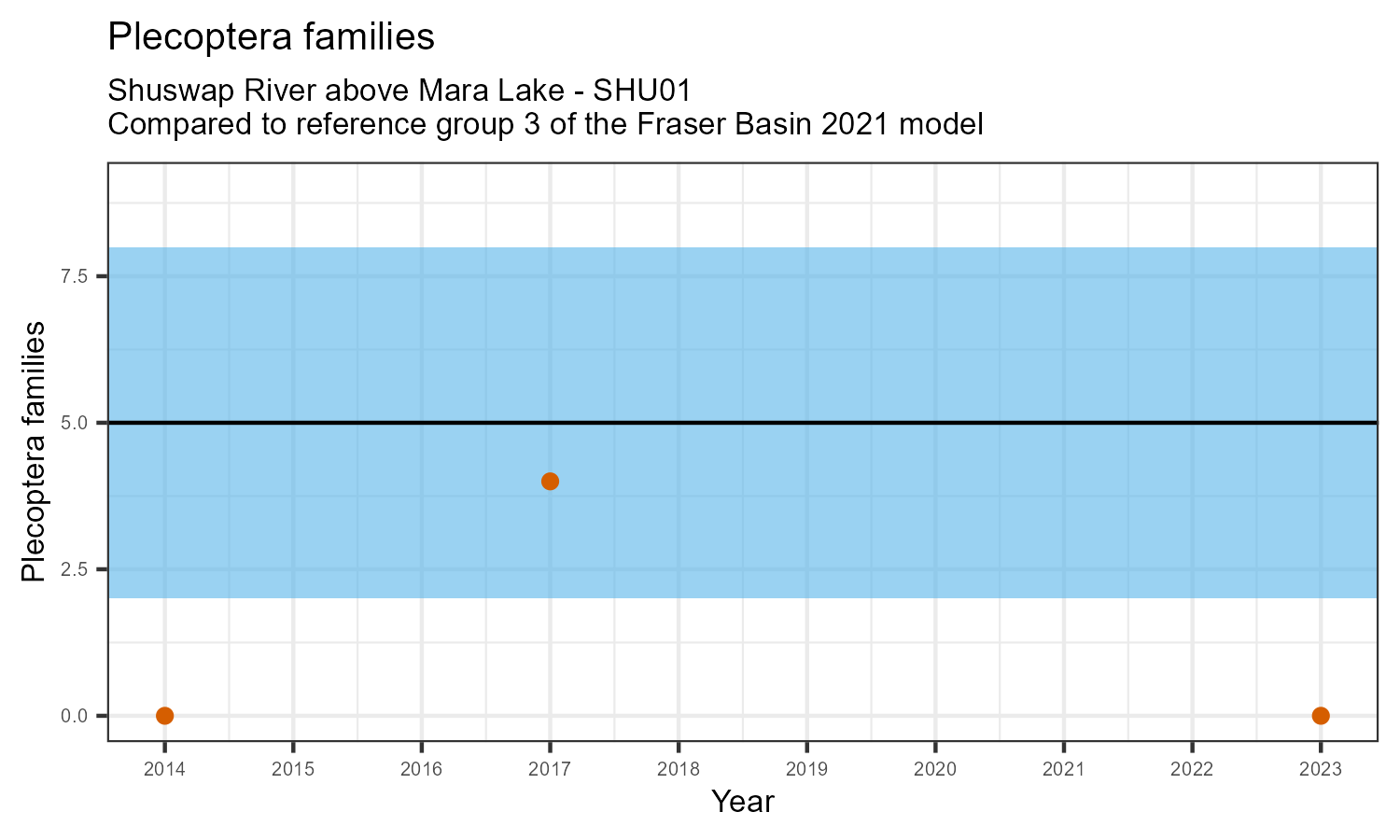
Plecoptera family richness is measured by counting how many taxonomic families in a sample belong to the order Plecoptera. Plecoptera are commonly known as stoneflies. They are pollution sensitive, so Plecoptera family richness may decrease in response to habitat disturbances like poor water quality.
| 2014 | 2017 | 2023 | Minimum | Median | Maximum | |
|---|---|---|---|---|---|---|
| Total abundance | 977.01 | 132.00 | 3310.00 | 285.00 | 924.31 | 2328.19 |
| % EPT | 11.70 | 12.12 | 4.53 | 49.84 | 80.95 | 98.73 |
| % Ephemeroptera | 8.48 | 4.55 | 2.72 | 15.92 | 47.87 | 87.06 |
| % Plecoptera | 0.58 | 3.79 | 0.00 | 4.29 | 20.15 | 79.10 |
| % Trichoptera | 2.63 | 3.79 | 1.81 | 0.00 | 6.53 | 58.66 |
| % Chironomidae | 73.40 | 86.36 | 39.58 | 0.00 | 9.83 | 38.93 |
| % Diptera and non-insects | 87.14 | 87.88 | 95.17 | 1.27 | 18.93 | 49.84 |
| % Filterers | 74.86 | 87.12 | 39.58 | 1.40 | 12.59 | 38.93 |
| % Gatherers | 86.26 | 91.67 | 86.71 | 38.46 | 86.84 | 97.52 |
| % Predators | 89.18 | 93.18 | 96.68 | 17.59 | 50.11 | 84.67 |
| % Scrapers | 83.34 | 90.91 | 43.20 | 31.09 | 79.02 | 95.27 |
| % Shredders | 76.61 | 87.88 | 41.99 | 6.94 | 31.77 | 67.66 |
| Family richness | 15.00 | 11.00 | 11.00 | 10.00 | 19.00 | 27.00 |
| EPT families | 5.00 | 8.00 | 4.00 | 6.00 | 12.50 | 18.00 |
| Ephemeroptera families | 3.00 | 3.00 | 1.00 | 2.00 | 4.00 | 6.00 |
| Plecoptera families | 0.00 | 4.00 | 0.00 | 2.00 | 5.00 | 8.00 |
| Trichoptera families | 2.00 | 1.00 | 3.00 | 0.00 | 3.50 | 6.00 |
| Diptera families | 3.00 | 2.00 | 3.00 | 1.00 | 3.00 | 6.00 |
| Coleoptera families | 1.00 | 0.00 | 1.00 | 0.00 | 0.00 | 1.00 |
| Long-Lived family richness | 1.00 | 1.00 | 1.00 | 0.00 | 0.00 | 2.00 |
| Clinger family richness | 4.00 | 7.00 | 4.00 | 7.00 | 12.00 | 17.00 |
| Intolerant family richness | 3.00 | 6.00 | 2.00 | 3.00 | 10.00 | 16.00 |
| % Tolerant family abundance | 10.23 | 0.76 | 49.55 | 0.00 | 1.34 | 18.48 |
| % Top 2 dominant families | 83.14 | 91.54 | 81.87 | 28.57 | 53.37 | 81.70 |
| Simpsons diversity | 0.44 | 0.23 | 0.66 | 0.48 | 0.81 | 0.91 |
| Simpsons evenness | 0.12 | 0.12 | 0.26 | 0.10 | 0.31 | 0.67 |
| Hilsenhoff Biotic Index (NW) | 5.91 | 6.27 | 7.50 | 0.94 | 2.91 | 4.58 |
Trichoptera families
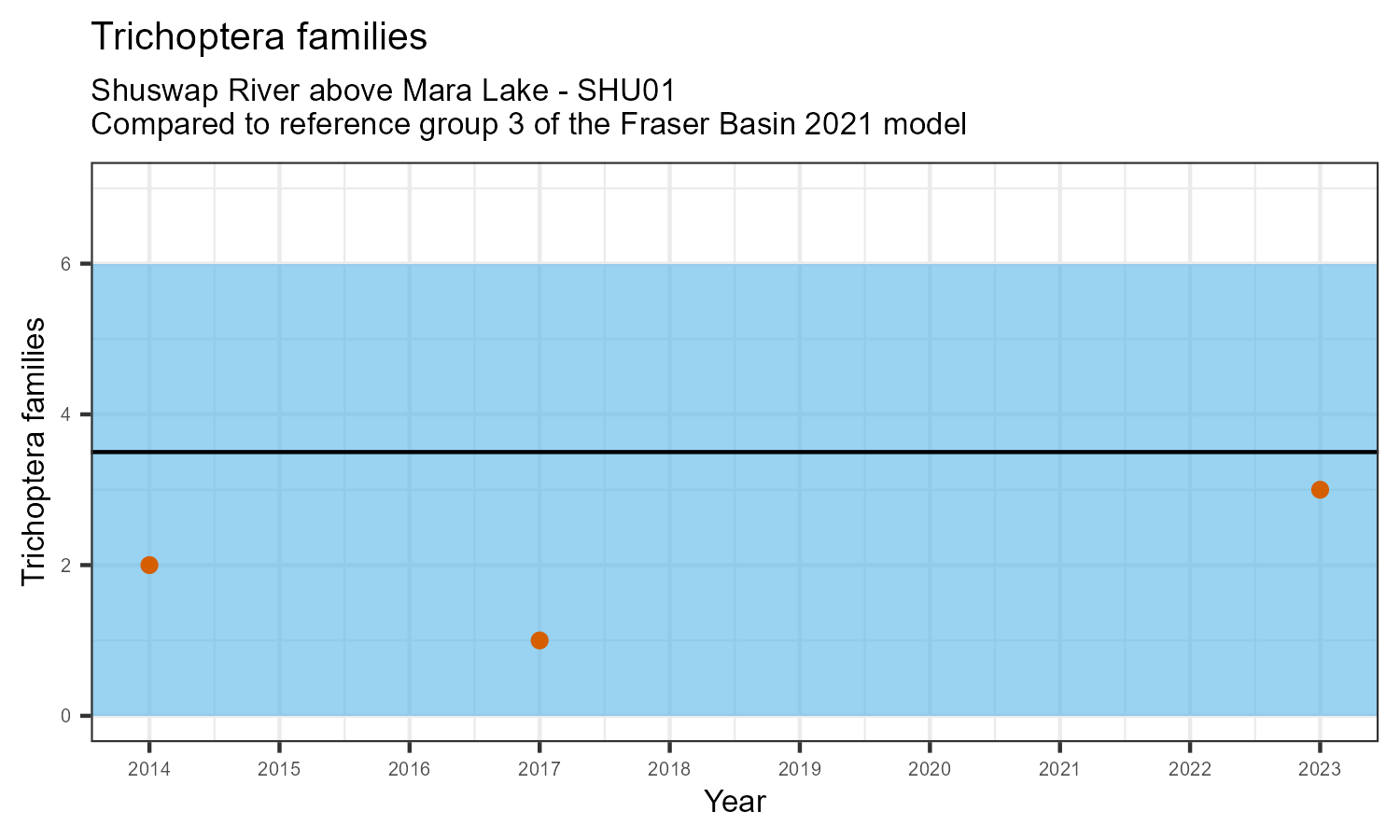
Trichoptera family richness is measured by counting how many taxonomic families in a sample belong to the order Trichoptera. Trichoptera are commonly known as caddisflies. They are pollution sensitive, so Trichoptera family richness may decrease in response to habitat disturbances like poor water quality.
| 2014 | 2017 | 2023 | Minimum | Median | Maximum | |
|---|---|---|---|---|---|---|
| Total abundance | 977.01 | 132.00 | 3310.00 | 285.00 | 924.31 | 2328.19 |
| % EPT | 11.70 | 12.12 | 4.53 | 49.84 | 80.95 | 98.73 |
| % Ephemeroptera | 8.48 | 4.55 | 2.72 | 15.92 | 47.87 | 87.06 |
| % Plecoptera | 0.58 | 3.79 | 0.00 | 4.29 | 20.15 | 79.10 |
| % Trichoptera | 2.63 | 3.79 | 1.81 | 0.00 | 6.53 | 58.66 |
| % Chironomidae | 73.40 | 86.36 | 39.58 | 0.00 | 9.83 | 38.93 |
| % Diptera and non-insects | 87.14 | 87.88 | 95.17 | 1.27 | 18.93 | 49.84 |
| % Filterers | 74.86 | 87.12 | 39.58 | 1.40 | 12.59 | 38.93 |
| % Gatherers | 86.26 | 91.67 | 86.71 | 38.46 | 86.84 | 97.52 |
| % Predators | 89.18 | 93.18 | 96.68 | 17.59 | 50.11 | 84.67 |
| % Scrapers | 83.34 | 90.91 | 43.20 | 31.09 | 79.02 | 95.27 |
| % Shredders | 76.61 | 87.88 | 41.99 | 6.94 | 31.77 | 67.66 |
| Family richness | 15.00 | 11.00 | 11.00 | 10.00 | 19.00 | 27.00 |
| EPT families | 5.00 | 8.00 | 4.00 | 6.00 | 12.50 | 18.00 |
| Ephemeroptera families | 3.00 | 3.00 | 1.00 | 2.00 | 4.00 | 6.00 |
| Plecoptera families | 0.00 | 4.00 | 0.00 | 2.00 | 5.00 | 8.00 |
| Trichoptera families | 2.00 | 1.00 | 3.00 | 0.00 | 3.50 | 6.00 |
| Diptera families | 3.00 | 2.00 | 3.00 | 1.00 | 3.00 | 6.00 |
| Coleoptera families | 1.00 | 0.00 | 1.00 | 0.00 | 0.00 | 1.00 |
| Long-Lived family richness | 1.00 | 1.00 | 1.00 | 0.00 | 0.00 | 2.00 |
| Clinger family richness | 4.00 | 7.00 | 4.00 | 7.00 | 12.00 | 17.00 |
| Intolerant family richness | 3.00 | 6.00 | 2.00 | 3.00 | 10.00 | 16.00 |
| % Tolerant family abundance | 10.23 | 0.76 | 49.55 | 0.00 | 1.34 | 18.48 |
| % Top 2 dominant families | 83.14 | 91.54 | 81.87 | 28.57 | 53.37 | 81.70 |
| Simpsons diversity | 0.44 | 0.23 | 0.66 | 0.48 | 0.81 | 0.91 |
| Simpsons evenness | 0.12 | 0.12 | 0.26 | 0.10 | 0.31 | 0.67 |
| Hilsenhoff Biotic Index (NW) | 5.91 | 6.27 | 7.50 | 0.94 | 2.91 | 4.58 |
EPT families
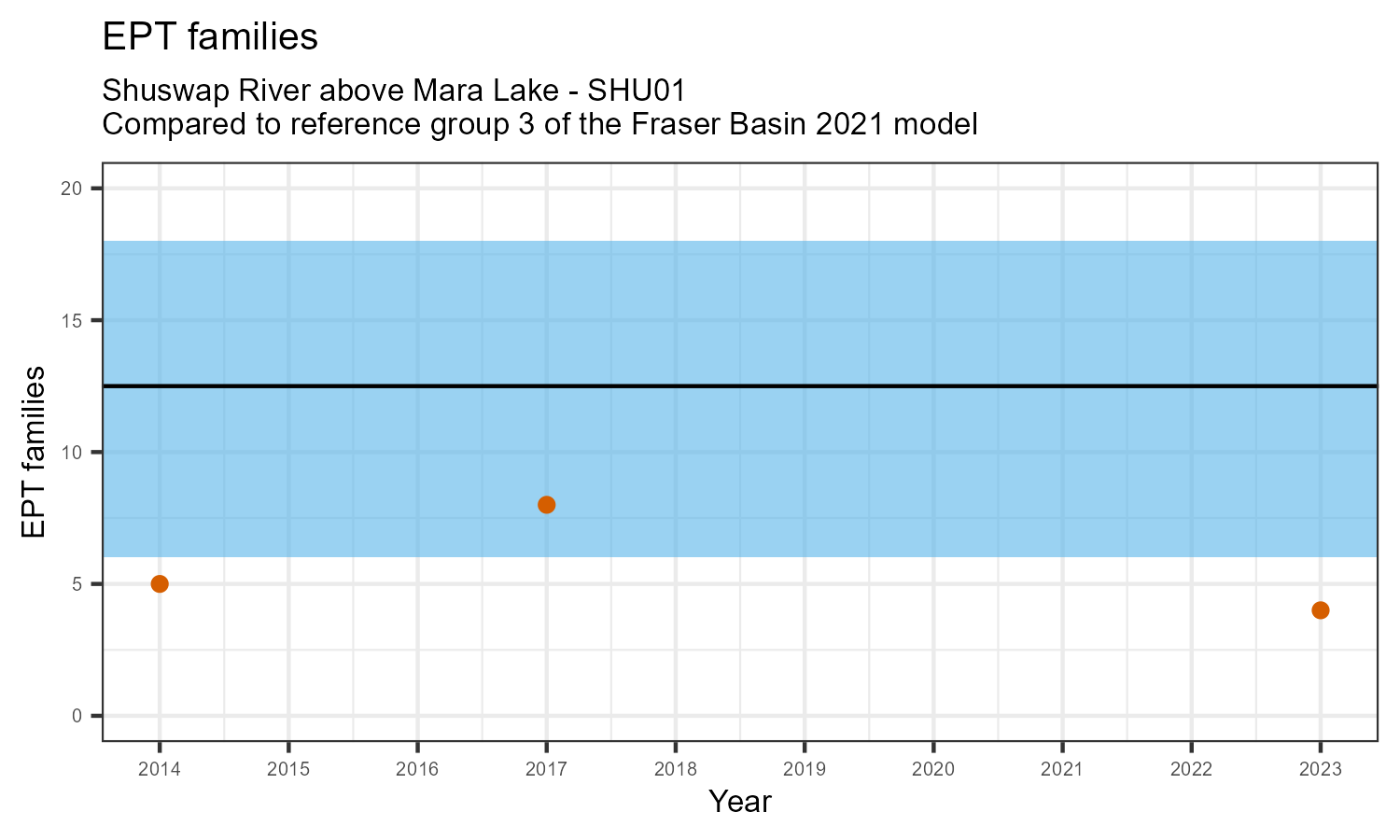
EPT family richness is measured by counting how many taxonomic families belong to one of the pollution sensitive EPT orders: Ephemeroptera (mayflies), Plecoptera (stoneflies), or Trichoptera (caddisflies). EPT family richness may decrease in response to habitat disturbances like poor water quality.
| 2014 | 2017 | 2023 | Minimum | Median | Maximum | |
|---|---|---|---|---|---|---|
| Total abundance | 977.01 | 132.00 | 3310.00 | 285.00 | 924.31 | 2328.19 |
| % EPT | 11.70 | 12.12 | 4.53 | 49.84 | 80.95 | 98.73 |
| % Ephemeroptera | 8.48 | 4.55 | 2.72 | 15.92 | 47.87 | 87.06 |
| % Plecoptera | 0.58 | 3.79 | 0.00 | 4.29 | 20.15 | 79.10 |
| % Trichoptera | 2.63 | 3.79 | 1.81 | 0.00 | 6.53 | 58.66 |
| % Chironomidae | 73.40 | 86.36 | 39.58 | 0.00 | 9.83 | 38.93 |
| % Diptera and non-insects | 87.14 | 87.88 | 95.17 | 1.27 | 18.93 | 49.84 |
| % Filterers | 74.86 | 87.12 | 39.58 | 1.40 | 12.59 | 38.93 |
| % Gatherers | 86.26 | 91.67 | 86.71 | 38.46 | 86.84 | 97.52 |
| % Predators | 89.18 | 93.18 | 96.68 | 17.59 | 50.11 | 84.67 |
| % Scrapers | 83.34 | 90.91 | 43.20 | 31.09 | 79.02 | 95.27 |
| % Shredders | 76.61 | 87.88 | 41.99 | 6.94 | 31.77 | 67.66 |
| Family richness | 15.00 | 11.00 | 11.00 | 10.00 | 19.00 | 27.00 |
| EPT families | 5.00 | 8.00 | 4.00 | 6.00 | 12.50 | 18.00 |
| Ephemeroptera families | 3.00 | 3.00 | 1.00 | 2.00 | 4.00 | 6.00 |
| Plecoptera families | 0.00 | 4.00 | 0.00 | 2.00 | 5.00 | 8.00 |
| Trichoptera families | 2.00 | 1.00 | 3.00 | 0.00 | 3.50 | 6.00 |
| Diptera families | 3.00 | 2.00 | 3.00 | 1.00 | 3.00 | 6.00 |
| Coleoptera families | 1.00 | 0.00 | 1.00 | 0.00 | 0.00 | 1.00 |
| Long-Lived family richness | 1.00 | 1.00 | 1.00 | 0.00 | 0.00 | 2.00 |
| Clinger family richness | 4.00 | 7.00 | 4.00 | 7.00 | 12.00 | 17.00 |
| Intolerant family richness | 3.00 | 6.00 | 2.00 | 3.00 | 10.00 | 16.00 |
| % Tolerant family abundance | 10.23 | 0.76 | 49.55 | 0.00 | 1.34 | 18.48 |
| % Top 2 dominant families | 83.14 | 91.54 | 81.87 | 28.57 | 53.37 | 81.70 |
| Simpsons diversity | 0.44 | 0.23 | 0.66 | 0.48 | 0.81 | 0.91 |
| Simpsons evenness | 0.12 | 0.12 | 0.26 | 0.10 | 0.31 | 0.67 |
| Hilsenhoff Biotic Index (NW) | 5.91 | 6.27 | 7.50 | 0.94 | 2.91 | 4.58 |
Coleoptera families
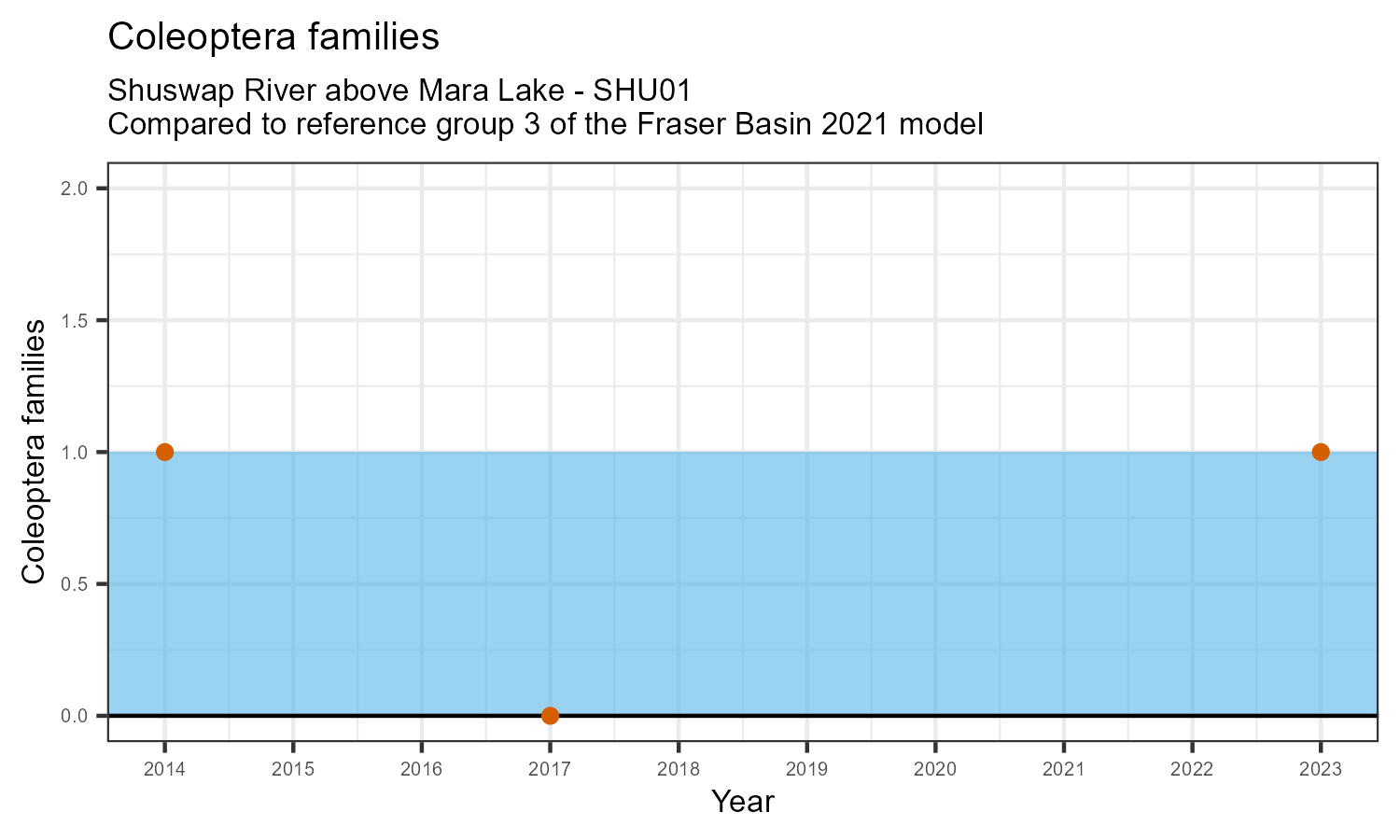
Coleoptera family richness is measured by counting how many taxonomic families belong to the order Coleoptera. Coleoptera are commonly known as beetles, many of which are aquatic or semi-aquatic. They are pollution sensitive, so Coleoptera family richness may decrease in response to habitat disturbances like poor water quality.
| 2014 | 2017 | 2023 | Minimum | Median | Maximum | |
|---|---|---|---|---|---|---|
| Total abundance | 977.01 | 132.00 | 3310.00 | 285.00 | 924.31 | 2328.19 |
| % EPT | 11.70 | 12.12 | 4.53 | 49.84 | 80.95 | 98.73 |
| % Ephemeroptera | 8.48 | 4.55 | 2.72 | 15.92 | 47.87 | 87.06 |
| % Plecoptera | 0.58 | 3.79 | 0.00 | 4.29 | 20.15 | 79.10 |
| % Trichoptera | 2.63 | 3.79 | 1.81 | 0.00 | 6.53 | 58.66 |
| % Chironomidae | 73.40 | 86.36 | 39.58 | 0.00 | 9.83 | 38.93 |
| % Diptera and non-insects | 87.14 | 87.88 | 95.17 | 1.27 | 18.93 | 49.84 |
| % Filterers | 74.86 | 87.12 | 39.58 | 1.40 | 12.59 | 38.93 |
| % Gatherers | 86.26 | 91.67 | 86.71 | 38.46 | 86.84 | 97.52 |
| % Predators | 89.18 | 93.18 | 96.68 | 17.59 | 50.11 | 84.67 |
| % Scrapers | 83.34 | 90.91 | 43.20 | 31.09 | 79.02 | 95.27 |
| % Shredders | 76.61 | 87.88 | 41.99 | 6.94 | 31.77 | 67.66 |
| Family richness | 15.00 | 11.00 | 11.00 | 10.00 | 19.00 | 27.00 |
| EPT families | 5.00 | 8.00 | 4.00 | 6.00 | 12.50 | 18.00 |
| Ephemeroptera families | 3.00 | 3.00 | 1.00 | 2.00 | 4.00 | 6.00 |
| Plecoptera families | 0.00 | 4.00 | 0.00 | 2.00 | 5.00 | 8.00 |
| Trichoptera families | 2.00 | 1.00 | 3.00 | 0.00 | 3.50 | 6.00 |
| Diptera families | 3.00 | 2.00 | 3.00 | 1.00 | 3.00 | 6.00 |
| Coleoptera families | 1.00 | 0.00 | 1.00 | 0.00 | 0.00 | 1.00 |
| Long-Lived family richness | 1.00 | 1.00 | 1.00 | 0.00 | 0.00 | 2.00 |
| Clinger family richness | 4.00 | 7.00 | 4.00 | 7.00 | 12.00 | 17.00 |
| Intolerant family richness | 3.00 | 6.00 | 2.00 | 3.00 | 10.00 | 16.00 |
| % Tolerant family abundance | 10.23 | 0.76 | 49.55 | 0.00 | 1.34 | 18.48 |
| % Top 2 dominant families | 83.14 | 91.54 | 81.87 | 28.57 | 53.37 | 81.70 |
| Simpsons diversity | 0.44 | 0.23 | 0.66 | 0.48 | 0.81 | 0.91 |
| Simpsons evenness | 0.12 | 0.12 | 0.26 | 0.10 | 0.31 | 0.67 |
| Hilsenhoff Biotic Index (NW) | 5.91 | 6.27 | 7.50 | 0.94 | 2.91 | 4.58 |
Diptera families
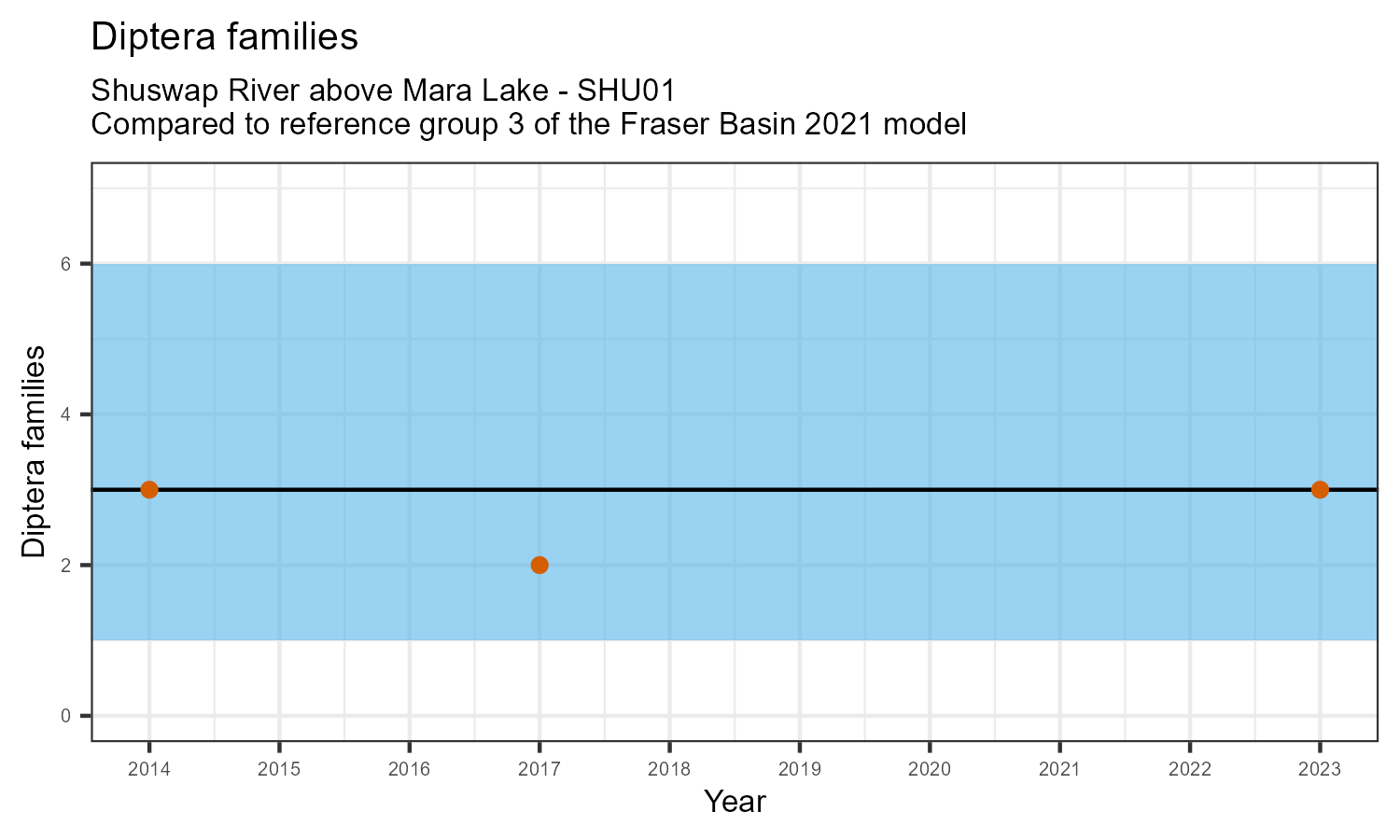
Diptera family richness is measured by counting how many taxonomic families belong to the order Diptera. Diptera are commonly known as flies. Flies tend to be pollution tolerant, so Diptera family richness may increase in response to habitat disturbances like poor water quality.
| 2014 | 2017 | 2023 | Minimum | Median | Maximum | |
|---|---|---|---|---|---|---|
| Total abundance | 977.01 | 132.00 | 3310.00 | 285.00 | 924.31 | 2328.19 |
| % EPT | 11.70 | 12.12 | 4.53 | 49.84 | 80.95 | 98.73 |
| % Ephemeroptera | 8.48 | 4.55 | 2.72 | 15.92 | 47.87 | 87.06 |
| % Plecoptera | 0.58 | 3.79 | 0.00 | 4.29 | 20.15 | 79.10 |
| % Trichoptera | 2.63 | 3.79 | 1.81 | 0.00 | 6.53 | 58.66 |
| % Chironomidae | 73.40 | 86.36 | 39.58 | 0.00 | 9.83 | 38.93 |
| % Diptera and non-insects | 87.14 | 87.88 | 95.17 | 1.27 | 18.93 | 49.84 |
| % Filterers | 74.86 | 87.12 | 39.58 | 1.40 | 12.59 | 38.93 |
| % Gatherers | 86.26 | 91.67 | 86.71 | 38.46 | 86.84 | 97.52 |
| % Predators | 89.18 | 93.18 | 96.68 | 17.59 | 50.11 | 84.67 |
| % Scrapers | 83.34 | 90.91 | 43.20 | 31.09 | 79.02 | 95.27 |
| % Shredders | 76.61 | 87.88 | 41.99 | 6.94 | 31.77 | 67.66 |
| Family richness | 15.00 | 11.00 | 11.00 | 10.00 | 19.00 | 27.00 |
| EPT families | 5.00 | 8.00 | 4.00 | 6.00 | 12.50 | 18.00 |
| Ephemeroptera families | 3.00 | 3.00 | 1.00 | 2.00 | 4.00 | 6.00 |
| Plecoptera families | 0.00 | 4.00 | 0.00 | 2.00 | 5.00 | 8.00 |
| Trichoptera families | 2.00 | 1.00 | 3.00 | 0.00 | 3.50 | 6.00 |
| Diptera families | 3.00 | 2.00 | 3.00 | 1.00 | 3.00 | 6.00 |
| Coleoptera families | 1.00 | 0.00 | 1.00 | 0.00 | 0.00 | 1.00 |
| Long-Lived family richness | 1.00 | 1.00 | 1.00 | 0.00 | 0.00 | 2.00 |
| Clinger family richness | 4.00 | 7.00 | 4.00 | 7.00 | 12.00 | 17.00 |
| Intolerant family richness | 3.00 | 6.00 | 2.00 | 3.00 | 10.00 | 16.00 |
| % Tolerant family abundance | 10.23 | 0.76 | 49.55 | 0.00 | 1.34 | 18.48 |
| % Top 2 dominant families | 83.14 | 91.54 | 81.87 | 28.57 | 53.37 | 81.70 |
| Simpsons diversity | 0.44 | 0.23 | 0.66 | 0.48 | 0.81 | 0.91 |
| Simpsons evenness | 0.12 | 0.12 | 0.26 | 0.10 | 0.31 | 0.67 |
| Hilsenhoff Biotic Index (NW) | 5.91 | 6.27 | 7.50 | 0.94 | 2.91 | 4.58 |
Long-Lived family richness
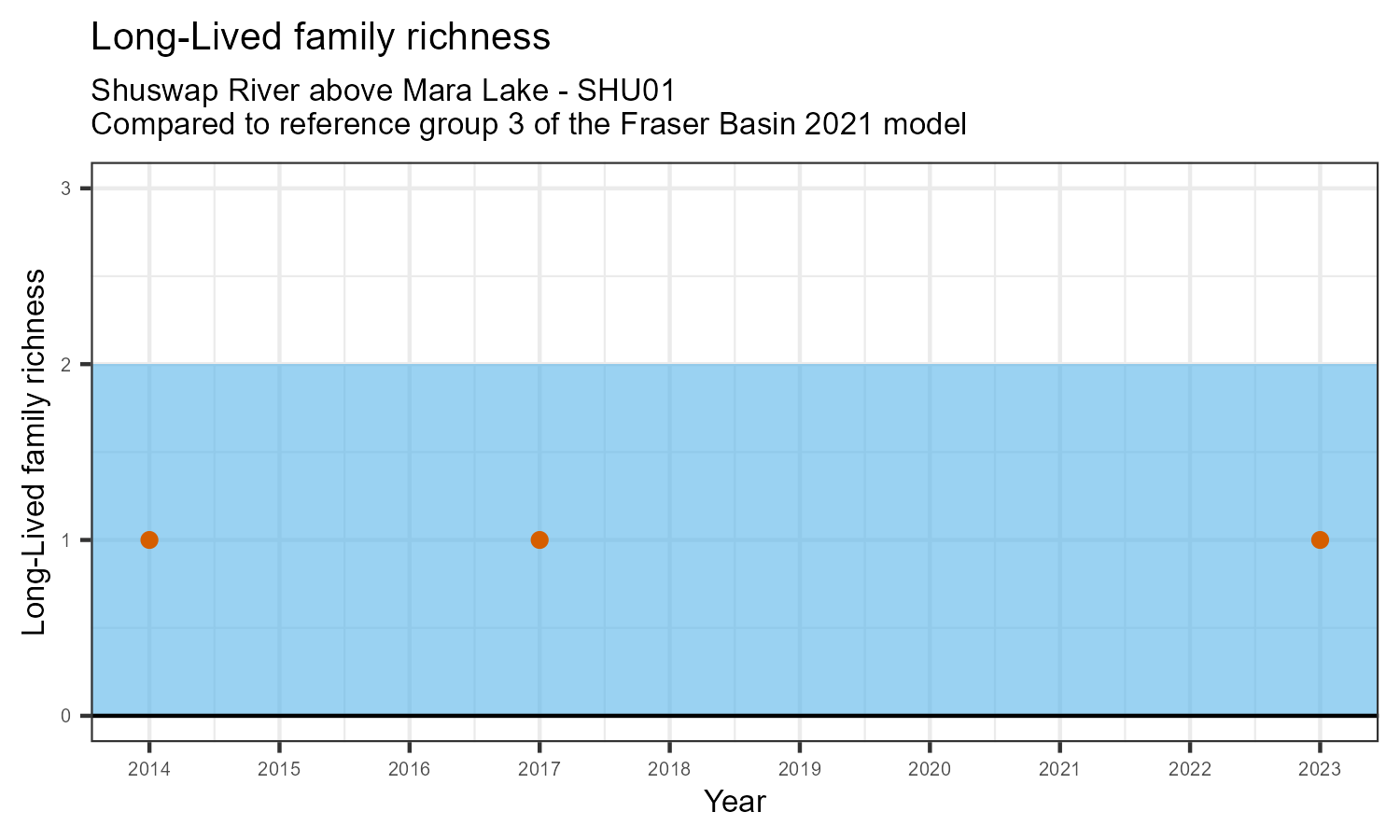
Long-lived family richness counts the number of taxonomic families that need more than 1 year to complete their life cycle. These families have been exposed to conditions in the water over a longer period. They provide information on historical and current water quality conditions. The number of long-lived families may decrease in response to habitat disturbances like poor water quality.
| 2014 | 2017 | 2023 | Minimum | Median | Maximum | |
|---|---|---|---|---|---|---|
| Total abundance | 977.01 | 132.00 | 3310.00 | 285.00 | 924.31 | 2328.19 |
| % EPT | 11.70 | 12.12 | 4.53 | 49.84 | 80.95 | 98.73 |
| % Ephemeroptera | 8.48 | 4.55 | 2.72 | 15.92 | 47.87 | 87.06 |
| % Plecoptera | 0.58 | 3.79 | 0.00 | 4.29 | 20.15 | 79.10 |
| % Trichoptera | 2.63 | 3.79 | 1.81 | 0.00 | 6.53 | 58.66 |
| % Chironomidae | 73.40 | 86.36 | 39.58 | 0.00 | 9.83 | 38.93 |
| % Diptera and non-insects | 87.14 | 87.88 | 95.17 | 1.27 | 18.93 | 49.84 |
| % Filterers | 74.86 | 87.12 | 39.58 | 1.40 | 12.59 | 38.93 |
| % Gatherers | 86.26 | 91.67 | 86.71 | 38.46 | 86.84 | 97.52 |
| % Predators | 89.18 | 93.18 | 96.68 | 17.59 | 50.11 | 84.67 |
| % Scrapers | 83.34 | 90.91 | 43.20 | 31.09 | 79.02 | 95.27 |
| % Shredders | 76.61 | 87.88 | 41.99 | 6.94 | 31.77 | 67.66 |
| Family richness | 15.00 | 11.00 | 11.00 | 10.00 | 19.00 | 27.00 |
| EPT families | 5.00 | 8.00 | 4.00 | 6.00 | 12.50 | 18.00 |
| Ephemeroptera families | 3.00 | 3.00 | 1.00 | 2.00 | 4.00 | 6.00 |
| Plecoptera families | 0.00 | 4.00 | 0.00 | 2.00 | 5.00 | 8.00 |
| Trichoptera families | 2.00 | 1.00 | 3.00 | 0.00 | 3.50 | 6.00 |
| Diptera families | 3.00 | 2.00 | 3.00 | 1.00 | 3.00 | 6.00 |
| Coleoptera families | 1.00 | 0.00 | 1.00 | 0.00 | 0.00 | 1.00 |
| Long-Lived family richness | 1.00 | 1.00 | 1.00 | 0.00 | 0.00 | 2.00 |
| Clinger family richness | 4.00 | 7.00 | 4.00 | 7.00 | 12.00 | 17.00 |
| Intolerant family richness | 3.00 | 6.00 | 2.00 | 3.00 | 10.00 | 16.00 |
| % Tolerant family abundance | 10.23 | 0.76 | 49.55 | 0.00 | 1.34 | 18.48 |
| % Top 2 dominant families | 83.14 | 91.54 | 81.87 | 28.57 | 53.37 | 81.70 |
| Simpsons diversity | 0.44 | 0.23 | 0.66 | 0.48 | 0.81 | 0.91 |
| Simpsons evenness | 0.12 | 0.12 | 0.26 | 0.10 | 0.31 | 0.67 |
| Hilsenhoff Biotic Index (NW) | 5.91 | 6.27 | 7.50 | 0.94 | 2.91 | 4.58 |
Simpsons diversity
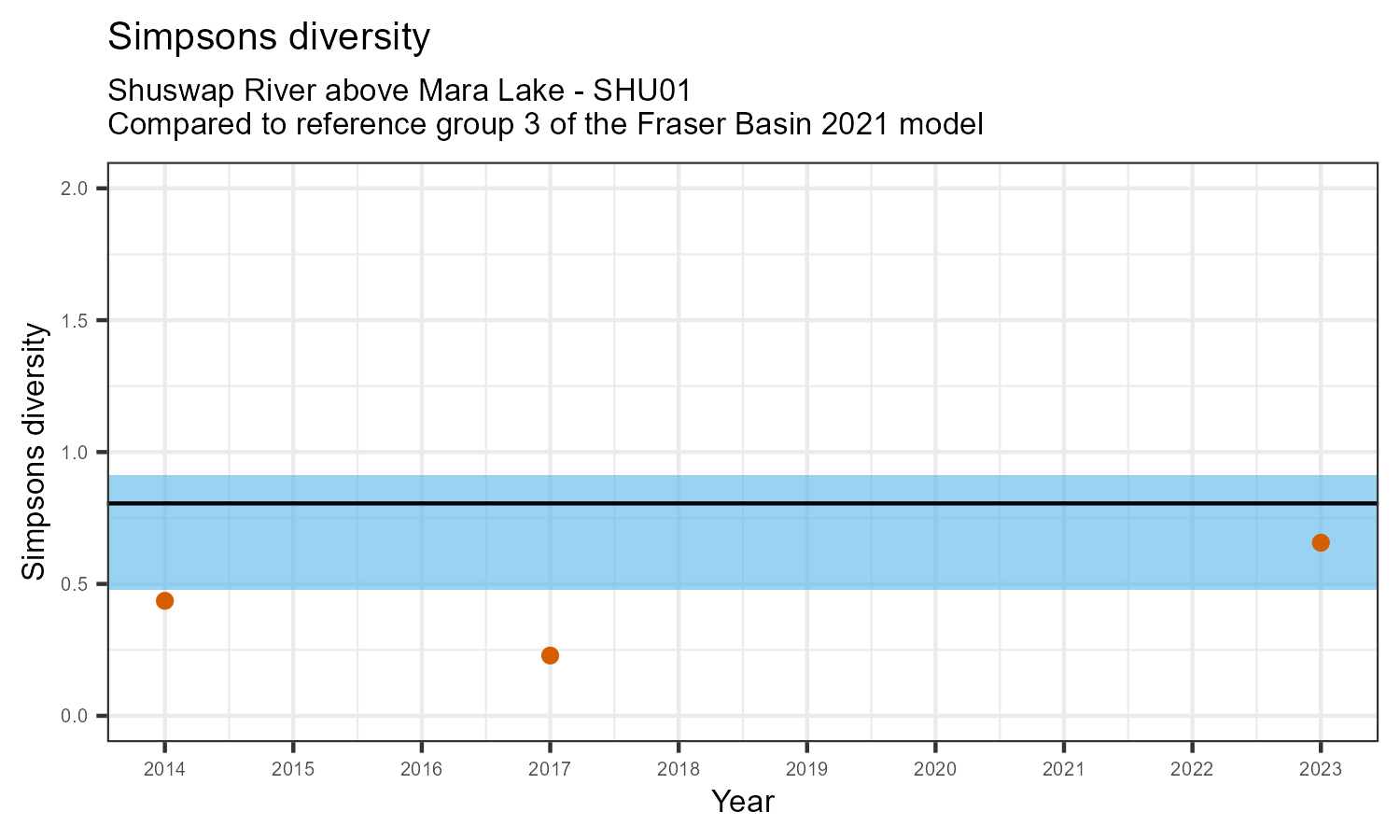
Simpson’s diversity is an index that measures the number of taxonomic families present as well as the relative number of individuals in each family. Simpson’s diversity increases as invertebrate family richness increases. It also increases when the families show similar, or balanced, abundance. Balanced, diverse communities are an indicator of a healthy ecosystem. Simpson’s diversity may decrease in response to habitat disturbance.
| 2014 | 2017 | 2023 | Minimum | Median | Maximum | |
|---|---|---|---|---|---|---|
| Total abundance | 977.01 | 132.00 | 3310.00 | 285.00 | 924.31 | 2328.19 |
| % EPT | 11.70 | 12.12 | 4.53 | 49.84 | 80.95 | 98.73 |
| % Ephemeroptera | 8.48 | 4.55 | 2.72 | 15.92 | 47.87 | 87.06 |
| % Plecoptera | 0.58 | 3.79 | 0.00 | 4.29 | 20.15 | 79.10 |
| % Trichoptera | 2.63 | 3.79 | 1.81 | 0.00 | 6.53 | 58.66 |
| % Chironomidae | 73.40 | 86.36 | 39.58 | 0.00 | 9.83 | 38.93 |
| % Diptera and non-insects | 87.14 | 87.88 | 95.17 | 1.27 | 18.93 | 49.84 |
| % Filterers | 74.86 | 87.12 | 39.58 | 1.40 | 12.59 | 38.93 |
| % Gatherers | 86.26 | 91.67 | 86.71 | 38.46 | 86.84 | 97.52 |
| % Predators | 89.18 | 93.18 | 96.68 | 17.59 | 50.11 | 84.67 |
| % Scrapers | 83.34 | 90.91 | 43.20 | 31.09 | 79.02 | 95.27 |
| % Shredders | 76.61 | 87.88 | 41.99 | 6.94 | 31.77 | 67.66 |
| Family richness | 15.00 | 11.00 | 11.00 | 10.00 | 19.00 | 27.00 |
| EPT families | 5.00 | 8.00 | 4.00 | 6.00 | 12.50 | 18.00 |
| Ephemeroptera families | 3.00 | 3.00 | 1.00 | 2.00 | 4.00 | 6.00 |
| Plecoptera families | 0.00 | 4.00 | 0.00 | 2.00 | 5.00 | 8.00 |
| Trichoptera families | 2.00 | 1.00 | 3.00 | 0.00 | 3.50 | 6.00 |
| Diptera families | 3.00 | 2.00 | 3.00 | 1.00 | 3.00 | 6.00 |
| Coleoptera families | 1.00 | 0.00 | 1.00 | 0.00 | 0.00 | 1.00 |
| Long-Lived family richness | 1.00 | 1.00 | 1.00 | 0.00 | 0.00 | 2.00 |
| Clinger family richness | 4.00 | 7.00 | 4.00 | 7.00 | 12.00 | 17.00 |
| Intolerant family richness | 3.00 | 6.00 | 2.00 | 3.00 | 10.00 | 16.00 |
| % Tolerant family abundance | 10.23 | 0.76 | 49.55 | 0.00 | 1.34 | 18.48 |
| % Top 2 dominant families | 83.14 | 91.54 | 81.87 | 28.57 | 53.37 | 81.70 |
| Simpsons diversity | 0.44 | 0.23 | 0.66 | 0.48 | 0.81 | 0.91 |
| Simpsons evenness | 0.12 | 0.12 | 0.26 | 0.10 | 0.31 | 0.67 |
| Hilsenhoff Biotic Index (NW) | 5.91 | 6.27 | 7.50 | 0.94 | 2.91 | 4.58 |
Simpsons evenness
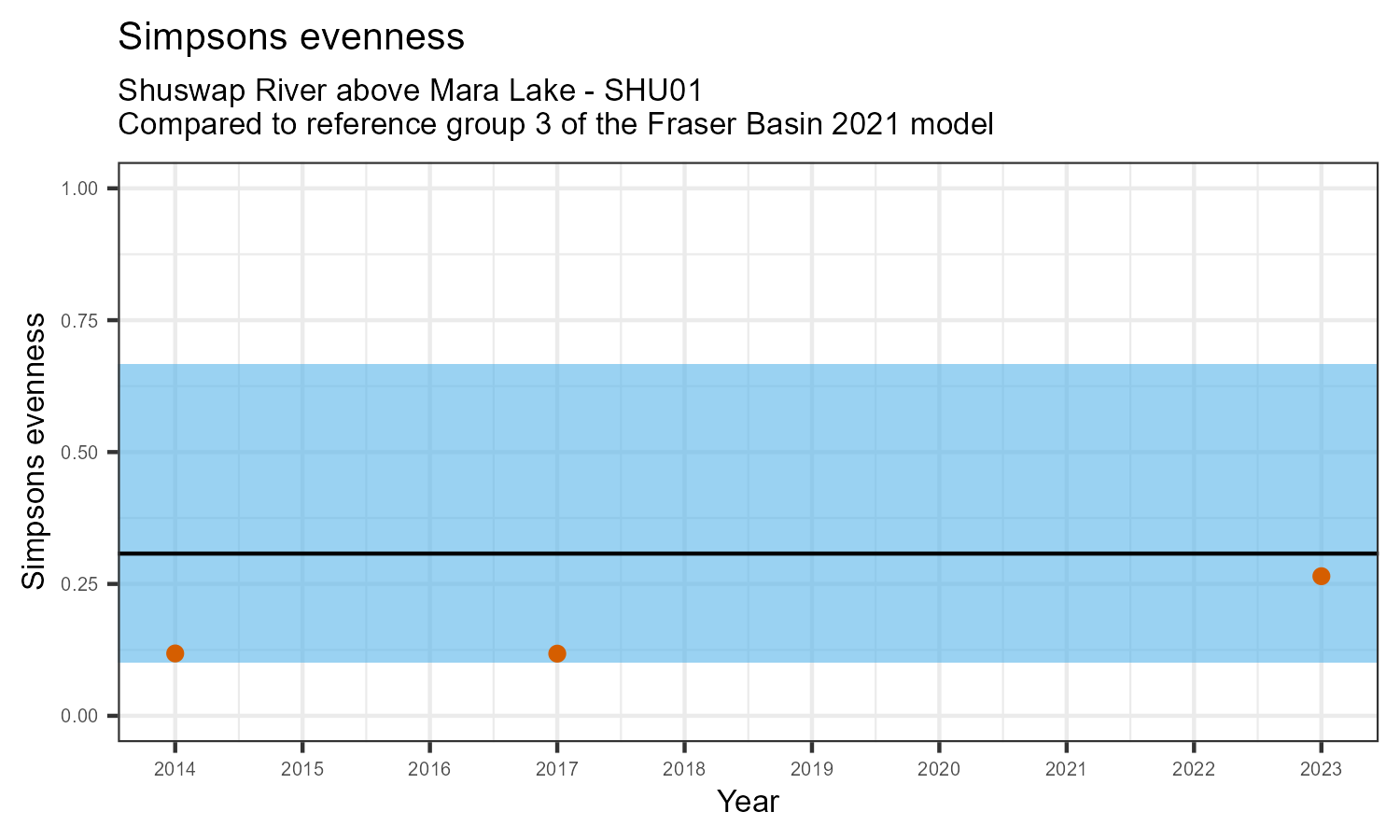
Simpson’s evenness is an index that measures whether the number of individuals in various taxonomic families is similar, or balanced. Balanced communities are an indicator of a healthy ecosystem. Simpson’s evenness may decrease in response to habitat disturbances.
| 2014 | 2017 | 2023 | Minimum | Median | Maximum | |
|---|---|---|---|---|---|---|
| Total abundance | 977.01 | 132.00 | 3310.00 | 285.00 | 924.31 | 2328.19 |
| % EPT | 11.70 | 12.12 | 4.53 | 49.84 | 80.95 | 98.73 |
| % Ephemeroptera | 8.48 | 4.55 | 2.72 | 15.92 | 47.87 | 87.06 |
| % Plecoptera | 0.58 | 3.79 | 0.00 | 4.29 | 20.15 | 79.10 |
| % Trichoptera | 2.63 | 3.79 | 1.81 | 0.00 | 6.53 | 58.66 |
| % Chironomidae | 73.40 | 86.36 | 39.58 | 0.00 | 9.83 | 38.93 |
| % Diptera and non-insects | 87.14 | 87.88 | 95.17 | 1.27 | 18.93 | 49.84 |
| % Filterers | 74.86 | 87.12 | 39.58 | 1.40 | 12.59 | 38.93 |
| % Gatherers | 86.26 | 91.67 | 86.71 | 38.46 | 86.84 | 97.52 |
| % Predators | 89.18 | 93.18 | 96.68 | 17.59 | 50.11 | 84.67 |
| % Scrapers | 83.34 | 90.91 | 43.20 | 31.09 | 79.02 | 95.27 |
| % Shredders | 76.61 | 87.88 | 41.99 | 6.94 | 31.77 | 67.66 |
| Family richness | 15.00 | 11.00 | 11.00 | 10.00 | 19.00 | 27.00 |
| EPT families | 5.00 | 8.00 | 4.00 | 6.00 | 12.50 | 18.00 |
| Ephemeroptera families | 3.00 | 3.00 | 1.00 | 2.00 | 4.00 | 6.00 |
| Plecoptera families | 0.00 | 4.00 | 0.00 | 2.00 | 5.00 | 8.00 |
| Trichoptera families | 2.00 | 1.00 | 3.00 | 0.00 | 3.50 | 6.00 |
| Diptera families | 3.00 | 2.00 | 3.00 | 1.00 | 3.00 | 6.00 |
| Coleoptera families | 1.00 | 0.00 | 1.00 | 0.00 | 0.00 | 1.00 |
| Long-Lived family richness | 1.00 | 1.00 | 1.00 | 0.00 | 0.00 | 2.00 |
| Clinger family richness | 4.00 | 7.00 | 4.00 | 7.00 | 12.00 | 17.00 |
| Intolerant family richness | 3.00 | 6.00 | 2.00 | 3.00 | 10.00 | 16.00 |
| % Tolerant family abundance | 10.23 | 0.76 | 49.55 | 0.00 | 1.34 | 18.48 |
| % Top 2 dominant families | 83.14 | 91.54 | 81.87 | 28.57 | 53.37 | 81.70 |
| Simpsons diversity | 0.44 | 0.23 | 0.66 | 0.48 | 0.81 | 0.91 |
| Simpsons evenness | 0.12 | 0.12 | 0.26 | 0.10 | 0.31 | 0.67 |
| Hilsenhoff Biotic Index (NW) | 5.91 | 6.27 | 7.50 | 0.94 | 2.91 | 4.58 |
Functional Group
% Filterers
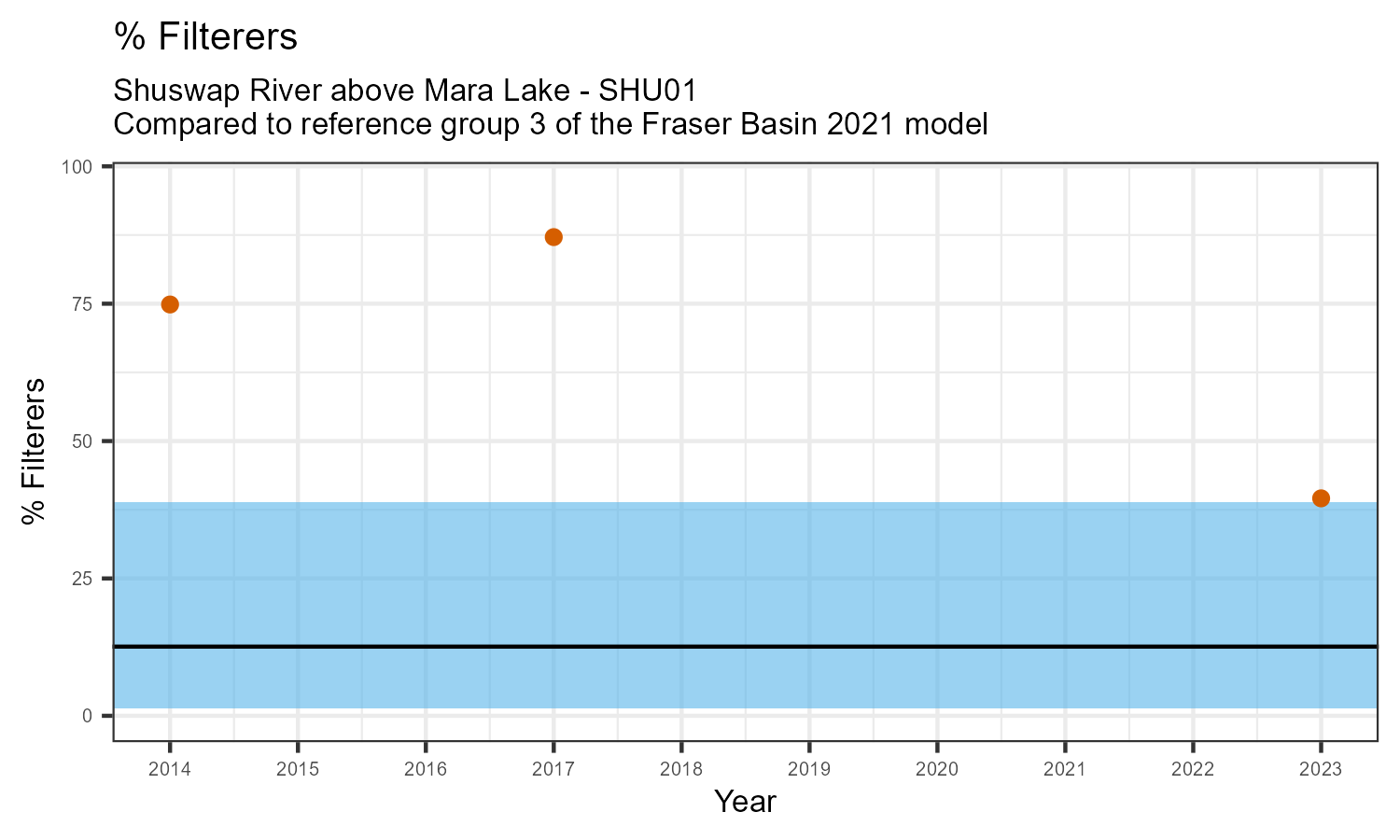
% Filterers is the proportion of taxonomic familes present that feed by collecting fine, floating organic material from the water column. The proportion of filterers is expected to increase at a site in response to disturbance.
| 2014 | 2017 | 2023 | Minimum | Median | Maximum | |
|---|---|---|---|---|---|---|
| Total abundance | 977.01 | 132.00 | 3310.00 | 285.00 | 924.31 | 2328.19 |
| % EPT | 11.70 | 12.12 | 4.53 | 49.84 | 80.95 | 98.73 |
| % Ephemeroptera | 8.48 | 4.55 | 2.72 | 15.92 | 47.87 | 87.06 |
| % Plecoptera | 0.58 | 3.79 | 0.00 | 4.29 | 20.15 | 79.10 |
| % Trichoptera | 2.63 | 3.79 | 1.81 | 0.00 | 6.53 | 58.66 |
| % Chironomidae | 73.40 | 86.36 | 39.58 | 0.00 | 9.83 | 38.93 |
| % Diptera and non-insects | 87.14 | 87.88 | 95.17 | 1.27 | 18.93 | 49.84 |
| % Filterers | 74.86 | 87.12 | 39.58 | 1.40 | 12.59 | 38.93 |
| % Gatherers | 86.26 | 91.67 | 86.71 | 38.46 | 86.84 | 97.52 |
| % Predators | 89.18 | 93.18 | 96.68 | 17.59 | 50.11 | 84.67 |
| % Scrapers | 83.34 | 90.91 | 43.20 | 31.09 | 79.02 | 95.27 |
| % Shredders | 76.61 | 87.88 | 41.99 | 6.94 | 31.77 | 67.66 |
| Family richness | 15.00 | 11.00 | 11.00 | 10.00 | 19.00 | 27.00 |
| EPT families | 5.00 | 8.00 | 4.00 | 6.00 | 12.50 | 18.00 |
| Ephemeroptera families | 3.00 | 3.00 | 1.00 | 2.00 | 4.00 | 6.00 |
| Plecoptera families | 0.00 | 4.00 | 0.00 | 2.00 | 5.00 | 8.00 |
| Trichoptera families | 2.00 | 1.00 | 3.00 | 0.00 | 3.50 | 6.00 |
| Diptera families | 3.00 | 2.00 | 3.00 | 1.00 | 3.00 | 6.00 |
| Coleoptera families | 1.00 | 0.00 | 1.00 | 0.00 | 0.00 | 1.00 |
| Long-Lived family richness | 1.00 | 1.00 | 1.00 | 0.00 | 0.00 | 2.00 |
| Clinger family richness | 4.00 | 7.00 | 4.00 | 7.00 | 12.00 | 17.00 |
| Intolerant family richness | 3.00 | 6.00 | 2.00 | 3.00 | 10.00 | 16.00 |
| % Tolerant family abundance | 10.23 | 0.76 | 49.55 | 0.00 | 1.34 | 18.48 |
| % Top 2 dominant families | 83.14 | 91.54 | 81.87 | 28.57 | 53.37 | 81.70 |
| Simpsons diversity | 0.44 | 0.23 | 0.66 | 0.48 | 0.81 | 0.91 |
| Simpsons evenness | 0.12 | 0.12 | 0.26 | 0.10 | 0.31 | 0.67 |
| Hilsenhoff Biotic Index (NW) | 5.91 | 6.27 | 7.50 | 0.94 | 2.91 | 4.58 |
% Gatherers
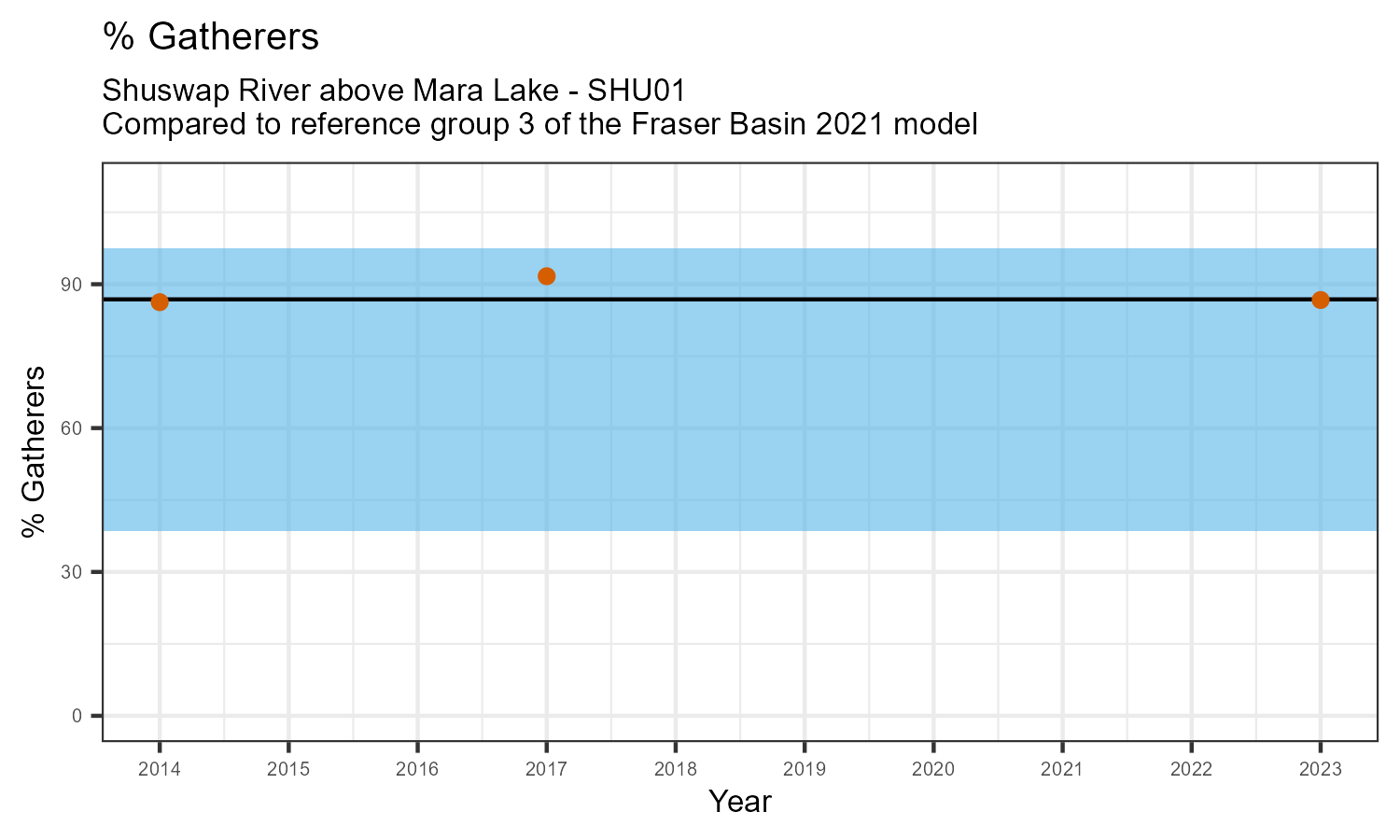
% Gatherers is the proportion of taxonomic familes present that feed primarily on fine organic matter in the water. The proportion of gatherers is expected to increase at a site in response to disturbance.
| 2014 | 2017 | 2023 | Minimum | Median | Maximum | |
|---|---|---|---|---|---|---|
| Total abundance | 977.01 | 132.00 | 3310.00 | 285.00 | 924.31 | 2328.19 |
| % EPT | 11.70 | 12.12 | 4.53 | 49.84 | 80.95 | 98.73 |
| % Ephemeroptera | 8.48 | 4.55 | 2.72 | 15.92 | 47.87 | 87.06 |
| % Plecoptera | 0.58 | 3.79 | 0.00 | 4.29 | 20.15 | 79.10 |
| % Trichoptera | 2.63 | 3.79 | 1.81 | 0.00 | 6.53 | 58.66 |
| % Chironomidae | 73.40 | 86.36 | 39.58 | 0.00 | 9.83 | 38.93 |
| % Diptera and non-insects | 87.14 | 87.88 | 95.17 | 1.27 | 18.93 | 49.84 |
| % Filterers | 74.86 | 87.12 | 39.58 | 1.40 | 12.59 | 38.93 |
| % Gatherers | 86.26 | 91.67 | 86.71 | 38.46 | 86.84 | 97.52 |
| % Predators | 89.18 | 93.18 | 96.68 | 17.59 | 50.11 | 84.67 |
| % Scrapers | 83.34 | 90.91 | 43.20 | 31.09 | 79.02 | 95.27 |
| % Shredders | 76.61 | 87.88 | 41.99 | 6.94 | 31.77 | 67.66 |
| Family richness | 15.00 | 11.00 | 11.00 | 10.00 | 19.00 | 27.00 |
| EPT families | 5.00 | 8.00 | 4.00 | 6.00 | 12.50 | 18.00 |
| Ephemeroptera families | 3.00 | 3.00 | 1.00 | 2.00 | 4.00 | 6.00 |
| Plecoptera families | 0.00 | 4.00 | 0.00 | 2.00 | 5.00 | 8.00 |
| Trichoptera families | 2.00 | 1.00 | 3.00 | 0.00 | 3.50 | 6.00 |
| Diptera families | 3.00 | 2.00 | 3.00 | 1.00 | 3.00 | 6.00 |
| Coleoptera families | 1.00 | 0.00 | 1.00 | 0.00 | 0.00 | 1.00 |
| Long-Lived family richness | 1.00 | 1.00 | 1.00 | 0.00 | 0.00 | 2.00 |
| Clinger family richness | 4.00 | 7.00 | 4.00 | 7.00 | 12.00 | 17.00 |
| Intolerant family richness | 3.00 | 6.00 | 2.00 | 3.00 | 10.00 | 16.00 |
| % Tolerant family abundance | 10.23 | 0.76 | 49.55 | 0.00 | 1.34 | 18.48 |
| % Top 2 dominant families | 83.14 | 91.54 | 81.87 | 28.57 | 53.37 | 81.70 |
| Simpsons diversity | 0.44 | 0.23 | 0.66 | 0.48 | 0.81 | 0.91 |
| Simpsons evenness | 0.12 | 0.12 | 0.26 | 0.10 | 0.31 | 0.67 |
| Hilsenhoff Biotic Index (NW) | 5.91 | 6.27 | 7.50 | 0.94 | 2.91 | 4.58 |
% Predators
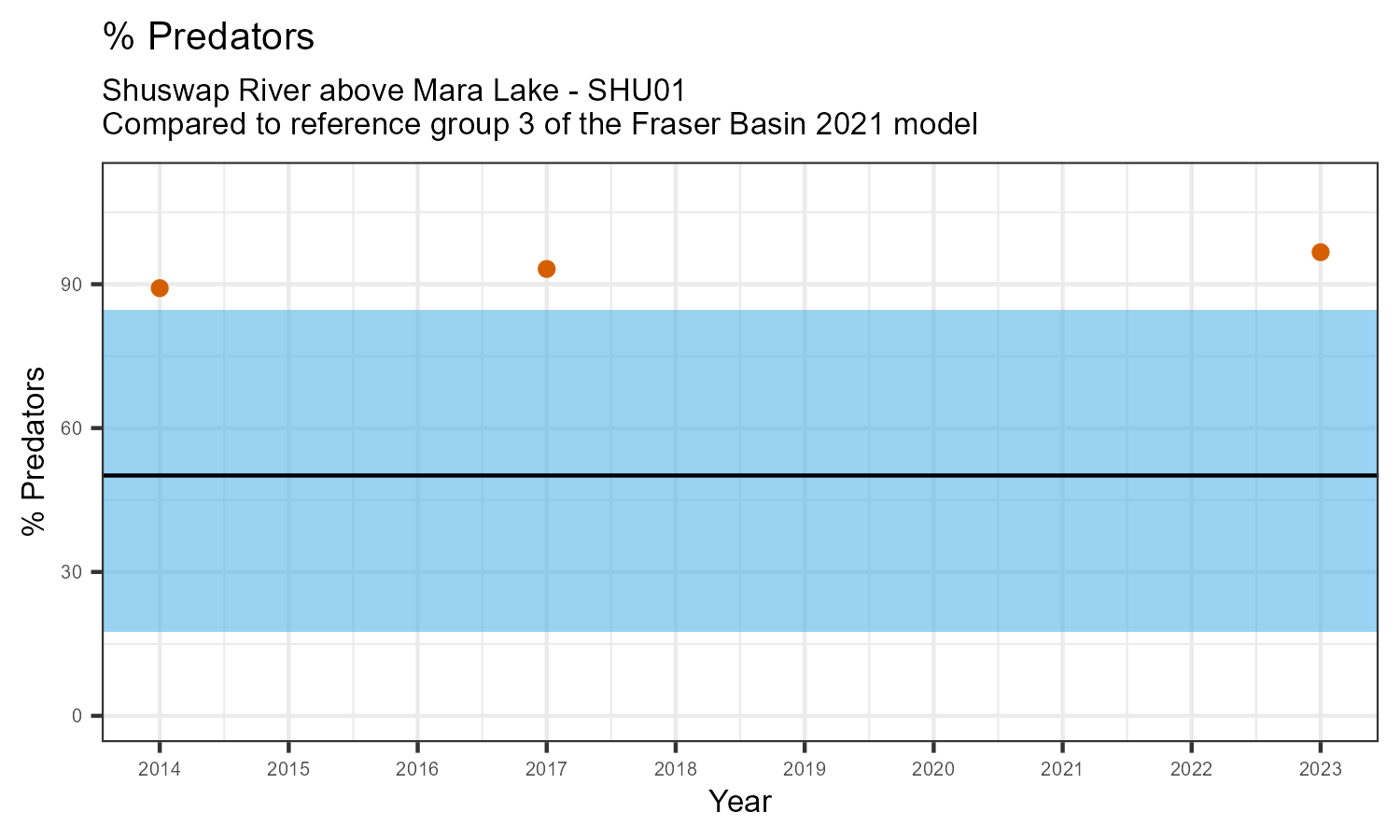
% Predators is the proportion of taxonomic familes present that feed primarily on other organisms. The proportion of predators is expected to decline at a site in response to disturbance.
| 2014 | 2017 | 2023 | Minimum | Median | Maximum | |
|---|---|---|---|---|---|---|
| Total abundance | 977.01 | 132.00 | 3310.00 | 285.00 | 924.31 | 2328.19 |
| % EPT | 11.70 | 12.12 | 4.53 | 49.84 | 80.95 | 98.73 |
| % Ephemeroptera | 8.48 | 4.55 | 2.72 | 15.92 | 47.87 | 87.06 |
| % Plecoptera | 0.58 | 3.79 | 0.00 | 4.29 | 20.15 | 79.10 |
| % Trichoptera | 2.63 | 3.79 | 1.81 | 0.00 | 6.53 | 58.66 |
| % Chironomidae | 73.40 | 86.36 | 39.58 | 0.00 | 9.83 | 38.93 |
| % Diptera and non-insects | 87.14 | 87.88 | 95.17 | 1.27 | 18.93 | 49.84 |
| % Filterers | 74.86 | 87.12 | 39.58 | 1.40 | 12.59 | 38.93 |
| % Gatherers | 86.26 | 91.67 | 86.71 | 38.46 | 86.84 | 97.52 |
| % Predators | 89.18 | 93.18 | 96.68 | 17.59 | 50.11 | 84.67 |
| % Scrapers | 83.34 | 90.91 | 43.20 | 31.09 | 79.02 | 95.27 |
| % Shredders | 76.61 | 87.88 | 41.99 | 6.94 | 31.77 | 67.66 |
| Family richness | 15.00 | 11.00 | 11.00 | 10.00 | 19.00 | 27.00 |
| EPT families | 5.00 | 8.00 | 4.00 | 6.00 | 12.50 | 18.00 |
| Ephemeroptera families | 3.00 | 3.00 | 1.00 | 2.00 | 4.00 | 6.00 |
| Plecoptera families | 0.00 | 4.00 | 0.00 | 2.00 | 5.00 | 8.00 |
| Trichoptera families | 2.00 | 1.00 | 3.00 | 0.00 | 3.50 | 6.00 |
| Diptera families | 3.00 | 2.00 | 3.00 | 1.00 | 3.00 | 6.00 |
| Coleoptera families | 1.00 | 0.00 | 1.00 | 0.00 | 0.00 | 1.00 |
| Long-Lived family richness | 1.00 | 1.00 | 1.00 | 0.00 | 0.00 | 2.00 |
| Clinger family richness | 4.00 | 7.00 | 4.00 | 7.00 | 12.00 | 17.00 |
| Intolerant family richness | 3.00 | 6.00 | 2.00 | 3.00 | 10.00 | 16.00 |
| % Tolerant family abundance | 10.23 | 0.76 | 49.55 | 0.00 | 1.34 | 18.48 |
| % Top 2 dominant families | 83.14 | 91.54 | 81.87 | 28.57 | 53.37 | 81.70 |
| Simpsons diversity | 0.44 | 0.23 | 0.66 | 0.48 | 0.81 | 0.91 |
| Simpsons evenness | 0.12 | 0.12 | 0.26 | 0.10 | 0.31 | 0.67 |
| Hilsenhoff Biotic Index (NW) | 5.91 | 6.27 | 7.50 | 0.94 | 2.91 | 4.58 |
% Scrapers
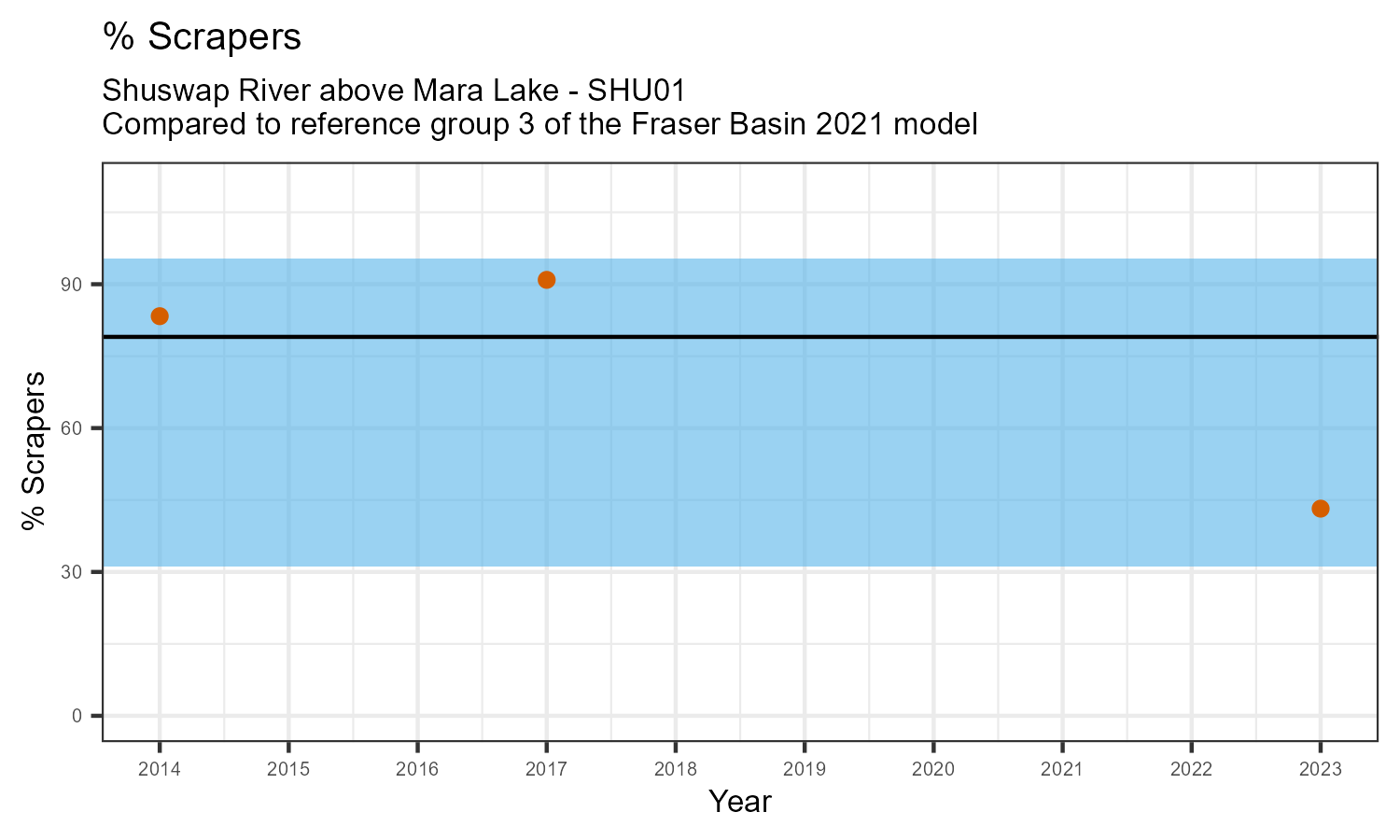
% Scrapers is the proportion of taxonomic familes present that feed by grazing on the algae growing on rocks and other underwater surfaces. The proportion of scrapers is expected to decrease at a site in response to disturbance.
| 2014 | 2017 | 2023 | Minimum | Median | Maximum | |
|---|---|---|---|---|---|---|
| Total abundance | 977.01 | 132.00 | 3310.00 | 285.00 | 924.31 | 2328.19 |
| % EPT | 11.70 | 12.12 | 4.53 | 49.84 | 80.95 | 98.73 |
| % Ephemeroptera | 8.48 | 4.55 | 2.72 | 15.92 | 47.87 | 87.06 |
| % Plecoptera | 0.58 | 3.79 | 0.00 | 4.29 | 20.15 | 79.10 |
| % Trichoptera | 2.63 | 3.79 | 1.81 | 0.00 | 6.53 | 58.66 |
| % Chironomidae | 73.40 | 86.36 | 39.58 | 0.00 | 9.83 | 38.93 |
| % Diptera and non-insects | 87.14 | 87.88 | 95.17 | 1.27 | 18.93 | 49.84 |
| % Filterers | 74.86 | 87.12 | 39.58 | 1.40 | 12.59 | 38.93 |
| % Gatherers | 86.26 | 91.67 | 86.71 | 38.46 | 86.84 | 97.52 |
| % Predators | 89.18 | 93.18 | 96.68 | 17.59 | 50.11 | 84.67 |
| % Scrapers | 83.34 | 90.91 | 43.20 | 31.09 | 79.02 | 95.27 |
| % Shredders | 76.61 | 87.88 | 41.99 | 6.94 | 31.77 | 67.66 |
| Family richness | 15.00 | 11.00 | 11.00 | 10.00 | 19.00 | 27.00 |
| EPT families | 5.00 | 8.00 | 4.00 | 6.00 | 12.50 | 18.00 |
| Ephemeroptera families | 3.00 | 3.00 | 1.00 | 2.00 | 4.00 | 6.00 |
| Plecoptera families | 0.00 | 4.00 | 0.00 | 2.00 | 5.00 | 8.00 |
| Trichoptera families | 2.00 | 1.00 | 3.00 | 0.00 | 3.50 | 6.00 |
| Diptera families | 3.00 | 2.00 | 3.00 | 1.00 | 3.00 | 6.00 |
| Coleoptera families | 1.00 | 0.00 | 1.00 | 0.00 | 0.00 | 1.00 |
| Long-Lived family richness | 1.00 | 1.00 | 1.00 | 0.00 | 0.00 | 2.00 |
| Clinger family richness | 4.00 | 7.00 | 4.00 | 7.00 | 12.00 | 17.00 |
| Intolerant family richness | 3.00 | 6.00 | 2.00 | 3.00 | 10.00 | 16.00 |
| % Tolerant family abundance | 10.23 | 0.76 | 49.55 | 0.00 | 1.34 | 18.48 |
| % Top 2 dominant families | 83.14 | 91.54 | 81.87 | 28.57 | 53.37 | 81.70 |
| Simpsons diversity | 0.44 | 0.23 | 0.66 | 0.48 | 0.81 | 0.91 |
| Simpsons evenness | 0.12 | 0.12 | 0.26 | 0.10 | 0.31 | 0.67 |
| Hilsenhoff Biotic Index (NW) | 5.91 | 6.27 | 7.50 | 0.94 | 2.91 | 4.58 |
% Shredders
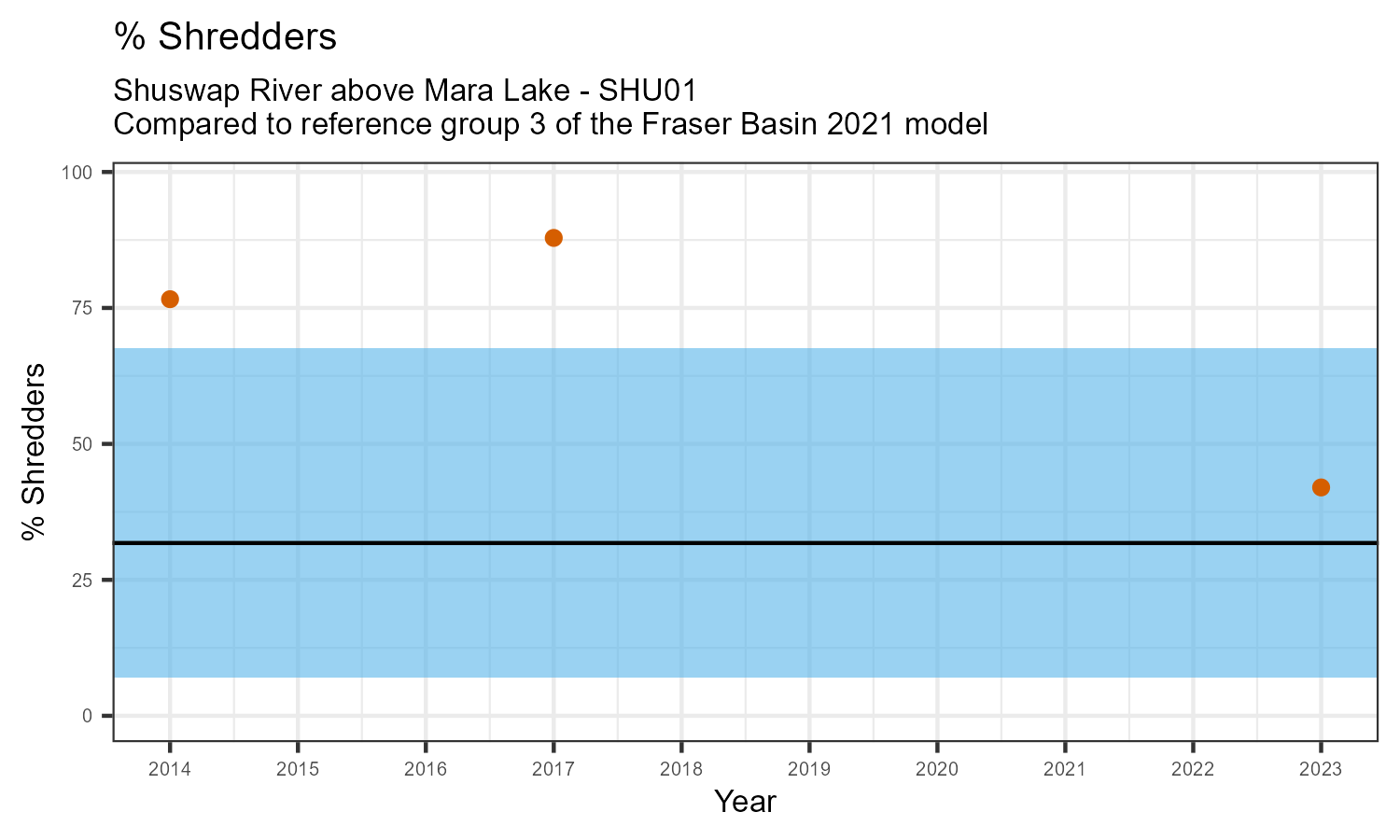
% Shredders is the proportion of taxonomic familes present that feed on leaf litter and other coarse particulate organic matter in the water. The proportion of shredders is expected to decrease at a site in response to disturbance.
| 2014 | 2017 | 2023 | Minimum | Median | Maximum | |
|---|---|---|---|---|---|---|
| Total abundance | 977.01 | 132.00 | 3310.00 | 285.00 | 924.31 | 2328.19 |
| % EPT | 11.70 | 12.12 | 4.53 | 49.84 | 80.95 | 98.73 |
| % Ephemeroptera | 8.48 | 4.55 | 2.72 | 15.92 | 47.87 | 87.06 |
| % Plecoptera | 0.58 | 3.79 | 0.00 | 4.29 | 20.15 | 79.10 |
| % Trichoptera | 2.63 | 3.79 | 1.81 | 0.00 | 6.53 | 58.66 |
| % Chironomidae | 73.40 | 86.36 | 39.58 | 0.00 | 9.83 | 38.93 |
| % Diptera and non-insects | 87.14 | 87.88 | 95.17 | 1.27 | 18.93 | 49.84 |
| % Filterers | 74.86 | 87.12 | 39.58 | 1.40 | 12.59 | 38.93 |
| % Gatherers | 86.26 | 91.67 | 86.71 | 38.46 | 86.84 | 97.52 |
| % Predators | 89.18 | 93.18 | 96.68 | 17.59 | 50.11 | 84.67 |
| % Scrapers | 83.34 | 90.91 | 43.20 | 31.09 | 79.02 | 95.27 |
| % Shredders | 76.61 | 87.88 | 41.99 | 6.94 | 31.77 | 67.66 |
| Family richness | 15.00 | 11.00 | 11.00 | 10.00 | 19.00 | 27.00 |
| EPT families | 5.00 | 8.00 | 4.00 | 6.00 | 12.50 | 18.00 |
| Ephemeroptera families | 3.00 | 3.00 | 1.00 | 2.00 | 4.00 | 6.00 |
| Plecoptera families | 0.00 | 4.00 | 0.00 | 2.00 | 5.00 | 8.00 |
| Trichoptera families | 2.00 | 1.00 | 3.00 | 0.00 | 3.50 | 6.00 |
| Diptera families | 3.00 | 2.00 | 3.00 | 1.00 | 3.00 | 6.00 |
| Coleoptera families | 1.00 | 0.00 | 1.00 | 0.00 | 0.00 | 1.00 |
| Long-Lived family richness | 1.00 | 1.00 | 1.00 | 0.00 | 0.00 | 2.00 |
| Clinger family richness | 4.00 | 7.00 | 4.00 | 7.00 | 12.00 | 17.00 |
| Intolerant family richness | 3.00 | 6.00 | 2.00 | 3.00 | 10.00 | 16.00 |
| % Tolerant family abundance | 10.23 | 0.76 | 49.55 | 0.00 | 1.34 | 18.48 |
| % Top 2 dominant families | 83.14 | 91.54 | 81.87 | 28.57 | 53.37 | 81.70 |
| Simpsons diversity | 0.44 | 0.23 | 0.66 | 0.48 | 0.81 | 0.91 |
| Simpsons evenness | 0.12 | 0.12 | 0.26 | 0.10 | 0.31 | 0.67 |
| Hilsenhoff Biotic Index (NW) | 5.91 | 6.27 | 7.50 | 0.94 | 2.91 | 4.58 |
Clinger family richness
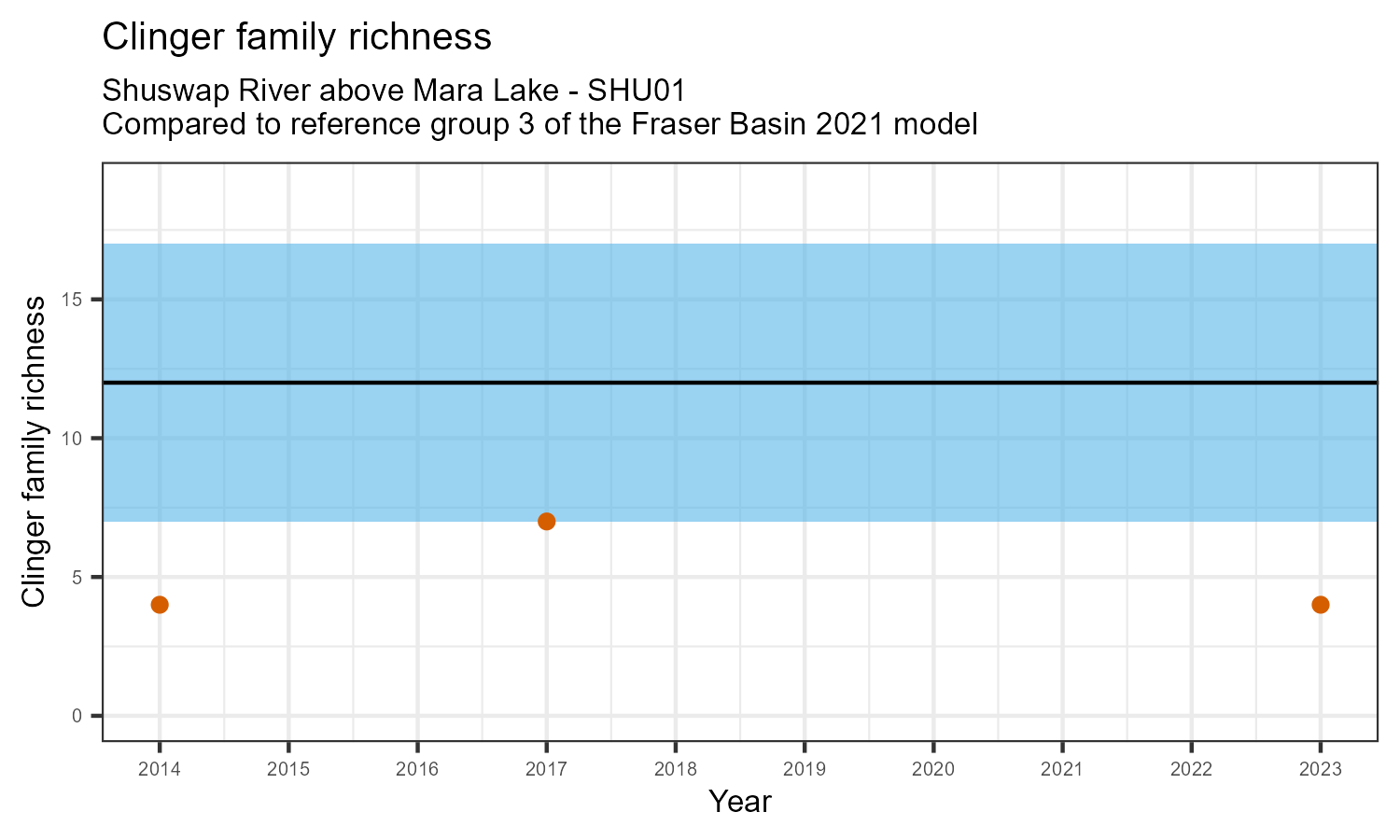
Clinger family richness counts the number of taxonomic families that tend to cling to rock surfaces. Common clingers include Simuliidae (blackflies), Ephemerellidae (mayflies), and Perlodidae (stoneflies). Clingers typically live in the gaps between rocks and cobble on streambeds. When fine sediments fill these gaps, the number of clinger families may decrease.
| 2014 | 2017 | 2023 | Minimum | Median | Maximum | |
|---|---|---|---|---|---|---|
| Total abundance | 977.01 | 132.00 | 3310.00 | 285.00 | 924.31 | 2328.19 |
| % EPT | 11.70 | 12.12 | 4.53 | 49.84 | 80.95 | 98.73 |
| % Ephemeroptera | 8.48 | 4.55 | 2.72 | 15.92 | 47.87 | 87.06 |
| % Plecoptera | 0.58 | 3.79 | 0.00 | 4.29 | 20.15 | 79.10 |
| % Trichoptera | 2.63 | 3.79 | 1.81 | 0.00 | 6.53 | 58.66 |
| % Chironomidae | 73.40 | 86.36 | 39.58 | 0.00 | 9.83 | 38.93 |
| % Diptera and non-insects | 87.14 | 87.88 | 95.17 | 1.27 | 18.93 | 49.84 |
| % Filterers | 74.86 | 87.12 | 39.58 | 1.40 | 12.59 | 38.93 |
| % Gatherers | 86.26 | 91.67 | 86.71 | 38.46 | 86.84 | 97.52 |
| % Predators | 89.18 | 93.18 | 96.68 | 17.59 | 50.11 | 84.67 |
| % Scrapers | 83.34 | 90.91 | 43.20 | 31.09 | 79.02 | 95.27 |
| % Shredders | 76.61 | 87.88 | 41.99 | 6.94 | 31.77 | 67.66 |
| Family richness | 15.00 | 11.00 | 11.00 | 10.00 | 19.00 | 27.00 |
| EPT families | 5.00 | 8.00 | 4.00 | 6.00 | 12.50 | 18.00 |
| Ephemeroptera families | 3.00 | 3.00 | 1.00 | 2.00 | 4.00 | 6.00 |
| Plecoptera families | 0.00 | 4.00 | 0.00 | 2.00 | 5.00 | 8.00 |
| Trichoptera families | 2.00 | 1.00 | 3.00 | 0.00 | 3.50 | 6.00 |
| Diptera families | 3.00 | 2.00 | 3.00 | 1.00 | 3.00 | 6.00 |
| Coleoptera families | 1.00 | 0.00 | 1.00 | 0.00 | 0.00 | 1.00 |
| Long-Lived family richness | 1.00 | 1.00 | 1.00 | 0.00 | 0.00 | 2.00 |
| Clinger family richness | 4.00 | 7.00 | 4.00 | 7.00 | 12.00 | 17.00 |
| Intolerant family richness | 3.00 | 6.00 | 2.00 | 3.00 | 10.00 | 16.00 |
| % Tolerant family abundance | 10.23 | 0.76 | 49.55 | 0.00 | 1.34 | 18.48 |
| % Top 2 dominant families | 83.14 | 91.54 | 81.87 | 28.57 | 53.37 | 81.70 |
| Simpsons diversity | 0.44 | 0.23 | 0.66 | 0.48 | 0.81 | 0.91 |
| Simpsons evenness | 0.12 | 0.12 | 0.26 | 0.10 | 0.31 | 0.67 |
| Hilsenhoff Biotic Index (NW) | 5.91 | 6.27 | 7.50 | 0.94 | 2.91 | 4.58 |
Biotic Index
Intolerant family richness
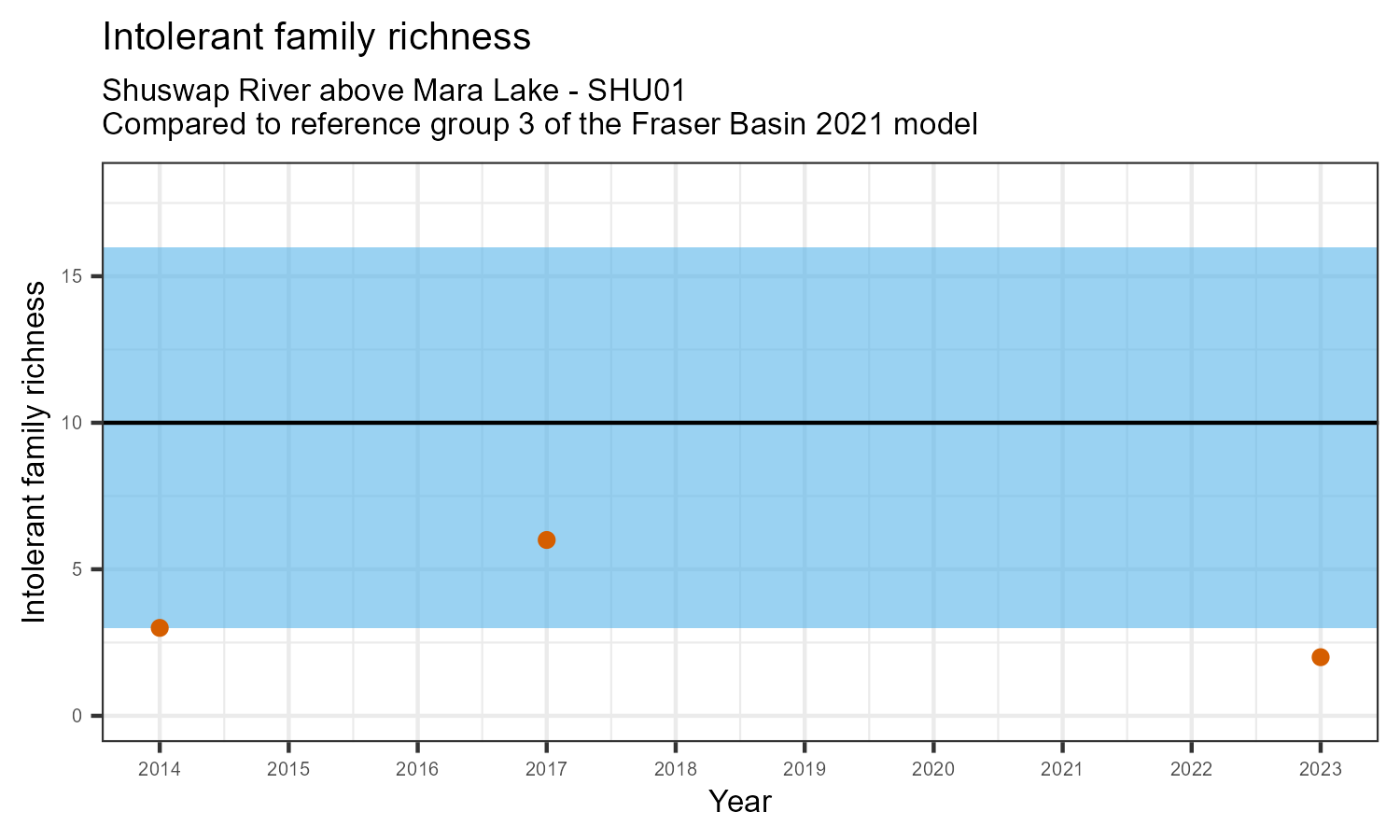
Intolerant family richness counts the number of taxonomic families that are sensitive (intolerant) to pollution, according to the Hilsenhoff Biotic Index. Intolerant family richness may decrease as water pollution increases.
| 2014 | 2017 | 2023 | Minimum | Median | Maximum | |
|---|---|---|---|---|---|---|
| Total abundance | 977.01 | 132.00 | 3310.00 | 285.00 | 924.31 | 2328.19 |
| % EPT | 11.70 | 12.12 | 4.53 | 49.84 | 80.95 | 98.73 |
| % Ephemeroptera | 8.48 | 4.55 | 2.72 | 15.92 | 47.87 | 87.06 |
| % Plecoptera | 0.58 | 3.79 | 0.00 | 4.29 | 20.15 | 79.10 |
| % Trichoptera | 2.63 | 3.79 | 1.81 | 0.00 | 6.53 | 58.66 |
| % Chironomidae | 73.40 | 86.36 | 39.58 | 0.00 | 9.83 | 38.93 |
| % Diptera and non-insects | 87.14 | 87.88 | 95.17 | 1.27 | 18.93 | 49.84 |
| % Filterers | 74.86 | 87.12 | 39.58 | 1.40 | 12.59 | 38.93 |
| % Gatherers | 86.26 | 91.67 | 86.71 | 38.46 | 86.84 | 97.52 |
| % Predators | 89.18 | 93.18 | 96.68 | 17.59 | 50.11 | 84.67 |
| % Scrapers | 83.34 | 90.91 | 43.20 | 31.09 | 79.02 | 95.27 |
| % Shredders | 76.61 | 87.88 | 41.99 | 6.94 | 31.77 | 67.66 |
| Family richness | 15.00 | 11.00 | 11.00 | 10.00 | 19.00 | 27.00 |
| EPT families | 5.00 | 8.00 | 4.00 | 6.00 | 12.50 | 18.00 |
| Ephemeroptera families | 3.00 | 3.00 | 1.00 | 2.00 | 4.00 | 6.00 |
| Plecoptera families | 0.00 | 4.00 | 0.00 | 2.00 | 5.00 | 8.00 |
| Trichoptera families | 2.00 | 1.00 | 3.00 | 0.00 | 3.50 | 6.00 |
| Diptera families | 3.00 | 2.00 | 3.00 | 1.00 | 3.00 | 6.00 |
| Coleoptera families | 1.00 | 0.00 | 1.00 | 0.00 | 0.00 | 1.00 |
| Long-Lived family richness | 1.00 | 1.00 | 1.00 | 0.00 | 0.00 | 2.00 |
| Clinger family richness | 4.00 | 7.00 | 4.00 | 7.00 | 12.00 | 17.00 |
| Intolerant family richness | 3.00 | 6.00 | 2.00 | 3.00 | 10.00 | 16.00 |
| % Tolerant family abundance | 10.23 | 0.76 | 49.55 | 0.00 | 1.34 | 18.48 |
| % Top 2 dominant families | 83.14 | 91.54 | 81.87 | 28.57 | 53.37 | 81.70 |
| Simpsons diversity | 0.44 | 0.23 | 0.66 | 0.48 | 0.81 | 0.91 |
| Simpsons evenness | 0.12 | 0.12 | 0.26 | 0.10 | 0.31 | 0.67 |
| Hilsenhoff Biotic Index (NW) | 5.91 | 6.27 | 7.50 | 0.94 | 2.91 | 4.58 |
% Tolerant family abundance
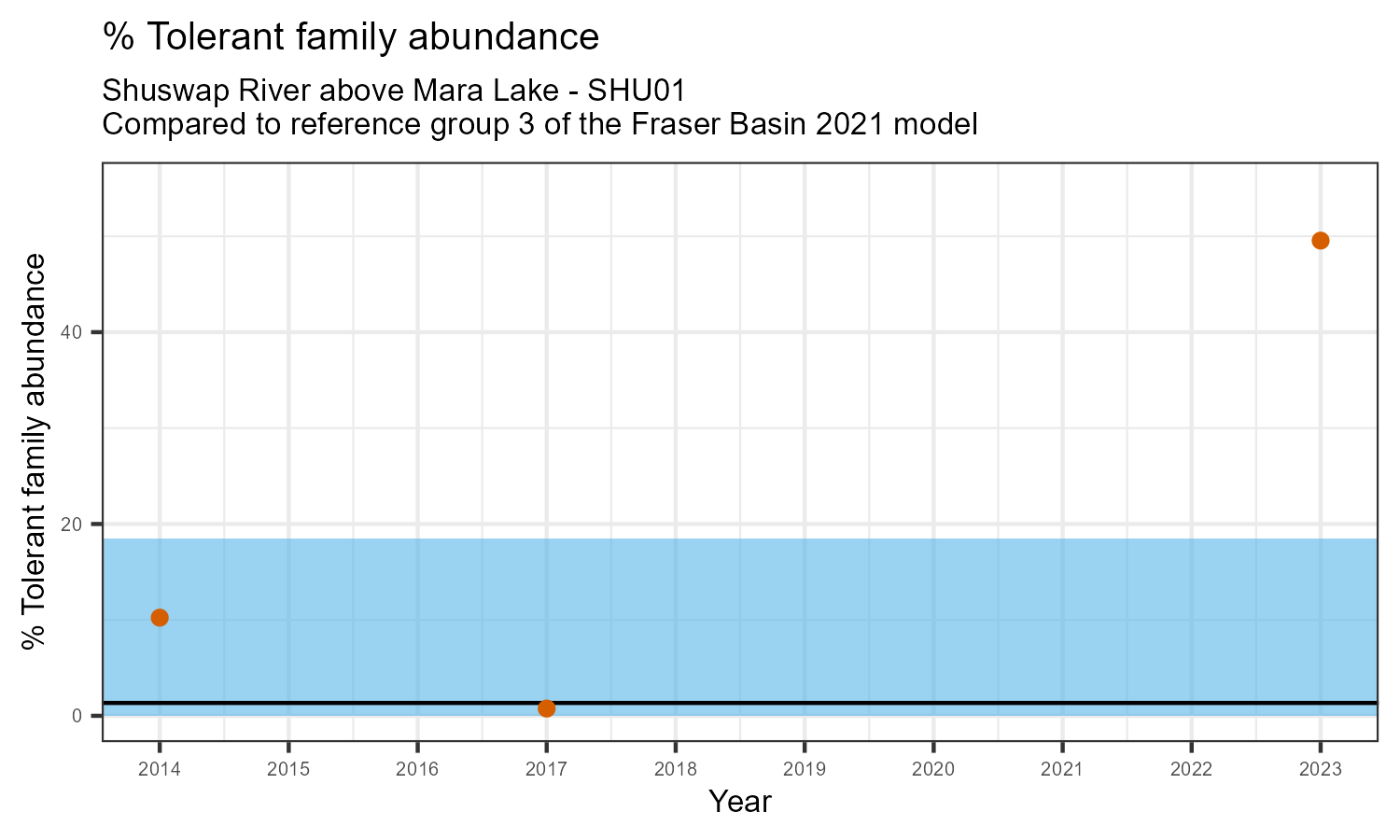
% Tolerant family abundance is the proportion of taxonomic families that are tolerant to pollution, according to the Hilsenhoff Biotic Index. The % tolerant family abundance may increase as water pollution increases.
| 2014 | 2017 | 2023 | Minimum | Median | Maximum | |
|---|---|---|---|---|---|---|
| Total abundance | 977.01 | 132.00 | 3310.00 | 285.00 | 924.31 | 2328.19 |
| % EPT | 11.70 | 12.12 | 4.53 | 49.84 | 80.95 | 98.73 |
| % Ephemeroptera | 8.48 | 4.55 | 2.72 | 15.92 | 47.87 | 87.06 |
| % Plecoptera | 0.58 | 3.79 | 0.00 | 4.29 | 20.15 | 79.10 |
| % Trichoptera | 2.63 | 3.79 | 1.81 | 0.00 | 6.53 | 58.66 |
| % Chironomidae | 73.40 | 86.36 | 39.58 | 0.00 | 9.83 | 38.93 |
| % Diptera and non-insects | 87.14 | 87.88 | 95.17 | 1.27 | 18.93 | 49.84 |
| % Filterers | 74.86 | 87.12 | 39.58 | 1.40 | 12.59 | 38.93 |
| % Gatherers | 86.26 | 91.67 | 86.71 | 38.46 | 86.84 | 97.52 |
| % Predators | 89.18 | 93.18 | 96.68 | 17.59 | 50.11 | 84.67 |
| % Scrapers | 83.34 | 90.91 | 43.20 | 31.09 | 79.02 | 95.27 |
| % Shredders | 76.61 | 87.88 | 41.99 | 6.94 | 31.77 | 67.66 |
| Family richness | 15.00 | 11.00 | 11.00 | 10.00 | 19.00 | 27.00 |
| EPT families | 5.00 | 8.00 | 4.00 | 6.00 | 12.50 | 18.00 |
| Ephemeroptera families | 3.00 | 3.00 | 1.00 | 2.00 | 4.00 | 6.00 |
| Plecoptera families | 0.00 | 4.00 | 0.00 | 2.00 | 5.00 | 8.00 |
| Trichoptera families | 2.00 | 1.00 | 3.00 | 0.00 | 3.50 | 6.00 |
| Diptera families | 3.00 | 2.00 | 3.00 | 1.00 | 3.00 | 6.00 |
| Coleoptera families | 1.00 | 0.00 | 1.00 | 0.00 | 0.00 | 1.00 |
| Long-Lived family richness | 1.00 | 1.00 | 1.00 | 0.00 | 0.00 | 2.00 |
| Clinger family richness | 4.00 | 7.00 | 4.00 | 7.00 | 12.00 | 17.00 |
| Intolerant family richness | 3.00 | 6.00 | 2.00 | 3.00 | 10.00 | 16.00 |
| % Tolerant family abundance | 10.23 | 0.76 | 49.55 | 0.00 | 1.34 | 18.48 |
| % Top 2 dominant families | 83.14 | 91.54 | 81.87 | 28.57 | 53.37 | 81.70 |
| Simpsons diversity | 0.44 | 0.23 | 0.66 | 0.48 | 0.81 | 0.91 |
| Simpsons evenness | 0.12 | 0.12 | 0.26 | 0.10 | 0.31 | 0.67 |
| Hilsenhoff Biotic Index (NW) | 5.91 | 6.27 | 7.50 | 0.94 | 2.91 | 4.58 |
Hilsenhoff Biotic Index (NW)
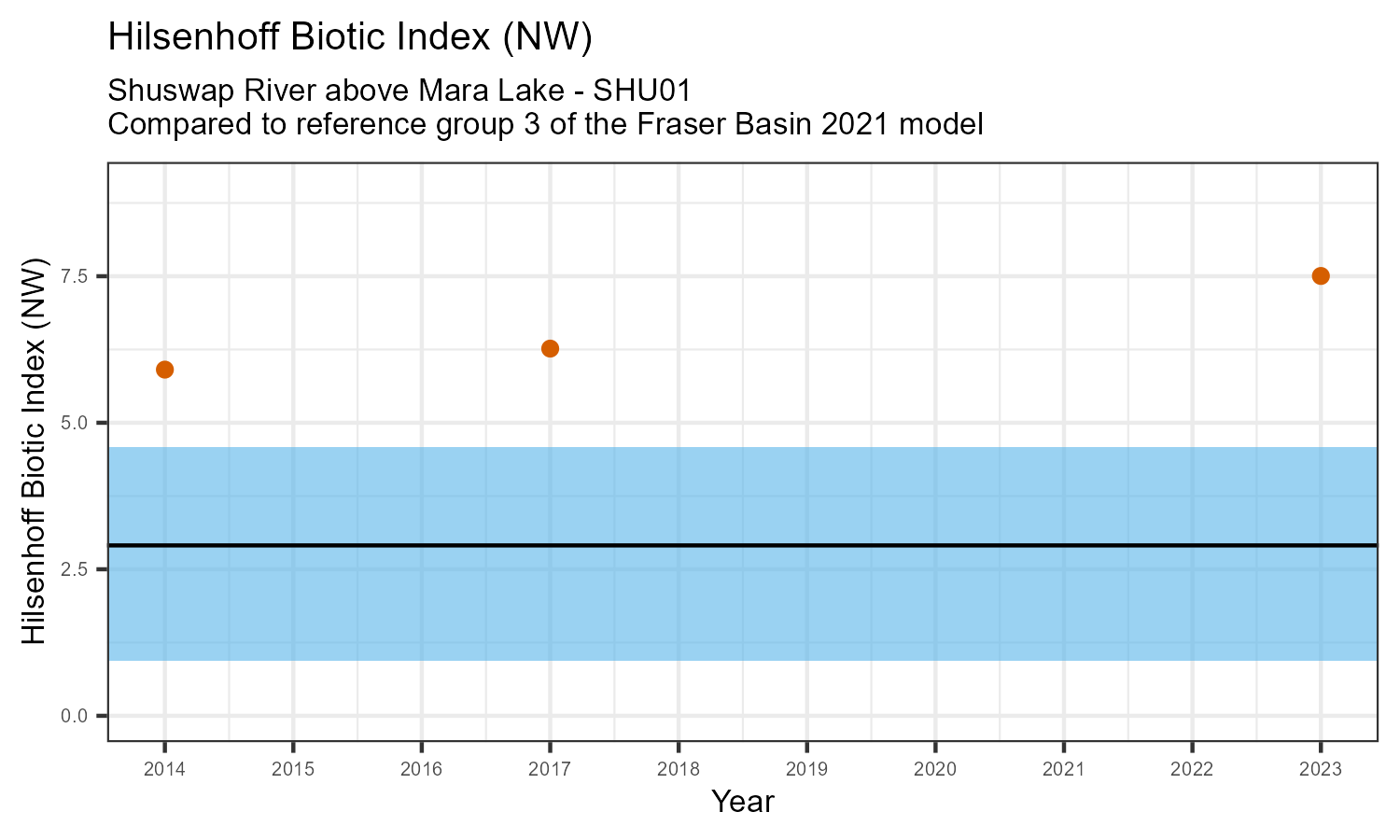
Hilsenhoff Biotic Index (NW) calculates a value based on the invertebrates present, their abundances, and their tolerance (or intolerance) to water pollution. Sensitive (intolerant) invertebrates receive low scores, and tolerant ones receive high scores. This index produces a value between 0 and 10, where 0 indicates excellent water quality and 10 indicates very poor water quality. The Hilsenhoff Biotic Index tolerance values are specific to the geographic area for which they were developed - in this case, northwest North America.
| 2014 | 2017 | 2023 | Minimum | Median | Maximum | |
|---|---|---|---|---|---|---|
| Total abundance | 977.01 | 132.00 | 3310.00 | 285.00 | 924.31 | 2328.19 |
| % EPT | 11.70 | 12.12 | 4.53 | 49.84 | 80.95 | 98.73 |
| % Ephemeroptera | 8.48 | 4.55 | 2.72 | 15.92 | 47.87 | 87.06 |
| % Plecoptera | 0.58 | 3.79 | 0.00 | 4.29 | 20.15 | 79.10 |
| % Trichoptera | 2.63 | 3.79 | 1.81 | 0.00 | 6.53 | 58.66 |
| % Chironomidae | 73.40 | 86.36 | 39.58 | 0.00 | 9.83 | 38.93 |
| % Diptera and non-insects | 87.14 | 87.88 | 95.17 | 1.27 | 18.93 | 49.84 |
| % Filterers | 74.86 | 87.12 | 39.58 | 1.40 | 12.59 | 38.93 |
| % Gatherers | 86.26 | 91.67 | 86.71 | 38.46 | 86.84 | 97.52 |
| % Predators | 89.18 | 93.18 | 96.68 | 17.59 | 50.11 | 84.67 |
| % Scrapers | 83.34 | 90.91 | 43.20 | 31.09 | 79.02 | 95.27 |
| % Shredders | 76.61 | 87.88 | 41.99 | 6.94 | 31.77 | 67.66 |
| Family richness | 15.00 | 11.00 | 11.00 | 10.00 | 19.00 | 27.00 |
| EPT families | 5.00 | 8.00 | 4.00 | 6.00 | 12.50 | 18.00 |
| Ephemeroptera families | 3.00 | 3.00 | 1.00 | 2.00 | 4.00 | 6.00 |
| Plecoptera families | 0.00 | 4.00 | 0.00 | 2.00 | 5.00 | 8.00 |
| Trichoptera families | 2.00 | 1.00 | 3.00 | 0.00 | 3.50 | 6.00 |
| Diptera families | 3.00 | 2.00 | 3.00 | 1.00 | 3.00 | 6.00 |
| Coleoptera families | 1.00 | 0.00 | 1.00 | 0.00 | 0.00 | 1.00 |
| Long-Lived family richness | 1.00 | 1.00 | 1.00 | 0.00 | 0.00 | 2.00 |
| Clinger family richness | 4.00 | 7.00 | 4.00 | 7.00 | 12.00 | 17.00 |
| Intolerant family richness | 3.00 | 6.00 | 2.00 | 3.00 | 10.00 | 16.00 |
| % Tolerant family abundance | 10.23 | 0.76 | 49.55 | 0.00 | 1.34 | 18.48 |
| % Top 2 dominant families | 83.14 | 91.54 | 81.87 | 28.57 | 53.37 | 81.70 |
| Simpsons diversity | 0.44 | 0.23 | 0.66 | 0.48 | 0.81 | 0.91 |
| Simpsons evenness | 0.12 | 0.12 | 0.26 | 0.10 | 0.31 | 0.67 |
| Hilsenhoff Biotic Index (NW) | 5.91 | 6.27 | 7.50 | 0.94 | 2.91 | 4.58 |
End of individual parameter tabs
This graph shows individual metric values at this station compared to the reference group it classified to most often over all years of sampling. In this case, that is Group 3 of the Fraser Basin 2021 reference model.
The top and bottom of the blue band represent the maximum and minimum metrics values from Group 3 . The black line is the median value for the reference group. If the reference group and station values for a metric were zero in all years of sampling, that metric was not graphed.
References and Other Useful Links
- Visit Biomonitoring B.C. for more information on water quality biomonitoring in B.C.
- Learn more about the Canadian Aquatic Biomonitoring Network.
